
Sprucing up 'round the ballpark

Sidewalks are getting widened, fences replaced and trees planted to enhance the appeal of the Twins ballpark area.

October 28, 2009 at 6:20PM
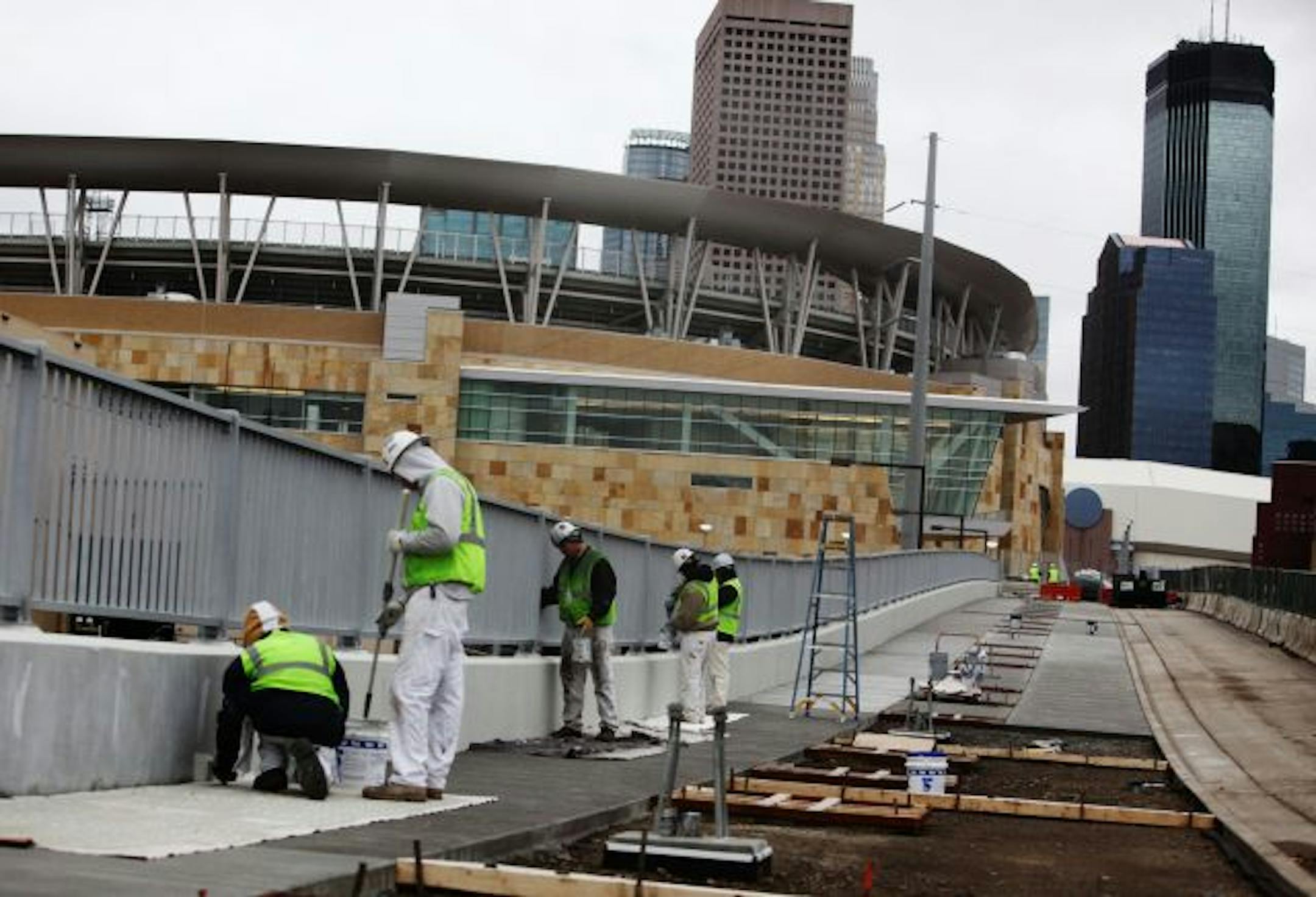
Workers painted a railing last week along a pedestrian walkway north of Target Field, one of the many exterior projects that crews are scrambling to finish. The improvements are part of an effort to extend downtown Minneapolis two blocks beyond Target Center, Ballpark Authority executive director Dan Kenney says.
Workers painted a railing last week along a pedestrian walkway north of Target Field, one of the many exterior projects that crews are scrambling to finish. The improvements are part of an effort to extend downtown Minneapolis two blocks beyond Target Center, Ballpark Authority executive director Dan Kenney says. (Star Tribune/The Minnesota Star Tribune)

The Minnesota Twins are in Minneapolis about one in every four days each year. But Target Field won't be going anywhere when the baseball season is over.

That's why, now that the stands are up and the sod is down, the work being done outside the ballpark to improve the nearby streetscape is as essential as the finishing touches taking place within, said Dan Kenney, executive director of the Minnesota Ballpark Authority.

"It's about creating connections to new transit opportunities, to downtown in all directions," he said. "It doesn't matter what mode you take -- at some point you're a pedestrian, and you want to create an environment that's open and welcoming."

With the days growing shorter and chillier, workers are scurrying to wrap up the exterior projects before commuters on the Northstar rail line start using the stadium's transit station on Nov. 16 -- projects for which there won't be a lot of time before the Twins' opening day in April.

During the past week, workers have been pouring concrete for a double-wide sidewalk along N. 7th Street, which parallels the first-base line and will provide access for charter buses. On the grounds of Hennepin County's garbage burner, across from the third-base-line stands, landscapers have been planting trees and grass.

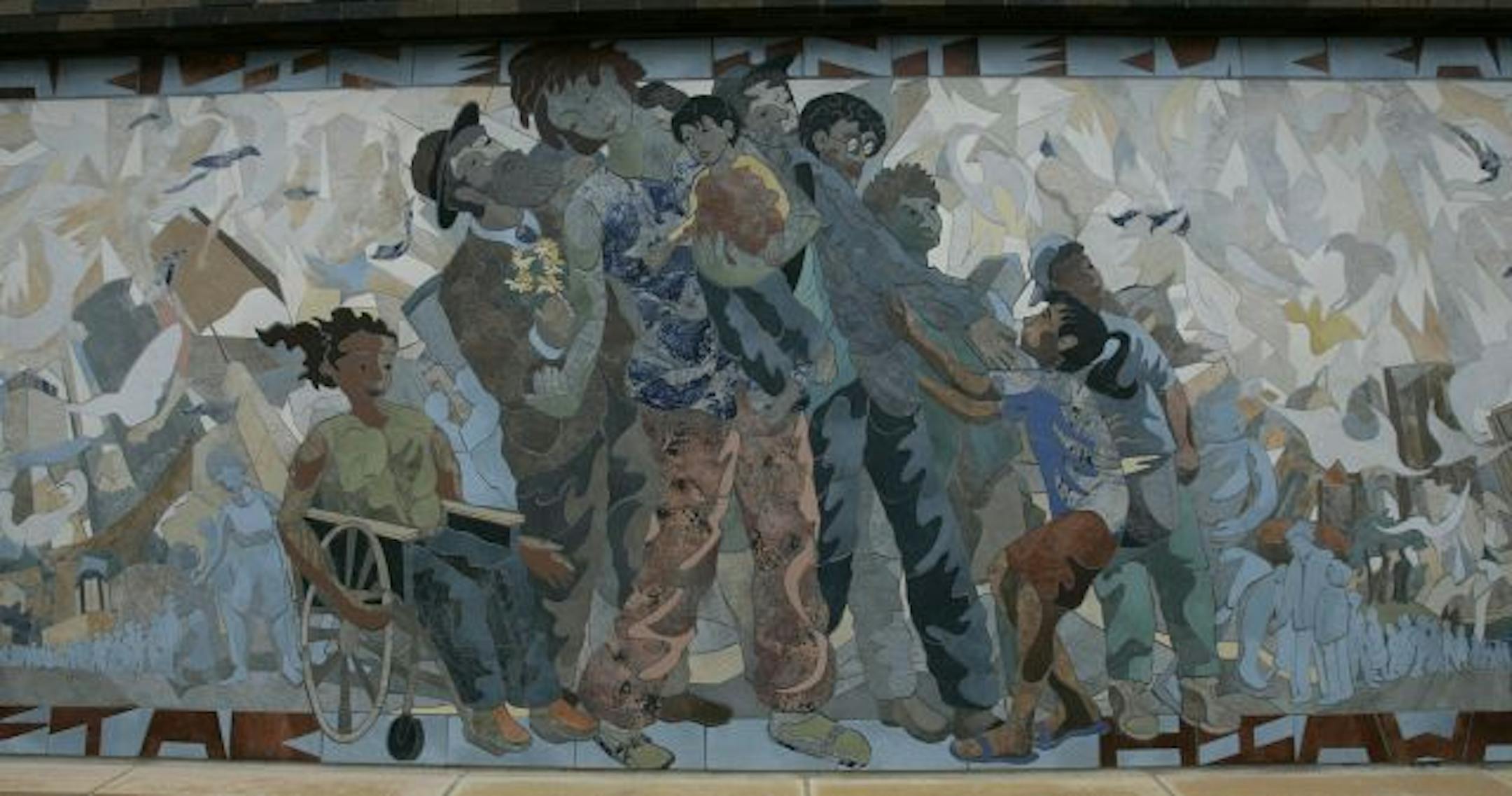
And St. Paul artist Craig David has been on hand to oversee the installation of his murals on the ballpark's exterior walls along 5th Street.

It's all part of the effort to stretch downtown Minneapolis two blocks beyond Target Center, all the way to the ballpark's left field corner, Kenney said.

The hope is that the ballpark will be the catalyst for a new downtown district, perhaps something akin to San Diego's Gaslamp Quarter near Petco Park or Denver's LoDo neighborhood outside Coors Field -- a NoLo (or North Loop) District for Minneapolis, if you will.
"You have an exciting, thriving entertainment district, and you already see housing development in the general area," Kenney said. "This area just seems ready to take off when the economy is right. I think it will have its own unique identity."

Sprucing up outside

Using a special stadium sales tax, Hennepin County fronted the $350 million public contribution for the ballpark, including $90 million for infrastructure: acquiring the site, locating utilities and other basic needs.

It also has spent nearly $2 million to remodel and upgrade the garbage burner, moving its doors away from the ballpark and equipping it with air locks and spritzers to prevent Twins fans from having to see -- or smell -- the trucks coming and going.

The team itself has ranged far beyond its original pledge of $130 million toward the ballpark.

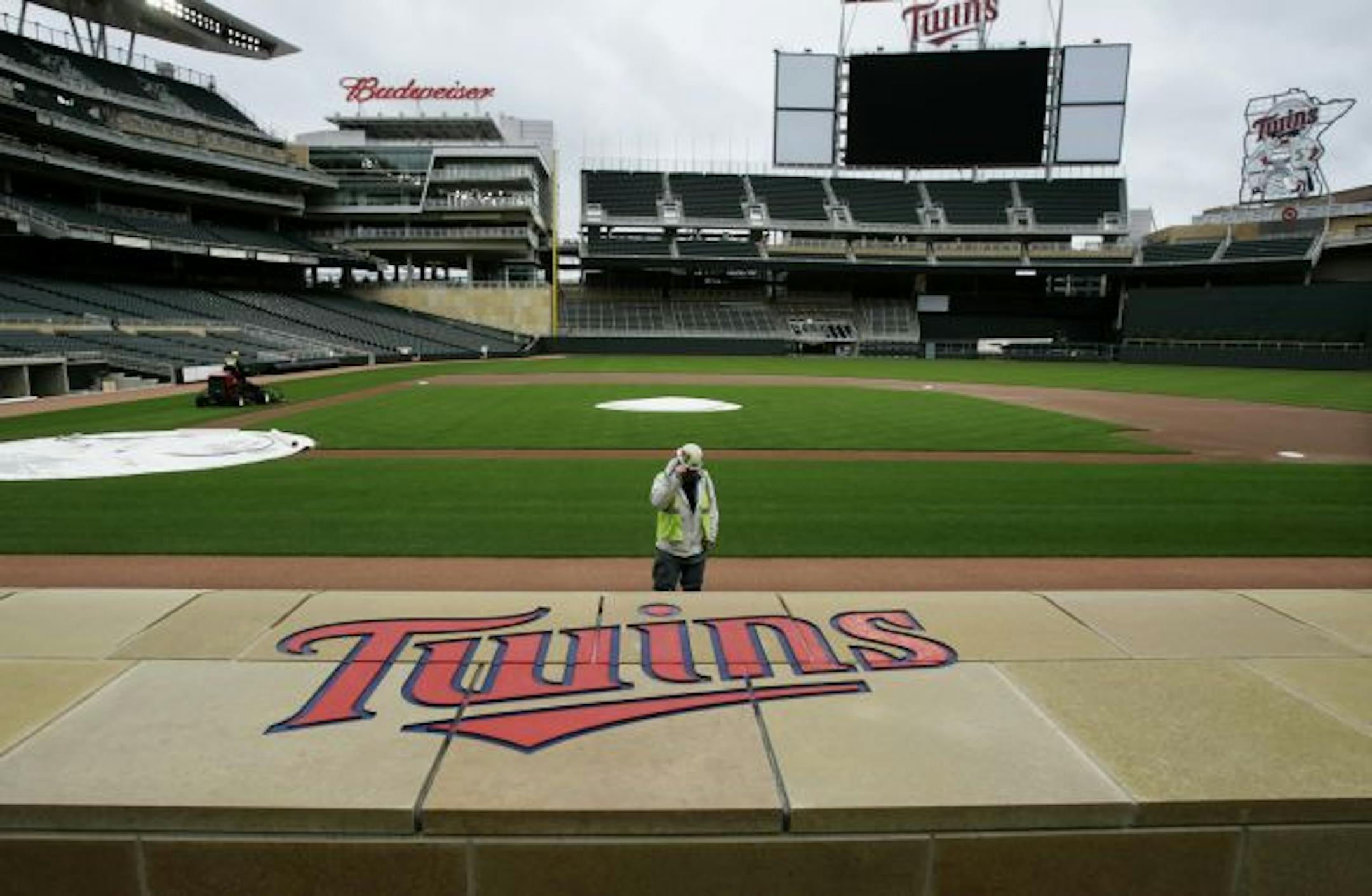
In the past couple of years, it has contributed at least $55 million more to cover niceties ranging from radiant heating in the stands to the ballpark's distinctive yellow limestone facing and the huge left field scoreboard.

The biggest crowd-pleaser will be a large center field sign featuring the classic team logo with twin ballplayers clasping hands across the river; when the Twins hit a home run, the twins will shake hands.

The Twins also paid for the $4 million Target Field Station on the ballpark's northeast corner that enables transit users to go between the Northstar commuter platform below and the light-rail line at street level. And the team joined with Target Corp., the ballpark's namesake, to build the landscaped $9 million plaza linking downtown to the new stadium.

The Ballpark Authority, which is funded by the county's sales tax revenue, has spent $5 million to extend Target Plaza to 1st Avenue N., widen sidewalks and install lights. The Minnesota Department of Transportation financed a $3.3 million skyway that will take fans from Parking Ramp A into the ballpark.

Minneapolis has spent $100,000 landscaping a traffic island with new planters and lighting, but Kenney said the city's most important job will be managing ballpark traffic. The city's 3 percent entertainment tax will apply to Twins tickets, bringing Minneapolis about $3 million a year that it doesn't get now from Twins sales at the Metrodome.

In a little more than two weeks, Northstar commuter trains will be gliding along the tracks below the ballpark, and Kenney said ballpark officials want to be as ready as possible.

"We're doing everything we can so that they can have a great opening, and they're doing everything so we can hit our deadline," he said.

Kevin Duchschere • 612-673-4455

Mosaic murals by St. Paul artist Craig David, installed along the ballpark's exterior on 5th Street, are among the features that officials hope will eventually contribute to the development of a new downtown district.
Mosaic murals by St. Paul artist Craig David, installed along the ballpark’s exterior on 5th Street, are among the features that officials hope will eventually contribute to the development of a new downtown district. (Star Tribune/The Minnesota Star Tribune)
As improvements go on outside the stadium, the Twins team has spent at least $55 million more than originally planned on ballpark amenities, including radiant heating in the stands and the giant left field scoreboard.
As improvements go on outside the stadium, the Twins team has spent at least $55 million more than originally planned on ballpark amenities, including radiant heating in the stands and the giant left field scoreboard. (Star Tribune/The Minnesota Star Tribune)
about the writer

about the writer

Kevin Duchschere

Team Leader

Kevin Duchschere, a metro team editor, has worked in the newsroom since 1986 as a general assignment reporter and has covered St. Paul City Hall, the Minnesota Legislature and Hennepin, Ramsey, Washington and Dakota counties. He was St. Paul bureau chief in 2005-07 and Suburbs team leader in 2015-20.

See Moreicon

More from No Section

See More
FILE -- A rent deposit slot at an apartment complex in Tucker, Ga., on July 21, 2020. As an eviction crisis has seemed increasingly likely this summer, everyone in the housing market has made the same plea to Washington: Send money — lots of it — that would keep renters in their homes and landlords afloat. (Melissa Golden/The New York Times) ORG XMIT: XNYT58
Melissa Golden/The New York Times

It’s too soon to tell how much the immigration crackdown is to blame.