

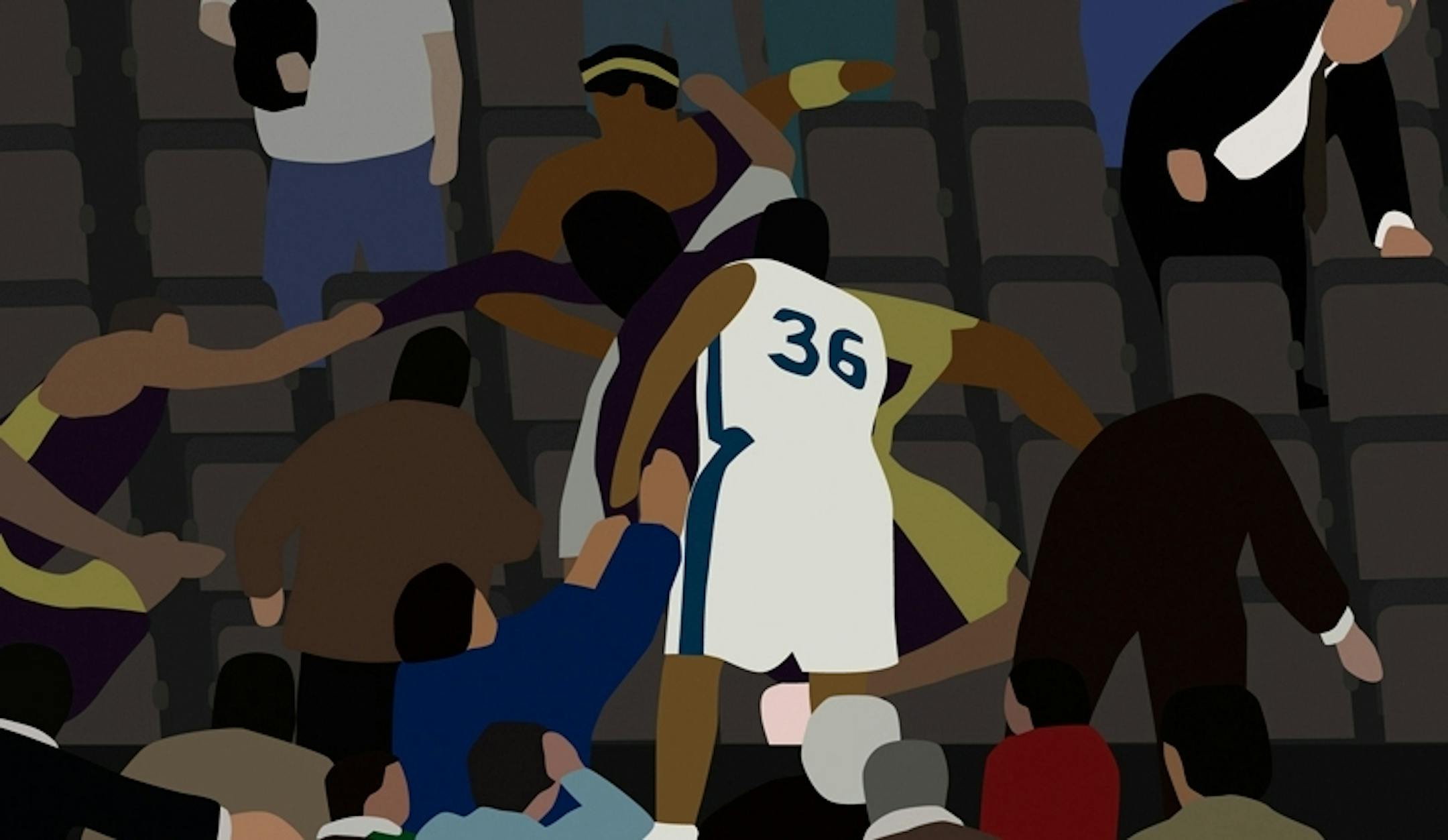
On Sunday night, just as the Oscar-nominated stars stroll the red carpet, the all-stars will hit the hard court for the NBA All-Star Game. To some, the two events may seem separated by a pop-cultural chasm between high and low artistry.
But as "The Sports Show" exhibit at the Minneapolis Institute of Arts makes vividly clear, sport is an expressive medium in its own right, as impactful as film. Accordingly, the drama and imagery of sports inspire interpretations from filmmakers and artists.
The artificial cultural isolation of sports is on display as soon as one enters the exhibit, where a Buster Keaton film, "College," plays.
The comedy is "essentially the same argument played out," said David Little, who curated "The Sports Show." "You're either an athlete or an academic. It's such a false dichotomy. ... If you're an intellect, all of the variations -- the drama, the unpredictability of sport -- are all things that a curious intellectual mind would find attractive."
Sports certainly attracted the minds of many 20th-century artists. Their names are often as iconic as the athletes they captured. Those gritty pictures of boxer Rocky Graziano? Taken by director Stanley Kubrick.
And the images of Muhammad Ali's hands, which show him as not as a loquacious showman but beat-up boxer? Taken by filmmaker Gordon Parks.
The list goes on, with noted photographer Annie Leibovitz capturing Kirby Puckett and Richard Avedon snapping then-unknown high school basketball player Lew Alcindor (later Kareem Abdul-Jabbar).
Arnold Schwarzenegger flexes for Robert Mapplethorpe, before both became better known (and more controversial). And Andy Warhol gives the pop-icon treatment to Pelé, Wayne Gretzky and Jack Nicklaus.


