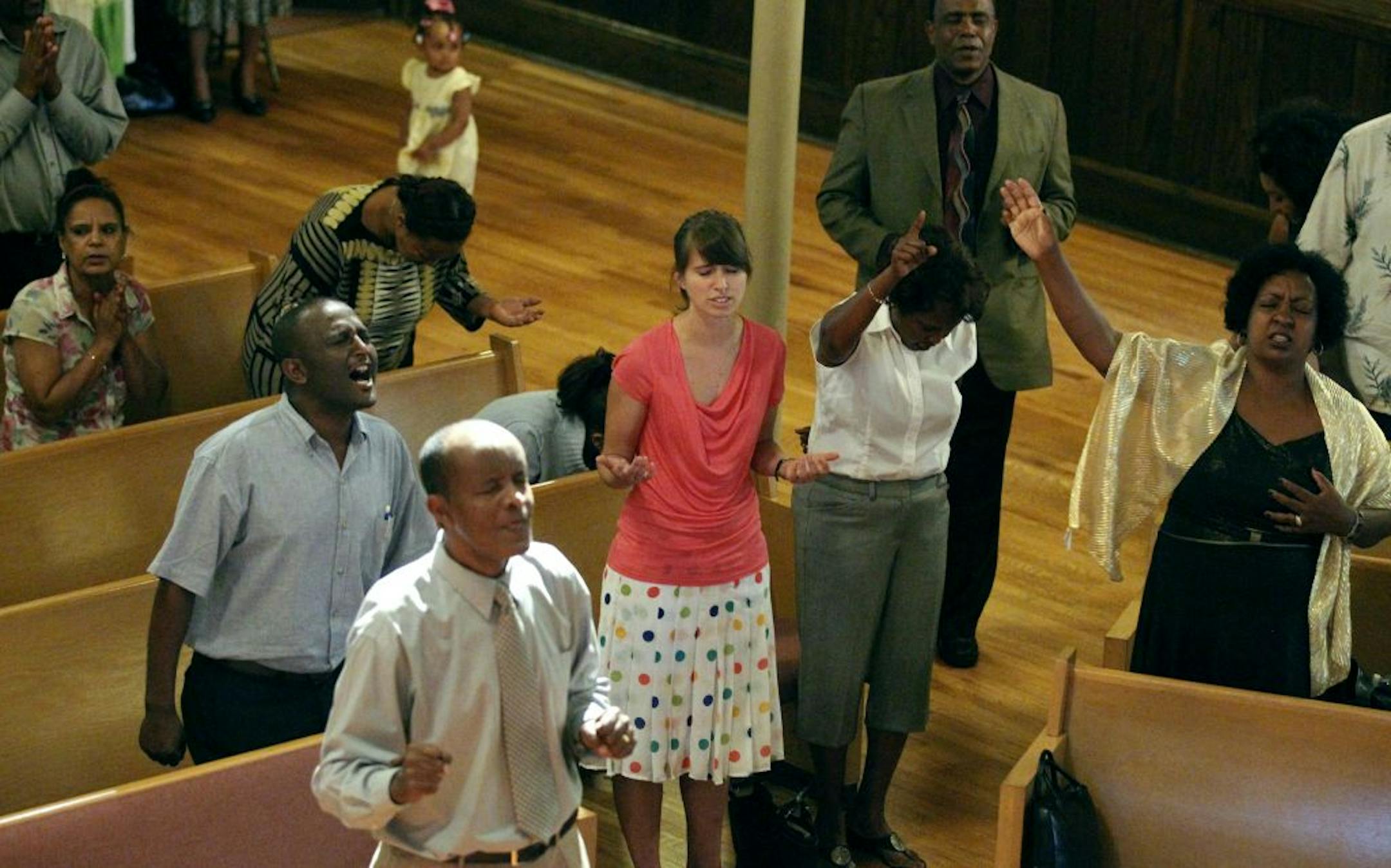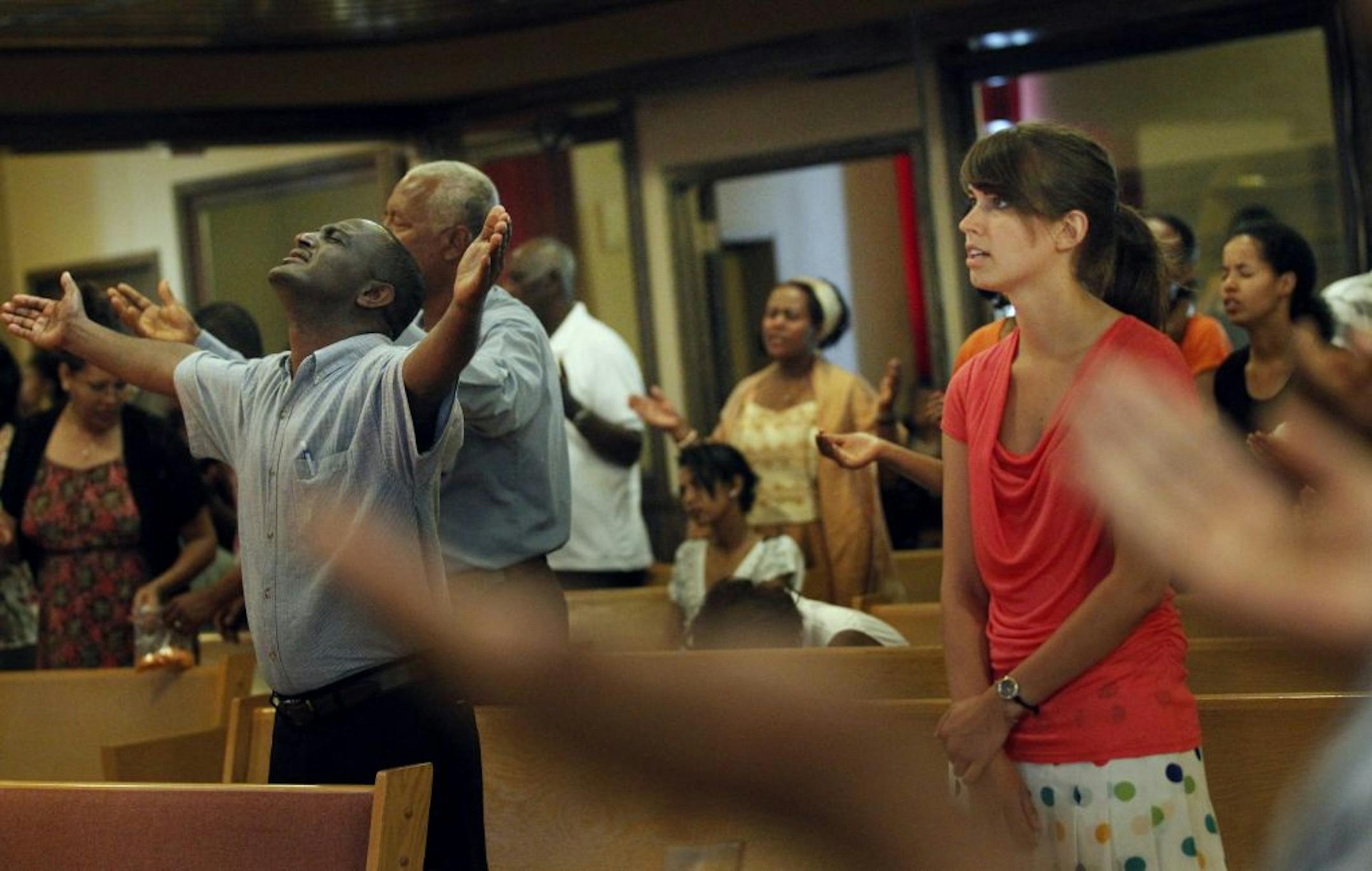
Sarah Koscielniak raises her hands in worship alongside members of an Ethiopian church congregation.
On another Sunday morning, you might find her at Alley Midway, a Lutheran Church-Missouri Synod congregation. Or maybe Central Mission church, affiliated with the Christian and Missionary Alliance denomination.
"I didn't want to necessarily tie myself to one specific denomination and church," said Koscielniak, 22, who lives in St. Paul, where she attends the three churches. "They're [denominations] important and distinctive, but in this time and age, it's less so, especially for young people who didn't grow up thinking their denomination was the absolutely correct one."
Koscielniak is part of a small but growing group of Christians nationwide known as "church hoppers." They don't attend the same church every week but worship at multiple Christian congregations, often of different denominations.
"Church hoppers" sample a variety of worship styles and programs -- going to one church because they might like the preaching or the style of music, then moving on to others for their Bible studies groups and youth programs.
Such dabbling is in stark contrast to how most Christians have traditionally worshiped, picking one church and sticking to it week to week. However, denomination loyalty is less important to churchgoers more concerned with meeting their spiritual needs.
"It's [church hopping] absolutely prevalent," said Scott Thumma, a researcher at the Hartford Institute for Religious Research in Connecticut who tracks church attendance. "It's absolutely clear that increasingly Americans commodify all their life."
While evangelical Christians tend to be particularly active church hoppers, Thumma said that mainline Protestants and Catholics do so as well.