

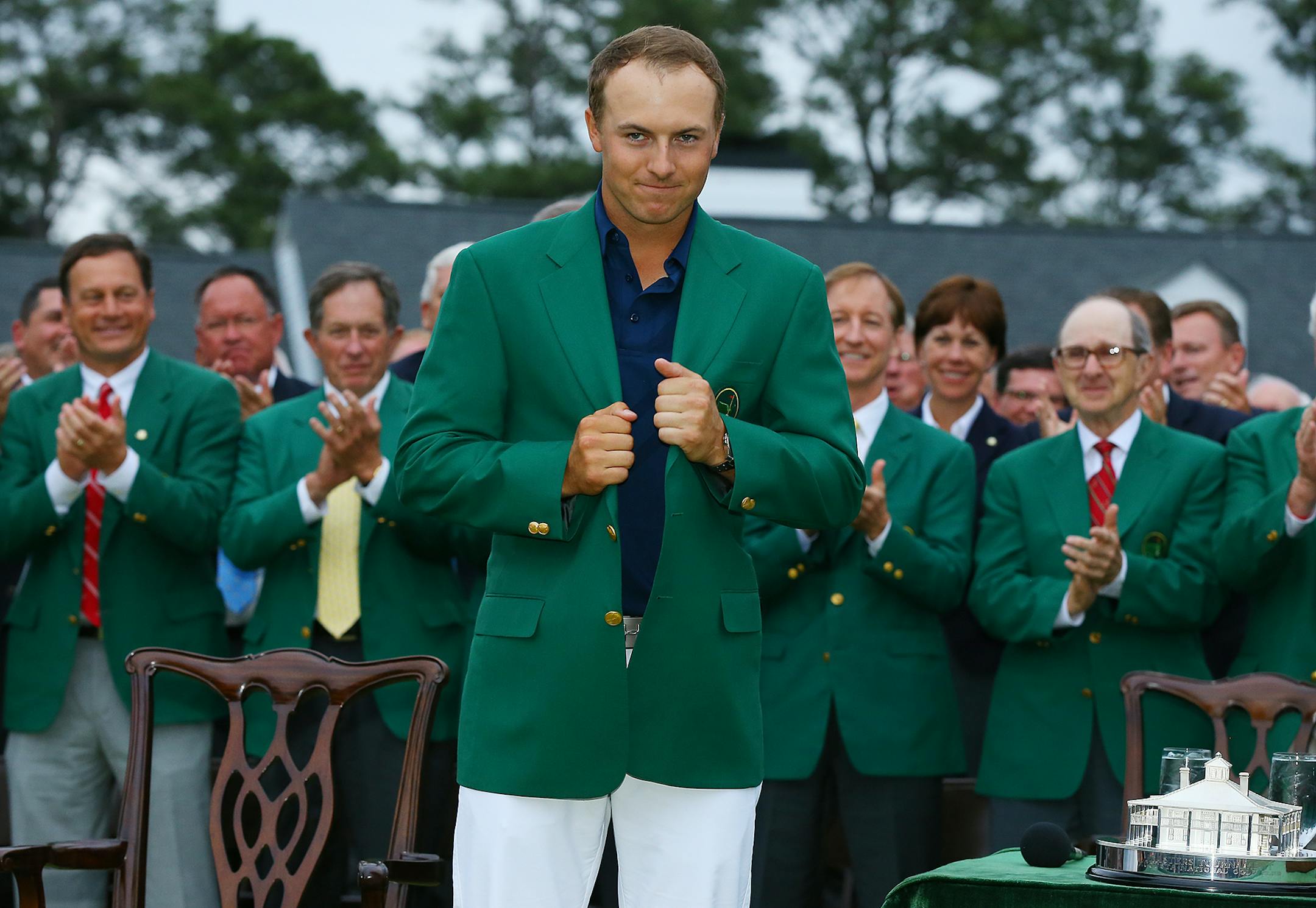
Augusta, Ga. – The public's thirst for the next big thing is so unquenchable that often the thirst persists even before the previous big thing has departed.
The music world began searching for The Next Bob Dylan while Dylan was still in his 20s, preceding another fistful of decades in which he toured and produced original music.
The golf world began searching for The Next Tiger Woods shortly after he hugged his father on the 18th green at Augusta National in 1997, and Woods remains relevant if puzzling after a sometimes-promising performance at the 2015 Masters.
Jordan Spieth's future is unknowable, but one thing is certain: He is not The Next Tiger Woods. Woods in '97 was a one-off: an ethnically diverse young golfer of almost unprecedented ability who changed the way courses were designed, the way apparel was worn, the way clubs were purchased, the way golfers attacked pins, the way the game appealed to the young.
Spieth will not emulate Woods even if he mimics his career accomplishments. Spieth hits it shorter and straighter and elicits memories of the era when most golfers came from well-off families and private schools. The primary similarity between the two is clutch putting, and Woods displayed that advantage for more than a decade, while Spieth is just beginning his career.
If Spieth proves to be great, his career could be more interesting than Woods' in one respect. Woods never found a worthy rival in his prime. If Spieth proves to be great, he could have many, with the leading candidate being another phenom, Rory McIlroy.
McIlroy, 25, needs only a Masters victory to claim the career grand slam. Spieth, 21, could move ahead of Woods' pace for major championships if he wins another in the next two years.
McIlroy will be Europe's best player on Ryder Cups for the foreseeable future. Spieth could quickly become the captain of the American team.


