

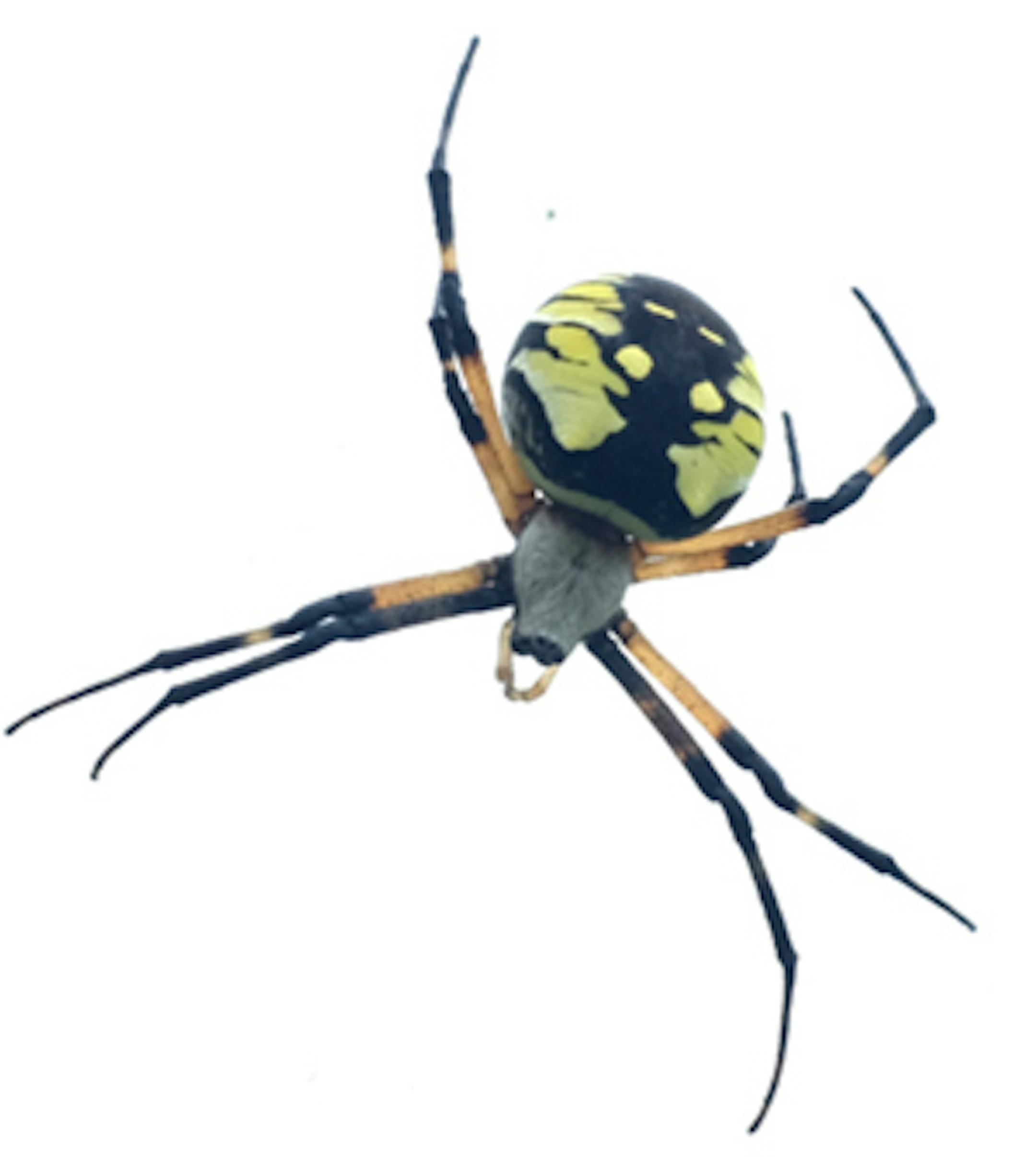
A black and yellow garden spider
Spiders and birds face some of the same problems in the world we have shaped.
You probably are unaware of spider problems. You probably don't think of spiders at all until you see one in your house. The collapsing world of insects, however, poses the same threat to spiders as to birds.
"Spiders of the World, a Natural History," a new book from Princeton University Press, gives a thorough overview of the world's spider species. They are estimated to number about 48,000, with perhaps as many yet to be identified and named.
"Spiders are among the most dominant predators in almost all of the earth's terrestrial ecosystems," according to the book's introduction.
They are estimated to consume between 400 million and 800 million tons of prey — mostly insects — each year. Hundreds of millions of tons.
Spiders, however, by their size and reclusive nature cannot easily, or perhaps at all, be tracked to determine the extent of loss. And, most spiders, all of them predators, are generalists, eating other creatures as well.
Asked about spider declines, Dr. Gustavo Hormiga, one of six authors contributing to the book, believes insect losses certainly have touched the spider world. He said in an email, "It is virtually impossible that the insect declines do not have an associated decline in spider populations."
Dr. Hormiga is the Ruth Weintraub Professor of Biology in the department of biological sciences at The George Washington University in Washington, D.C.


