CHIPPEWA FALLS, Wis. - The chairman of the Wisconsin Republican Party gave supporters a routine call last week to get out the vote and help deliver a "landslide victory" for the GOP ticket in the tight gubernatorial and U.S. Senate races.
Then Paul Farrow waited a beat and delivered the punchline: "In Wisconsin, that's one and a half percent."
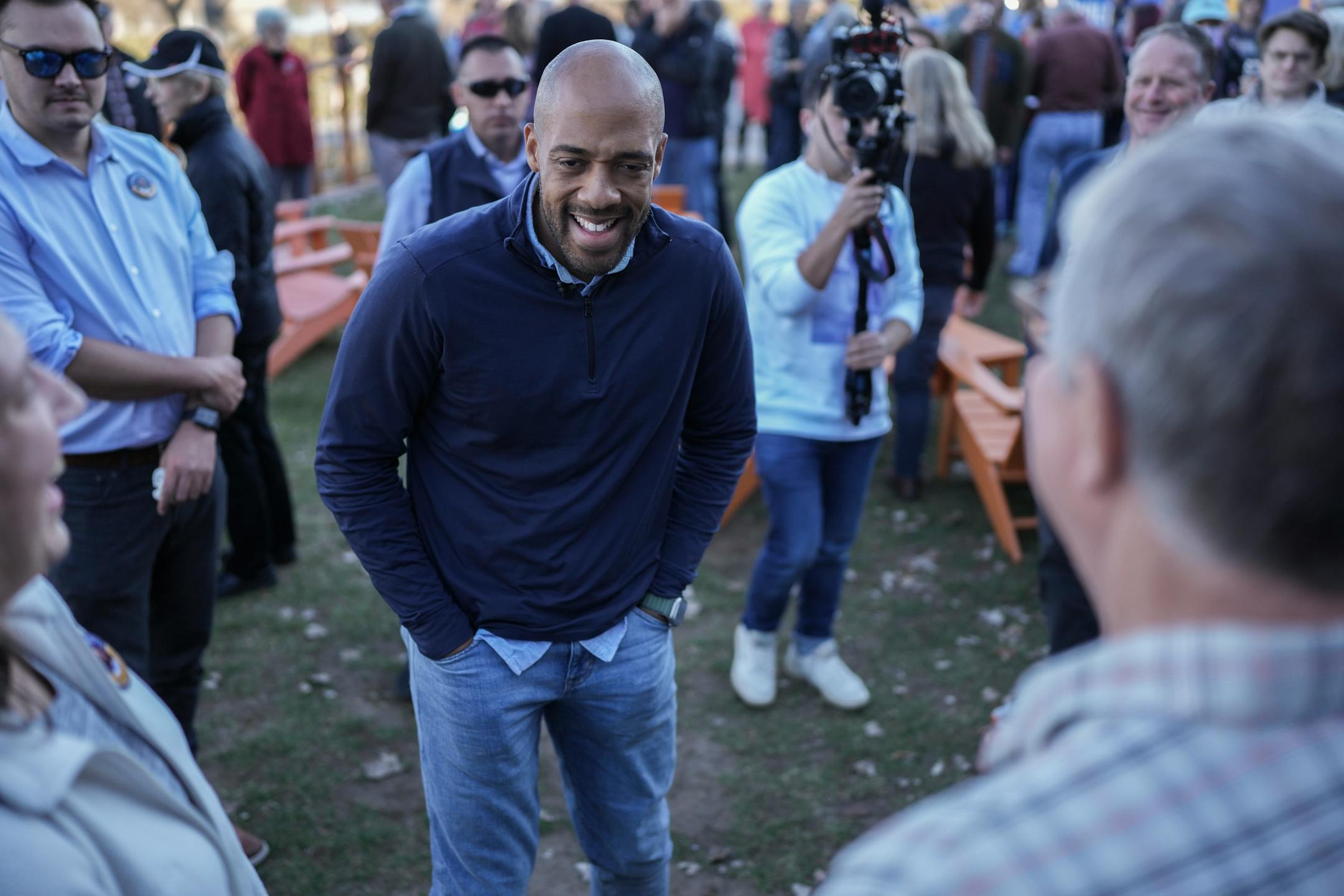
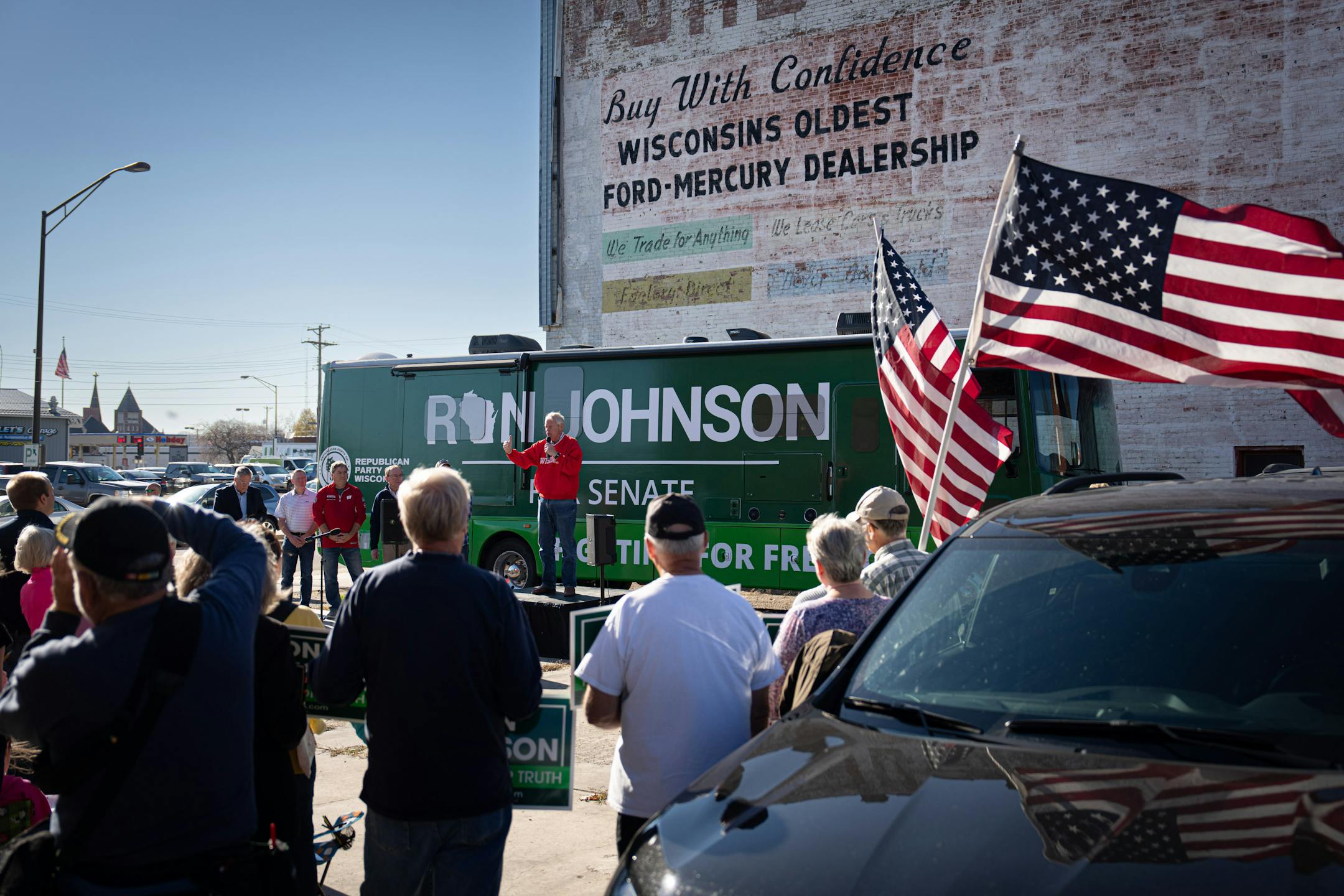
Farrow was warming up several dozen Republican supporters in a parking lot rally for U.S. Sen. Ron Johnson, who faces a challenge from Democratic Lt. Gov. Mandela Barnes in his bid for a third term. Their race couldn't be closer, and neither could the other top-tier match, between first-term Democratic governor Tony Evers and GOP challenger Tim Michels, a businessman who touts his endorsement from former President Donald Trump.
Like Minnesota, Wisconsin is almost evenly divided politically, routinely has high voter turnout and will decide Tuesday on its governor. But Minnesota's two senators aren't on the ballot this fall, and the Barnes-Johnson race is pivotal to which party controls the U.S. Senate.
The final pre-election poll from Marquette Law School last Wednesday declared both the Wisconsin governor's race and Senate race a dead heat.
Law professor and poll director Charles Franklin said the partisan divide is more entrenched in Wisconsin with fewer undecided voters, so statewide candidates are in a "game of inches."
The Wisconsin contests are vastly more expensive. The governor's race hit a record $114 million, some $20 million more than four years ago, according to the Wisconsin Democracy Campaign. AdImpact, which tracks spending, estimates Wisconsin's U.S. Senate race will approach $160 million.
These numbers dwarf the estimated $30 million spent through late October on the Minnesota contest between DFL Gov. Tim Walz and GOP challenger Scott Jensen, according to finance reports.