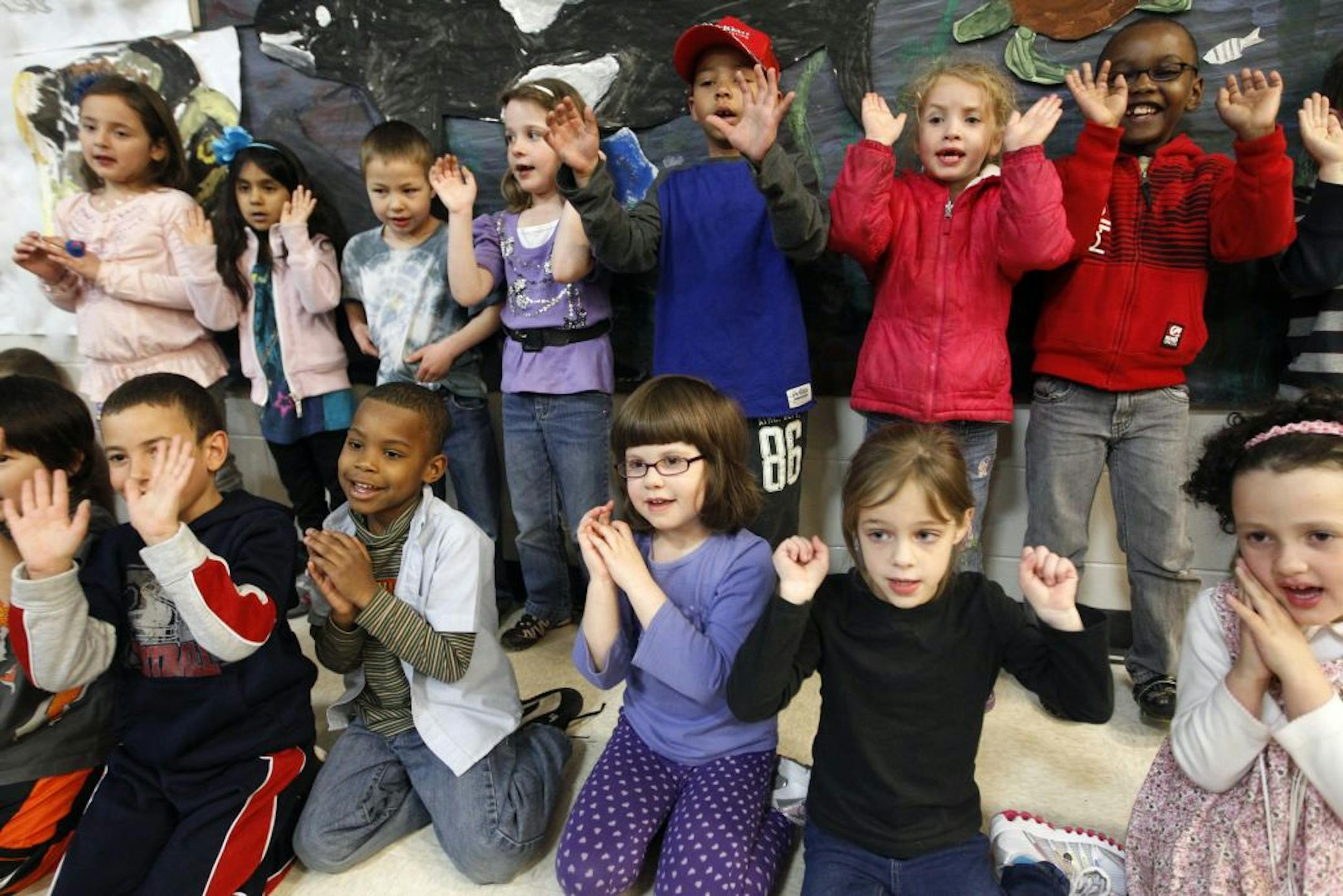
At Harambee Elementary in Maplewood, cultural diversity soaks into almost every lesson, activity and classroom discussion.
A "community cultures specialist" tours classes to make sure students are working across racial lines and learning about multiple world view perspectives. Kindergartners use crayons in numerous shades of skintone to draw accurate pictures of themselves. "We don't shy away from having conversations about race and the way we treat each other," said Harambee Principal Kristine Black.
But Harambee and the metro area's other voluntary integration programs are under intensifying pressure to show more than racial harmony among their 13,000 students. At a time when student achievement is a top priority, two out of the metro area's three integration districts have failed to make the academic progress required under federal law. Some districts have pulled out.
Their future darkened even more Wednesday when the Legislature passed a K-12 appropriation that sliced more than a third of the funding for the integration districts.
Republican leaders argue that state funding for integration will be $64 million this year alone, but has yielded too few solid results and would instead direct money toward efforts to raise achievement and reward districts that show success teaching kids to read.
Black hopes that won't happen. "To just eliminate the funding feels shortsighted," said Black. "This is long-term work that we're doing. It's a really complex problem and it's going to need comprehensive solutions."
13,000 students, $25 million
Minnesota's special integration schools were born in 1997, after the state overhauled its desegregation program.