

Forget formalities. House Speaker Nancy Pelosi is the GOAT.
The 55th individual and the first woman to serve as speaker of the House, second in line to the presidency, Pelosi might have an equal among the other speakers in American history — perhaps Sam Rayburn in the mid-20th century or Henry Clay in the 19th — but none were better. In my book, she is the greatest of all time.
As a former congressional reporter, I can speak personally to the records of eight of those 55 speakers, four Democrats and four Republicans, back to the estimable Massachusetts Rep. Thomas P. "Tip" O'Neill in the Reagan era. I'm hardly alone, however, in counting Pelosi as the best of that bunch. Two Democratic presidents credit her with their legislative successes; two Republican presidents were repeatedly foiled by her.
Even Republicans have marveled at Pelosi's prowess in leading — yes, leading — a diverse and restive Democratic caucus in her eight years as speaker and 12 as minority leader, achieving landmark legislation covering health care, civil and human rights, environmental advances, economic opportunity and so much more. Republicans demonized her for years, raising untold millions and stoking the hatred that played out in the life-threatening assault last month on her husband of nearly 60 years, Paul Pelosi. Yet only Republicans blinded by partisan hate won't concede how effective Pelosi has been.
Most Republicans privately envy Democrats' fortune in having a leader for whom the word doesn't have to be in quotation marks. Over nearly 30 years, their party has worn through one flawed speaker after another, each weakened by the caucus's mutinous radicals. Two had to resign; two retired earlier than expected. Few (does anyone?) expect that Minority "Leader" Kevin McCarthy, the California congressman in line to be speaker when Republicans take power in January, will escape that troublesome experience.
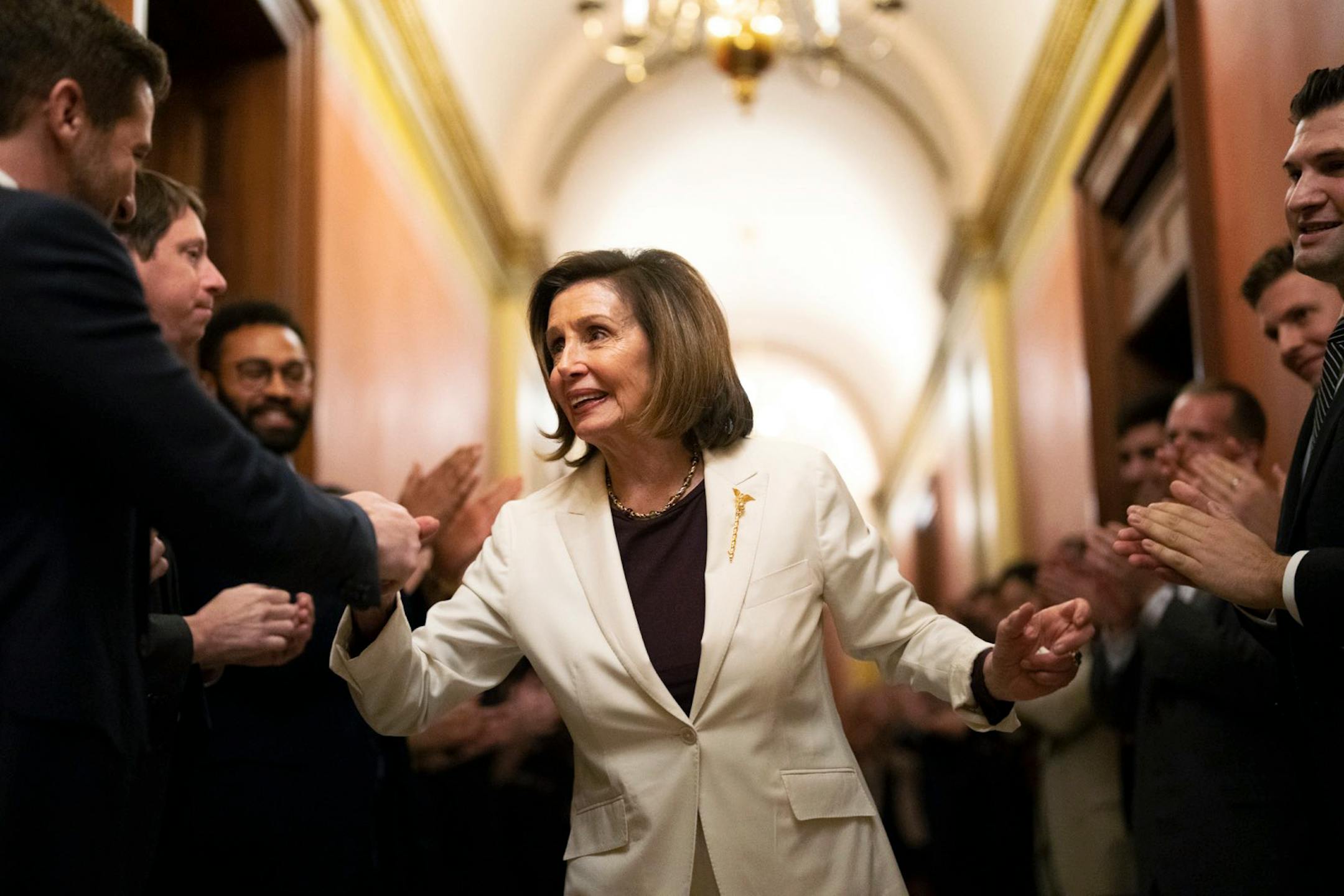
By contrast, the affection and respect among Democrats for Pelosi was apparent Thursday as she stood in the well of the chamber — wearing her suffragette white suit and the golden brooch that is a miniature of the speaker's ceremonial mace — and announced that, for the first time in 20 years, she would not ask for their votes to be the Democratic leader. Some members dabbed at their eyes. Scores lined up afterward for hugs and fond words, their faces a testament to how diverse the House Democratic Caucus has become in Pelosi's time.
I did not foresee Pelosi's ascendance when she arrived in the House in 1987. Her reputation as an effective former chair of the California Democratic Party and a prodigious party fundraiser preceded her; then she became a masterful legislator as well. Even so, I privately despaired that Pelosi or any other of the relatively few Democratic women in the House in the late '80s and through the '90s would coalesce around one of their own. That was what was required to push a woman onto the all-male leadership ladder.
It finally happened in 2001, and once Pelosi got on a lower rung of that ladder, her climb was swift: from House Democratic minority whip to minority leader in 2003, and then, after Democrats won majorities of the House and Senate in 2006, to her historic election as speaker in January 2007.


