
SouthWest plans more parking for commuters

Chanhassen and Chaska will get hundreds of new spaces at a series of park-and-ride locations.

March 19, 2008 at 3:54AM
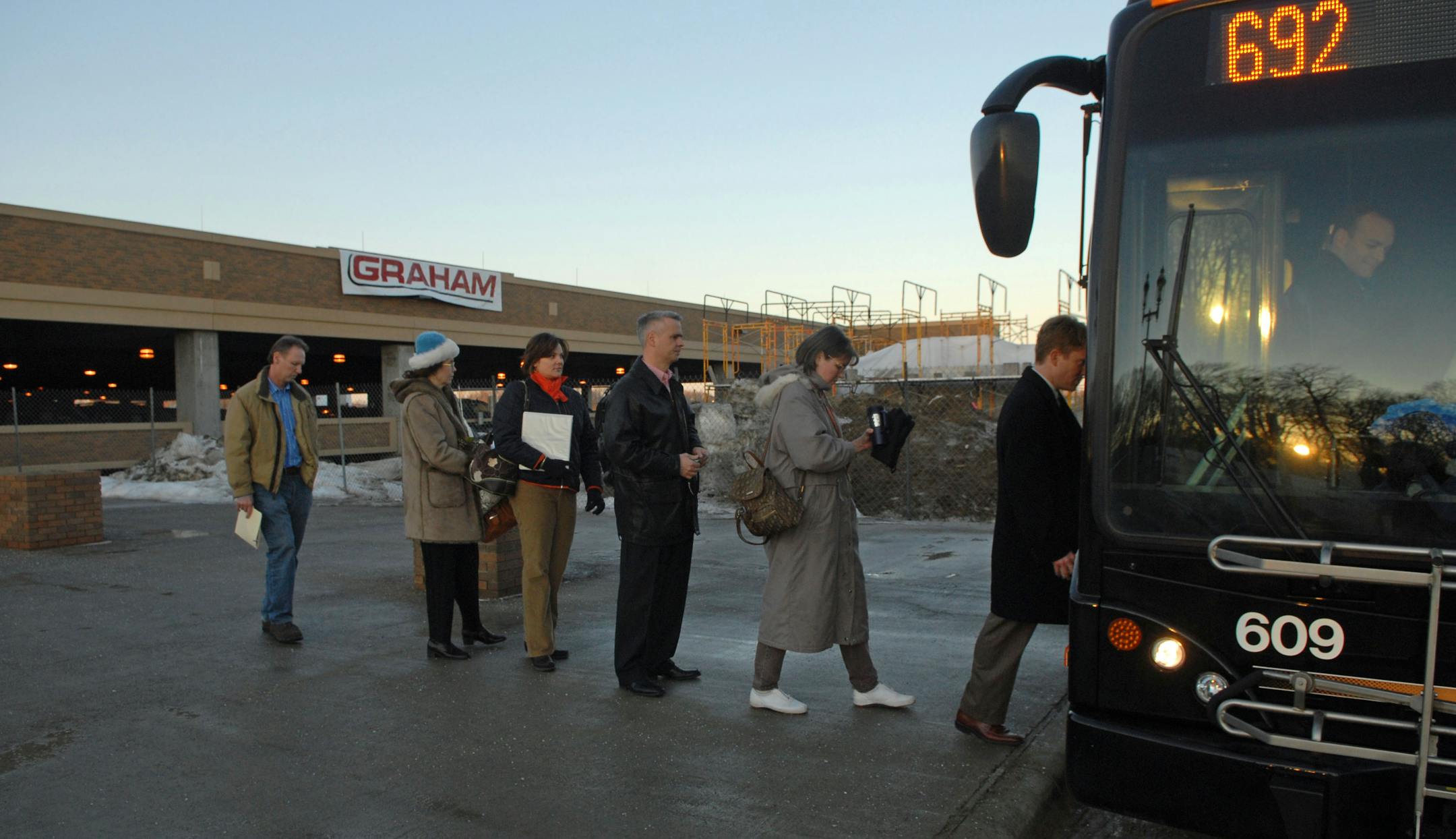
The Southwest Village station at the new Hwy. 312 and County Road 10 will get 400 new spaces.
The Southwest Village station at the new Hwy. 312 and County Road 10 will get 400 new spaces. (Star Tribune/The Minnesota Star Tribune)

Stretching to serve 50 percent more riders by 2015, SouthWest Transit is expanding westward, building new stations and park-and-ride parking for Chanhassen and Chaska.

Launched in 1986 by Eden Prairie, Chanhassen and Chaska, SouthWest Transit now provides more than a million express bus rides a year from the three cities to downtown Minneapolis and the University of Minnesota.

Attracting riders with coach-style buses, Southwest says it now carries 20 percent of Eden Prairie, Chaska and Chanhassen commuter trips.

To keep up with transit demand created by higher gas prices and a growing population, the agency will add 20 new buses by 2012.

Expansion plans also call for opening a new SouthWest Village station by August at the new Hwy. 312 and Hwy. 101 in Chanhassen. The site already has parking and bus service, and a 600-space ramp will be finished by June.

In 2009, construction will begin on a second Chanhassen station with a 500-stall ramp scheduled to open in early 2010 next to the Chanhassen Dinner Theatres on Market Street. Between the two locations, Chanhassen park-and-ride spaces will increase from about 200 to about 1,100 in the next two years.

Chaska riders will get a new 250-space lot this summer at a park-and-ride stop at Hwy. 312 and Hwy. 41.

Construction of another 400 spaces in Chaska is planned for 2012 but may be advanced to 2009 to 2010, at the new Hwy. 312 and County Road 10.

Like the Eden Prairie Transit Station, which is surrounded by restaurants and nearby housing, the SouthWest Village station will have 35 townhouses and about 25,000 square feet of commercial development nearby, including a coffee shop, restaurants and a dry cleaner. The sale of land for the homes and the leases paid by the commercial development will help pay for the $6 million station, said Len Simich, CEO of SouthWest Transit.

Chanhassen officials say they are eager for the expansion. A 120-space park-and-ride lot downtown has been full for seven years, said City Manager Todd Gerhardt. "Anything we can do to provide alternative transportation to our residents is a goal of ours," Gerhardt said.

Chanhassen commuter Matt Muenchow said he has already felt the benefit of the expansion because SouthWest has added routes with direct service to Chanhassen. That means his commute is faster and there's room to sit on the buses he takes.

Muenchow has been commuting by bus since May of last year. His motivation is "all financial," he said.

He pays $54 a month for a bus pass sponsored by his employer. If he drove, the cheapest monthly parking downtown would be $90 to $100, and he would have to pay for gas and fight traffic.

Getting commuters on buses farther west may relieve the parking crunch at the Eden Prairie station, where all 940 parking spaces in the five-level ramp are often full. "The earlier we can get them off the highway, the better for all of us," Simich said.

As the physical expansion unfolds, SouthWest worries about whether operating revenues will keep up.

Like other suburban transit services, SouthWest gets most of its operating cash from fares and from a cut of the revenues raised by the state sales tax on motor vehicles. (That is not to be confused with the quarter-cent sales tax that metro-area counties may impose to pay for new rail lines and busways.)

The economic downturn has depressed car and truck sales, and the statewide revenue from the motor vehicle sales tax has dropped dramatically: from $614 million in 2002 to less than $445 million forecast for 2009.

The figures have SouthWest's attention.

"We will have the vehicles and the stalls, and now we will see if we can have the operating funds to run all this stuff," Simich said.

If necessary, the agency could raise fares, cut night and weekend service, and use capital reserves to carry out the expansion, Simich said.

Laurie Blake • 612-673-1711

about the writer

about the writer

LAURIE BLAKE, Star Tribune