

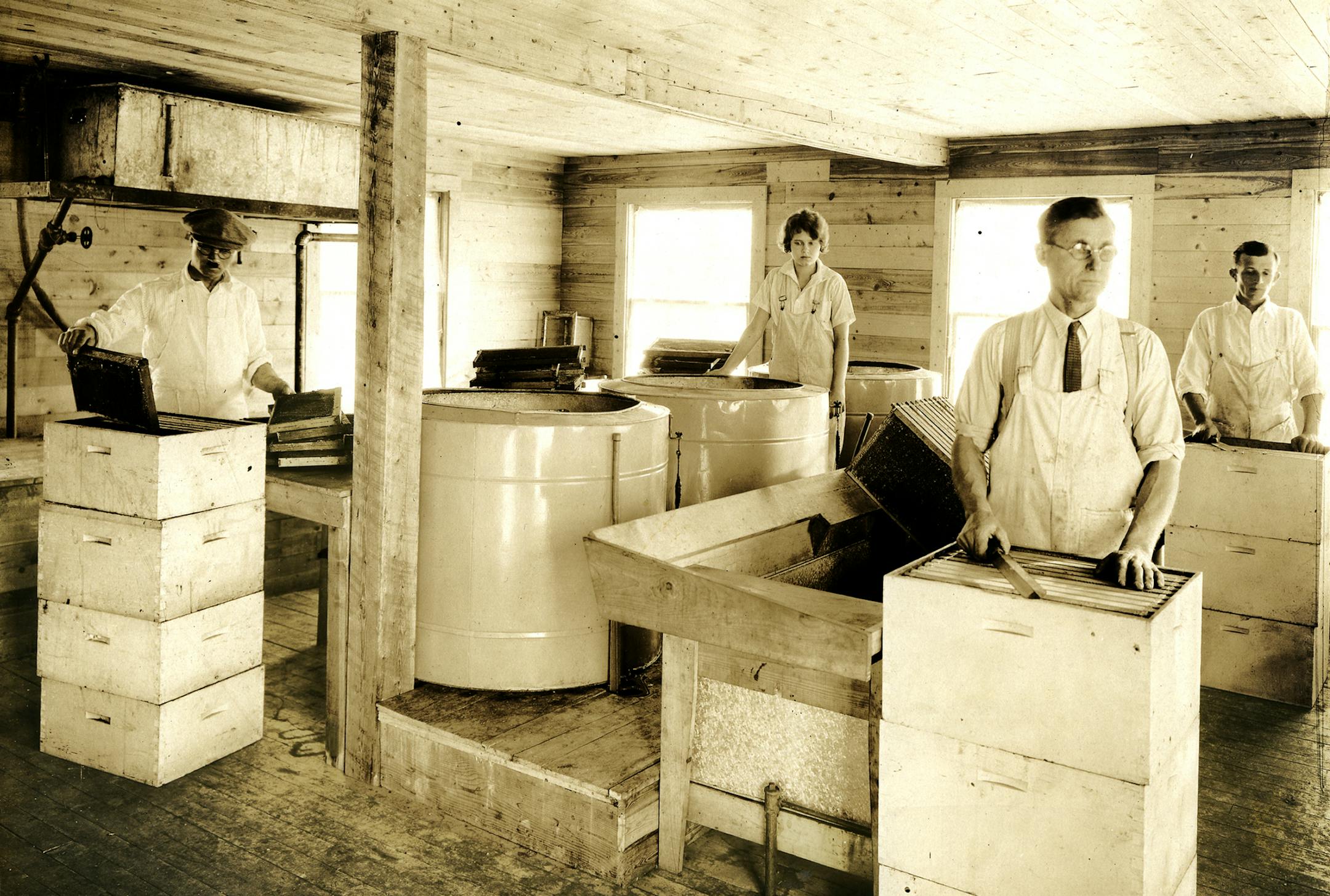
There are more than 7,000 old Minnesota homes, buildings and districts perched on the National Register of Historic Places. Now, for the first time in the state, a bee operation has joined the ballyhooed list.
The Hofmann Apiaries, a four-generation cornerstone of the state's beekeeping industry, stopped producing honey in 1985. But all the structures on the old family farm are intact near Lake Elysian and the southern Minnesota town of Janesville. It becomes only the second beekeeping property in the country to make the national register, according to preservation experts.
"If you stand in the honey house, which is technically a converted hog barn, you can feel the history in your bones," said Joan Mooney, a Waseca County Historical Society co-director who has been writing grants and spearheading research for nearly five years. "It's a rich, American story that speaks to a generation of innovative immigrant farmers in Minnesota."
Its preservation comes at a time when the nation's honeybees are dying off at an alarming rate. Based on the historic significance of the apiary and the farm's relatively pristine condition, the state review board recommended by a 13-0 vote that the property be listed on the national register.
Plans call for the apiary to eventually extract honey again, which could help fulfill an educational role for the old farm, according to Larry Hofmann, a Minneapolis artist whose grandfather first hived a swarm of bees there around 1902. He hopes to restore the honey house and wax shed first but wants to open the place up to school field trips or other uses one day.
"When my parents died, the place fell on my shoulders," said Hofmann, 72, who grew up on the farm and still owns 45 of the original 100 acres. "It's imbued with a sense history of the people that built it and struggled there."
Beekeeping dates back thousands of years. Archaeologists have found hives in Israel dating to the ninth century B.C. But the Hofmann saga starts in 1871 when 25-year-old Valentine Hofmann emigrated from Moravia — today part of the Czech Republic.
Valentine and Rosalia Frodl, his Moravian fiancee, were the first couple married at the newly built St. Jarleth Catholic Church in Waseca County in 1872.


