

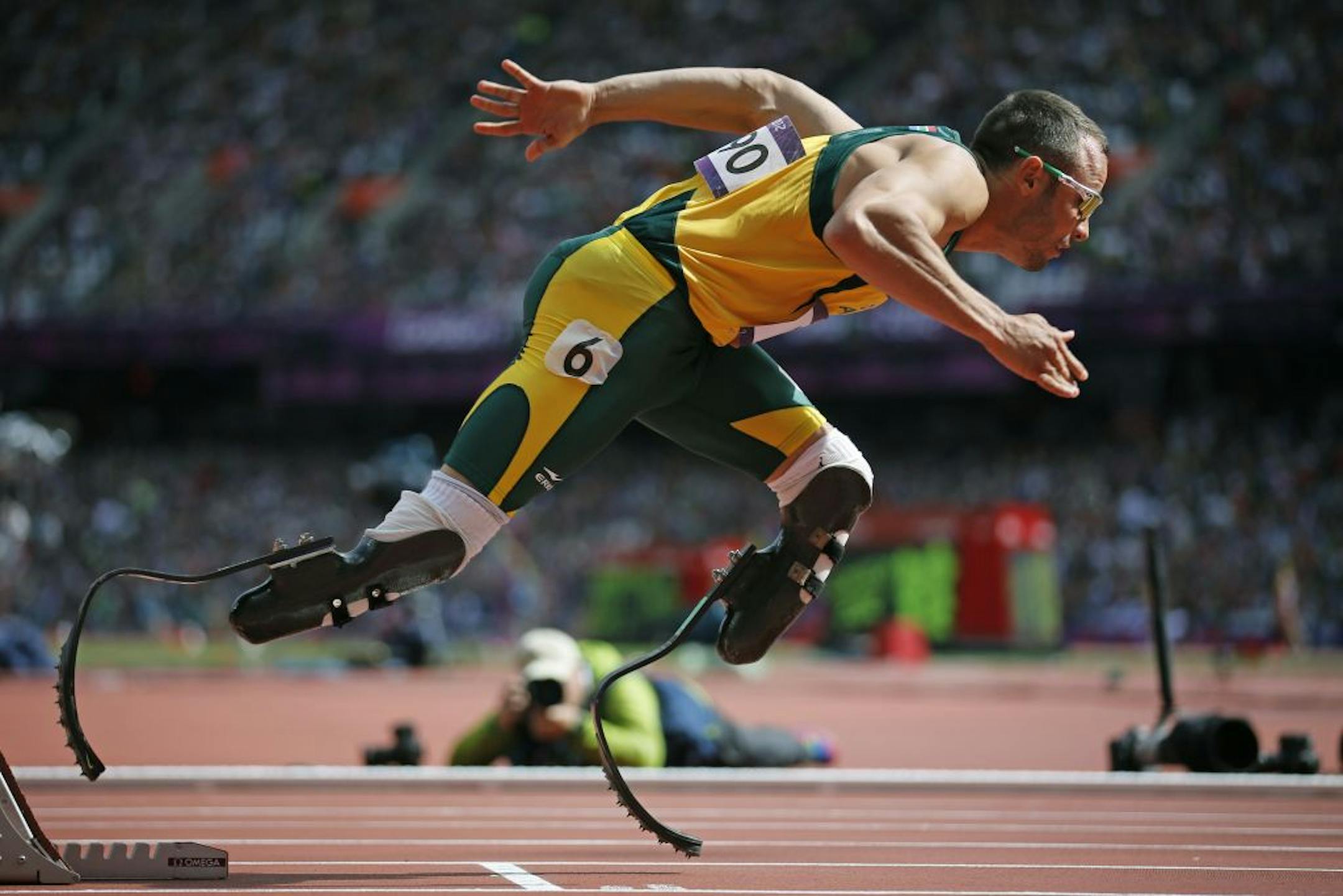
LONDON - He bent at the starting line, and for a moment you could not say for sure where the blocks ended and the man began. Oscar Pistorius sprang forward on the carbon-fiber blades that have made his running career possible and provocative, and cheers from the Olympic Stadium crowd followed him like a slow-rolling wave.
Pistorius, the South American sprinter known as the Blade Runner, was warming up for the first heat of the 400 meters. He was about to become the first double amputee to compete in the Olympics. The immense crowd rained down affection upon him, one fan even shouting, "You sexy beauty!"
In cruising to second place in the heat, qualifying for Sunday's semifinals, Pistorius became an inspiration and inspired debate over his right to race in the Games.
Never before has an Olympic official excused an athlete's tardiness after a race by saying, "He's changing his legs."
"My mother always said a loser isn't the person who gets involved and comes in last," Pistorius said. "It's the person who doesn't get involved in the first place."
Born without fibulae, Pistorius had both legs amputated below the knee before turning 1. After injuring his knee playing rugby, he turned to track. That a double amputee could qualify for the Olympics is heartwarming and admirable. It is also not as simple a story as so many would like to make it.
You can be a hero and a questionable precedent, all in one. Pistorius has the ability to make us surge to our feet, and scratch our heads.
You can celebrate the man's perseverance and bravery and still question his right to race. Michael Johnson, the world record holder in the 400 meters and a friend, says Pistorius possesses an unfair advantage. Some scientists and track experts agree.


