

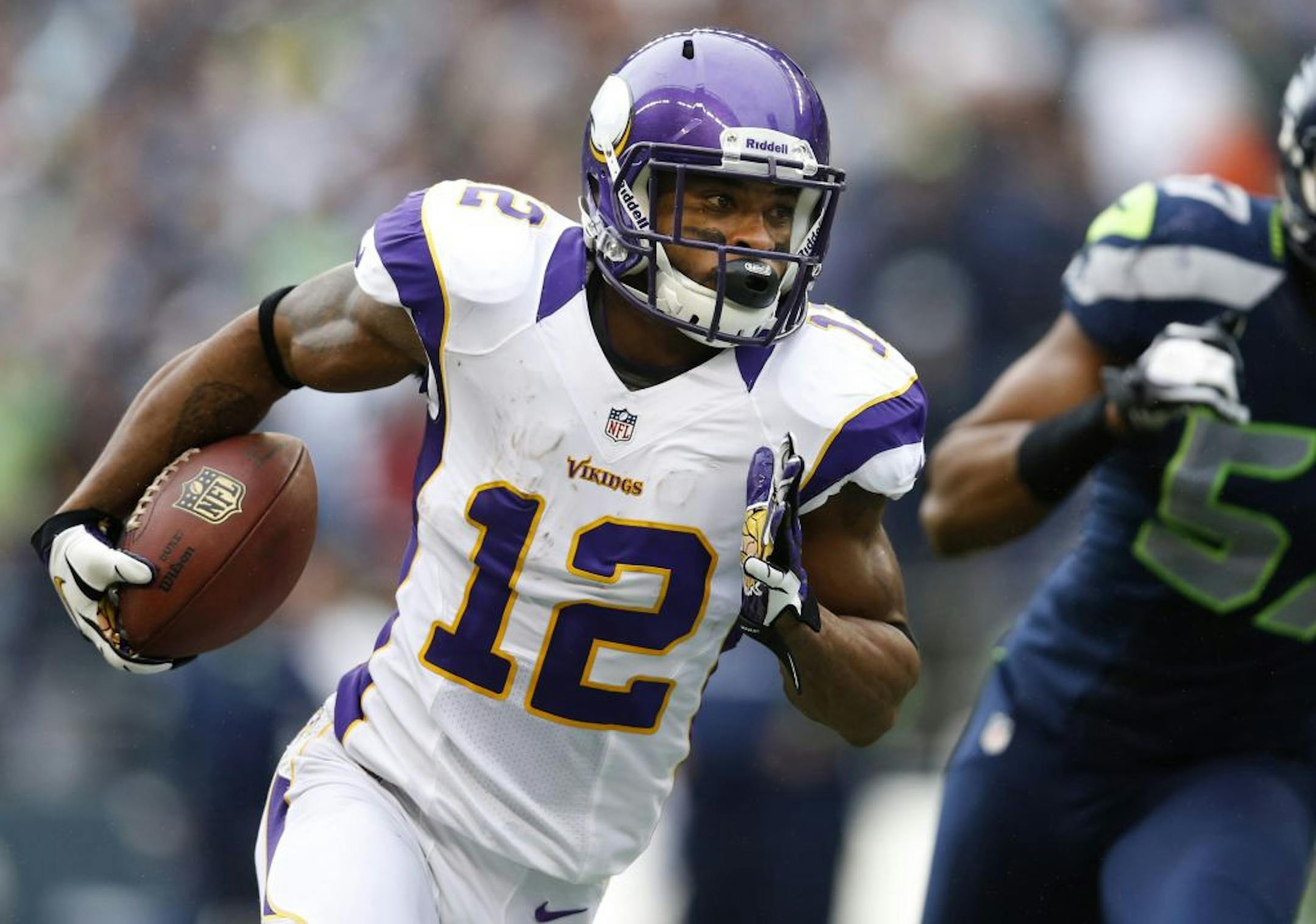
He was born in the East, in a town not known for wealth. In high school he developed a reputation as a spectacular athlete who could not stay out of trouble.
He was lean yet remarkably strong. He excelled at basketball but recognized that his speed and agility would serve him best in football. He signed to play college football for an elite football program in Florida, and when he slipped toward the bottom of the first round in the NFL draft, the Vikings pounced, hoping his talent would overshadow his history of defiant behavior.
He played in an NFC Championship Game as a rookie, coming within one forehead-smacking play of making it to the Super Bowl. Later in his career, he would pout and rant on the sideline, and express his lack of respect for Brad Childress.
When the Vikings regressed, he would become frustrated, and his extraordinary play and emotional outbursts would leave the franchise with the most difficult kind of personnel decision:
Do you invest heavily in a star player who might not be emotionally or physically built to last?
Randy Moss' personality caused him to slip to the 21st slot in the 1998 draft. Percy Harvin's past caused him to slip to the 22nd slot in the 2009 draft. Both became SODs. Not steals of the draft. Steals of the decade.
Moss would become perhaps the best deep receiver in NFL history. Harvin would become a unique hybrid who excelled as a slot receiver, occasional running back and kick returner.
They were hardly identical. Moss would rely on speed and skill while avoiding contact. Harvin would display a football version of bravery, pinballing into defenders.


