
Something to be glad about in politics?

A little optimism might help, especially in the area of elections.

October 17, 2017 at 11:00PM
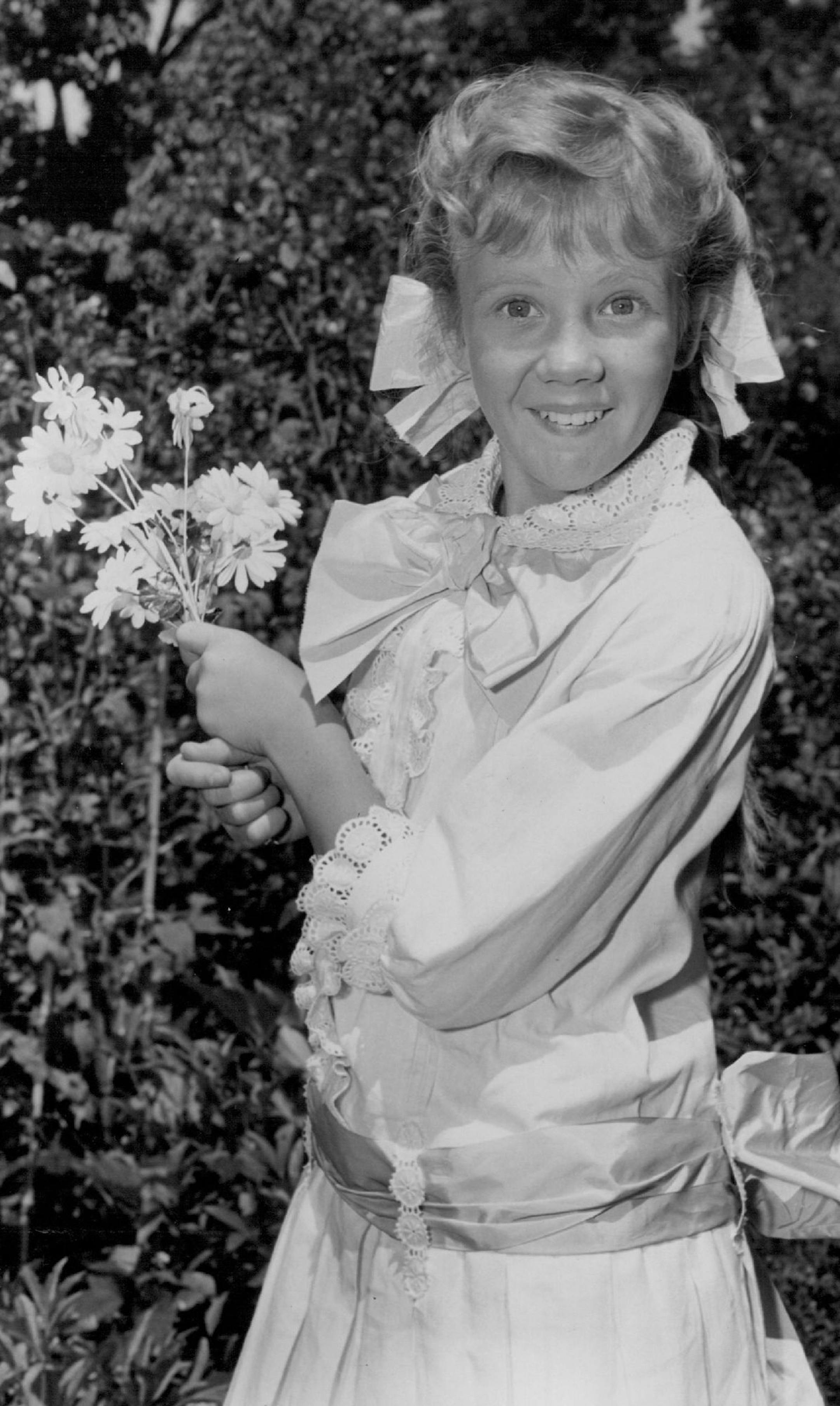
February 23, 1987 Hayley Mills, 13-year-old daughter of English actor, John E Mills, as "Pollyanna" in Walt Disney's high-budget, Technicolor production of the famed Eleanor H. Porter perennial best-seller. E E "Pollyanna" is young Miss Mills first American motion a 04picture production, and the second film she has ever made. Her w -Fri first appearance in a motion picture is in the currently running British production, "Tiger Bay," for which she won the Silver Award at this year's Berlin Film F
Hayley Mills starred as Pollyanna in the 1960 movie of that name. The Disney film is based on a book that included something called the “Glad Game” — finding something to be grateful for no matter how bleak things might look. (The Minnesota Star Tribune)

People I know who care about politics and policy are in despair. The thought of tens of millions of Americans losing health insurance, the reality of hundreds of thousands of contributing immigrants being tossed out of the country, and the growing possibility of nuclear war, to name just a few apparently real possibilities — all are creating an understandable angst.

That collective angst, in turn, is generating a range of individual coping mechanisms, from doubling down on activism to simply ignoring the problem.

We desperately need a Pollyanna. I'm volunteering for the job.

Pollyanna was a character in a successful and influential 1913 children's book. Pollyanna made her bleak surroundings better by teaching everyone around her the "Glad Game," finding something to be grateful for no matter how negative the situation looked. "Pollyanna" eventually became a commonly used word, describing someone always looking for the positive.

So what can I find in the current political and policy miasma to be grateful for and glad about?

I'm grateful that there's been a series of small developments that hopefully point to the acceleration of a previously tiny movement to rethink and reform the way we run elections and select candidates.

Here's how the election system works now: When possible, district boundaries are drawn so that one side will nearly always win. As a result, the primary elections that attract only the zealous really decide the election. Candidates willing to compromise to solve problems are being swept away in favor of intransigent purists. Money that funds campaigns comes from rich outsider extremists. Candidates lose control of the messages. Campaigns become public battering, using misinformation as the clubs. The result: governments that can't govern and a politics of fear and hate.

What's to be glad about? A growing number of hopeful signs that we're beginning to recognize the game has to change. Some examples:

• Minnesota has ranked-choice voting (RCV) in its two biggest cities with a third on the way. RCV favors candidates who are not extremists — coalition-builders, not pugilists. Candidates in RCV elections need to stay positive: Going negative tends to hurt the person who does it. Five states have some RCV systems in operation; an additional four states have authorized trying it. Growing RCV isn't easy, because most political operatives don't like it. Their success comes from teaching candidates in one-to-one general elections how to trash the other candidate. I'm glad we're trying, in Minnesota, to make elections better.

• Justice Anthony Kennedy on the U.S. Supreme Court has (maybe) signaled he'll help create a majority willing to admit what's plainly obvious: Some of the redistricting plans enacted after the 2010 census clearly violate the one-person/one-vote principle. In Wisconsin, whose redistricting the court is examining, people split near 50-50 on their votes for the two major parties, but one party wins close to two-thirds of the legislative seats. That's not an accident. I'm glad there's some hope on redistricting.

• Redistricting is based on the decennial census, something mandated in the Constitution. Census data is hugely important, to business, to scholars, to our political system. But some in Congress seem to want the 2020 census to fail. They're underfunding it, hoping, it's been speculated, to count as few people of color as possible. I'm glad that a number of foundations and activists are beginning to sound the alarm about the 2020 census. If we lose an accurate, usable census, we lose a really important part of our democracy.

• Trolls, ideologues and the Russian government hijacked the dialogue surrounding the 2016 election. Happily, they weren't able to hijack the results. That's because some states, with Minnesota leading the way, insist on having and keeping paper ballots after each election. Totally electronic voting is an invitation to be hacked. I'm grateful for Minnesota election officials who have insisted that a paper ballot is crucial.

This list of things to be glad about will strike some who care about policy and politics as pretty thin gruel. But, as Pollyanna herself said, "there is something about everything that you can be glad about, if you keep hunting long enough to find it."

Let's keep hunting.

Wy Spano is a longtime political analyst, lobbyist and educator in Minnesota.

about the writer

about the writer

Wy Spano

More from Commentaries

See More
card image
Carlos Gonzalez/The Minnesota Star Tribune

Dollar amounts were discussed early, and the problems only grew from there.

card image
card image