

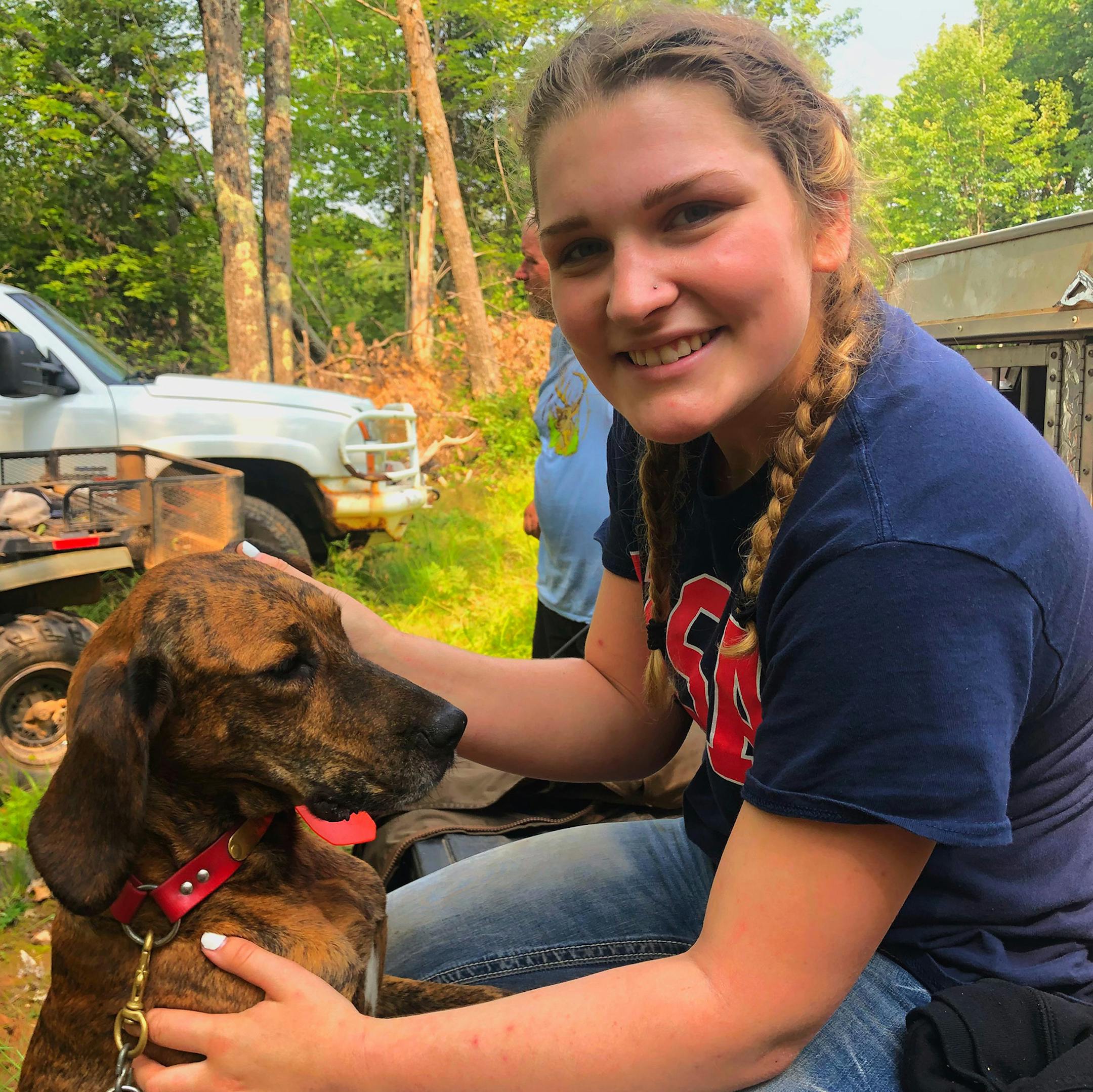
Rachel Germain remembers distinctly when wolves became a problem for her family. It was winter 2012-2013, she said, "and it's just gotten worse since then."
A college student, Rachel, 19, of Somerset, Wis., first accompanied her parents on deer hunts when she was a young girl. Her grandpa had built a cabin near Moose Junction, Wis., years ago, and it was there the family gathered in November to hunt whitetails.
"But only mature bucks," she said. "We tried to kill only older deer."
But Rachel no longer attends the family deer hunt. "It's not worth it," she said. "My dad still sits in a stand all day, sunup to sundown. But he never sees anything. The wolves have killed all the deer."
Wolves have taken more than deer hunting from Rachel. One of her favorite hounds, a Plott named Showtime, was killed by wolves this fall while she, her dad and her sister were bear hunting — the second dog the family has lost to Wisconsin's increasingly brazen wolf population.
"It's been happening for years," Rachel said. "When our dogs get on a bear trail and start barking, wolves seem to just come running for the dogs. We're constantly dealing with it."
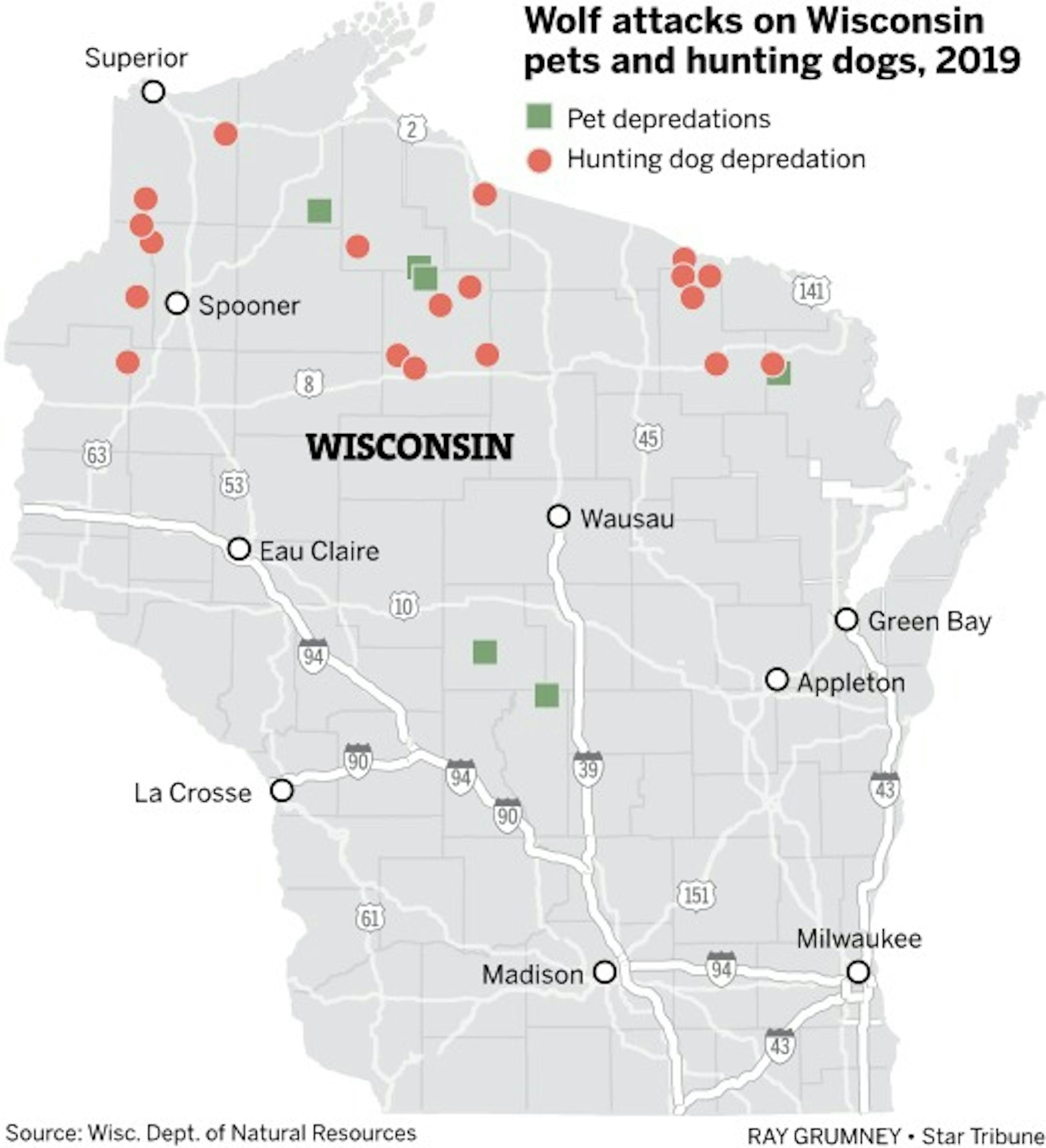
Wisconsin was home last winter to perhaps as many as 978 wolves gathered in about 250 packs, according to the state's Department of Natural Resources.
In 1980, only about 25 wolves inhabited the Badger State. In 1990, the number was 34. By 2000, the population had exploded to 248, and by 2010, roughly 700 wolves were believed to be in the state. (Minnesota's wolf population estimate is 2,655.)


