

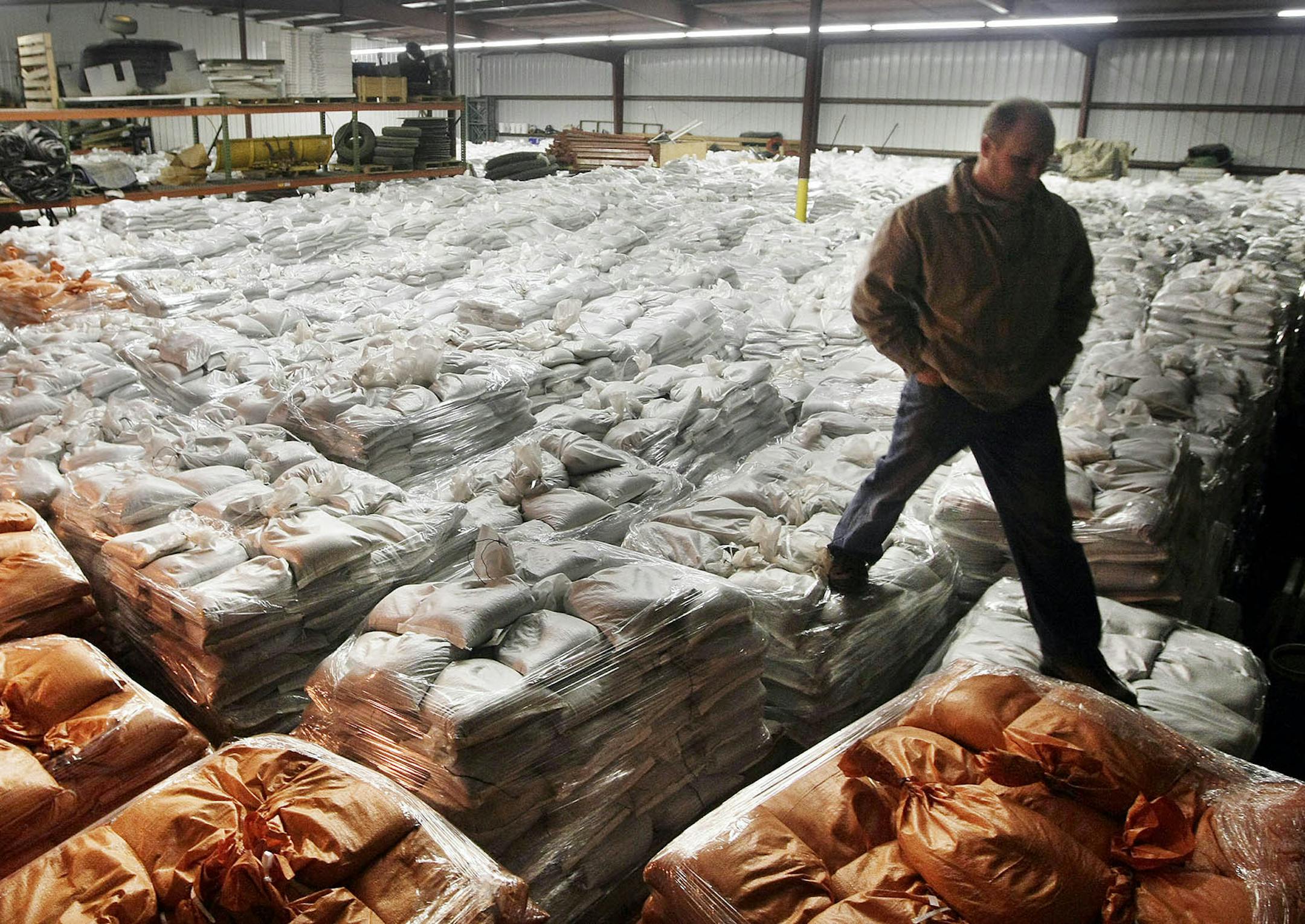
Sick and tired of sandbags? You betcha. Past heroics aside, flood fatigue has understandably overtaken Fargo, where the meandering Red River has overflowed its shallow banks in 49 of the last 110 years — and 20 of the last 22. And so it's easy to rejoice this week over President Obama's signing of a bill authorizing a $1.8 billion diversion channel that will redirect high water around the city's west side.
The earthen channel — 36 miles long, 1,500 feet wide and up to 30 feet deep — is the key element of a flood control project designed to protect the 200,000 residents of Fargo, Moorhead, West Fargo and a handful of other adjacent communities that straddle the river between North Dakota and Minnesota.
Other components include gated dams on the Red and Wild Rice rivers south of the city, and the project's most controversial feature: a 32,000-acre staging area made up largely of farmland south of 124th Avenue. That land would be intentionally flooded during severe high-water events and its water drained into the new channel.
Some farmers will be hurt, but they and other residents will be compensated. The project anticipates buying 60 homes and some of the several hundred other structures in the zone. In addition, property owners will get one-time easement payments as well as subsidies for supplemental crop insurance any time the zone is intentionally flooded.
The region's uncommonly flat topography adds complexity to the solution — and to the flooding problem itself. Unlike other U.S. rivers, the Red flows north, eventually into Canada's Hudson Bay. Most flooding occurs in March and April when snow melts near the river's source in the south while ice still clogs its downstream portions to the north. What happens around Fargo is best illustrated by pouring a glass of water over the top of a table; suddenly, there's water everywhere.
Why flooding has become an almost annual occurrence is a matter of debate. Some experts cite the onset of a historic wet cycle (as happened in the 1700s). Others mention weather extremes associated with climate change, the tile drainage systems used on farm fields and the hard-surface development spawned by Fargo-Moorhead's rapid growth. Once a quiet regional center dominated by surrounding farms, the North Dakota side of town, especially, has become an energetic sprawl of freeways, malls and high-tech businesses covering nearly 65 square miles.
In that sense, the flood project has become a marker of transition. Not so many years ago, sacrificing prime farmland to protect current and future urban development would have been politically impossible. But now, whether by chance or design, the location of the dam and channel will open to development about 20 additional square miles of flood-protected land on Fargo's south side.
"We've been growing and thriving, but there's no guarantee it will continue," said Cass County Administrator Keith Berndt. "If you're a company looking to locate or expand jobs, I'm not sure you're comfortable with locating in an area of frequent flooding."


