

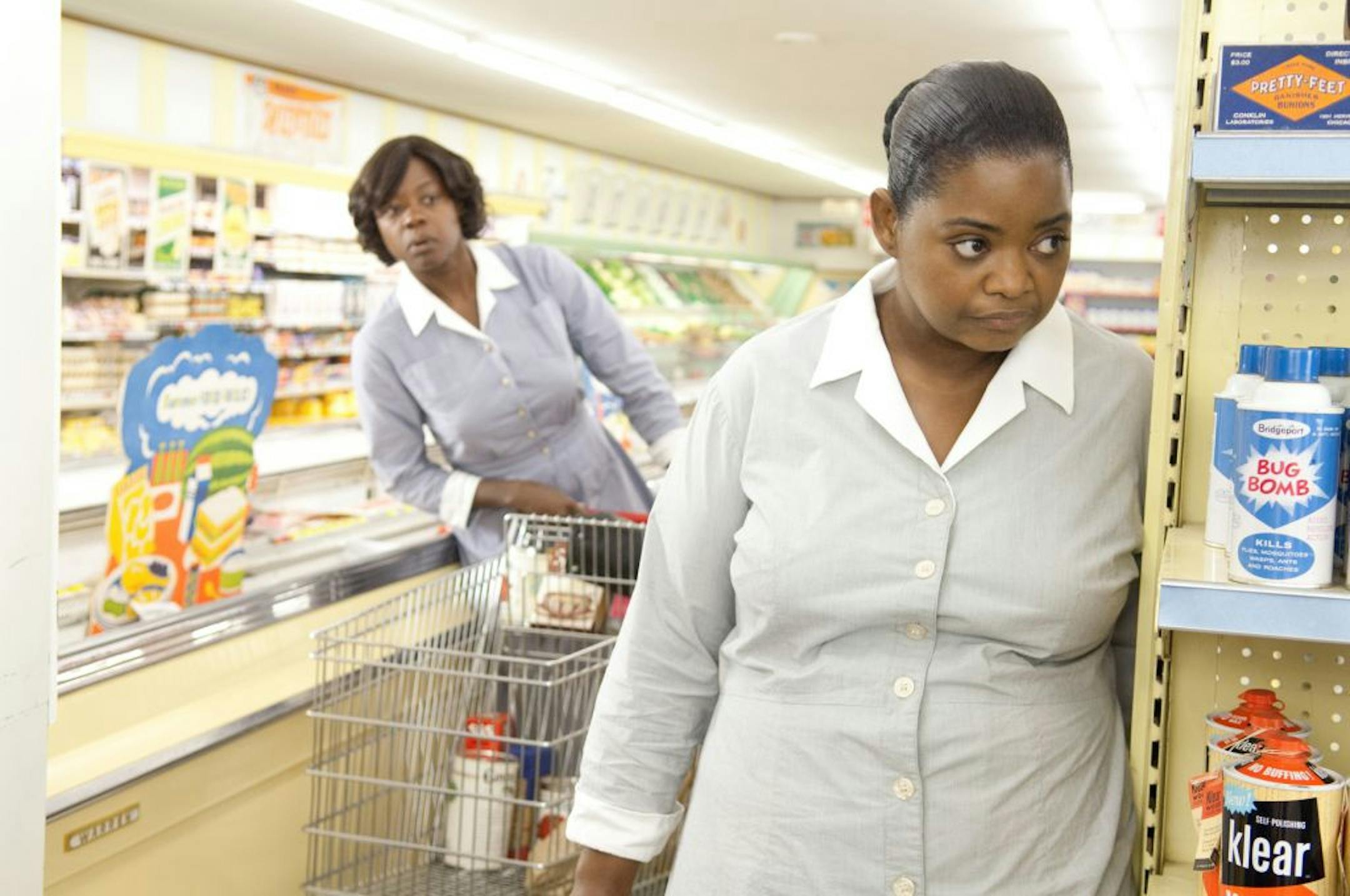
Viola Davis didn't want to wear the uniform. The Oscar-nominated actress was thrilled at the chance to star in "The Help," the film based on the bestselling novel by Kathryn Stockett. But it was a movie about maids in the Jim Crow South.
And "I had to get past the fact that I'd be playing a maid."
It's an image heavy with history and meaning -- the black maid in uniform -- raising upper-class white children in the segregated South. More than 70 years after "Gone With the Wind," the "mammy" stereotype that Hollywood happily embraced and then rejected still carries weight within the black community.
"My grandmother was a maid. My dad's mom and my dad's sister were maids in Florida and Georgia," says Rebekah McCloud, 59, an administrator at the University of Central Florida in Orlando. "Our parents' generation kind of hid all this stuff from the younger generation. People my mom's age -- she's 88 -- never talked about it. These were people who were embarrassed to be maids or to admit they were maids, groundsmen, domestics working for white people."
"I'm still ambivalent about seeing a movie about a cast of black women as maids," says Ruth Edwards, 56, coordinator of adult education at an Orlando area library. "But on the other hand, it is a cast of black women as maids. You never see that in the movies."
Both women had just seen -- and raved about -- "The Help," which opened Wednesday. But their reactions underline the tricky job DreamWorks has selling the movie to audiences. Will whites want to be reminded of that ugliness in pre-integration South? Will blacks?
Stockett's 2009 novel relates a series of oral histories by Southern maids in the 1960s. It was inspired by the author's childhood in Jackson, Miss., where she has said she was raised by her family's housekeeper.
DreamWorks, the studio releasing "The Help," previewed the film for a month before it opened. And while it was shown at the NAACP national convention in July, a DreamWorks spokesperson said there is no customized marketing for the movie. Preview audiences have been seeing it through the usual "opinion leader" showings and radio station and newspaper ticket giveaways.


