

'What's really going on here?" That's the question I typically ask students to kick-start a discussion about some aspect of American intelligence at the Johns Hopkins School of Advanced International Studies, where I teach a graduate course on the subject.
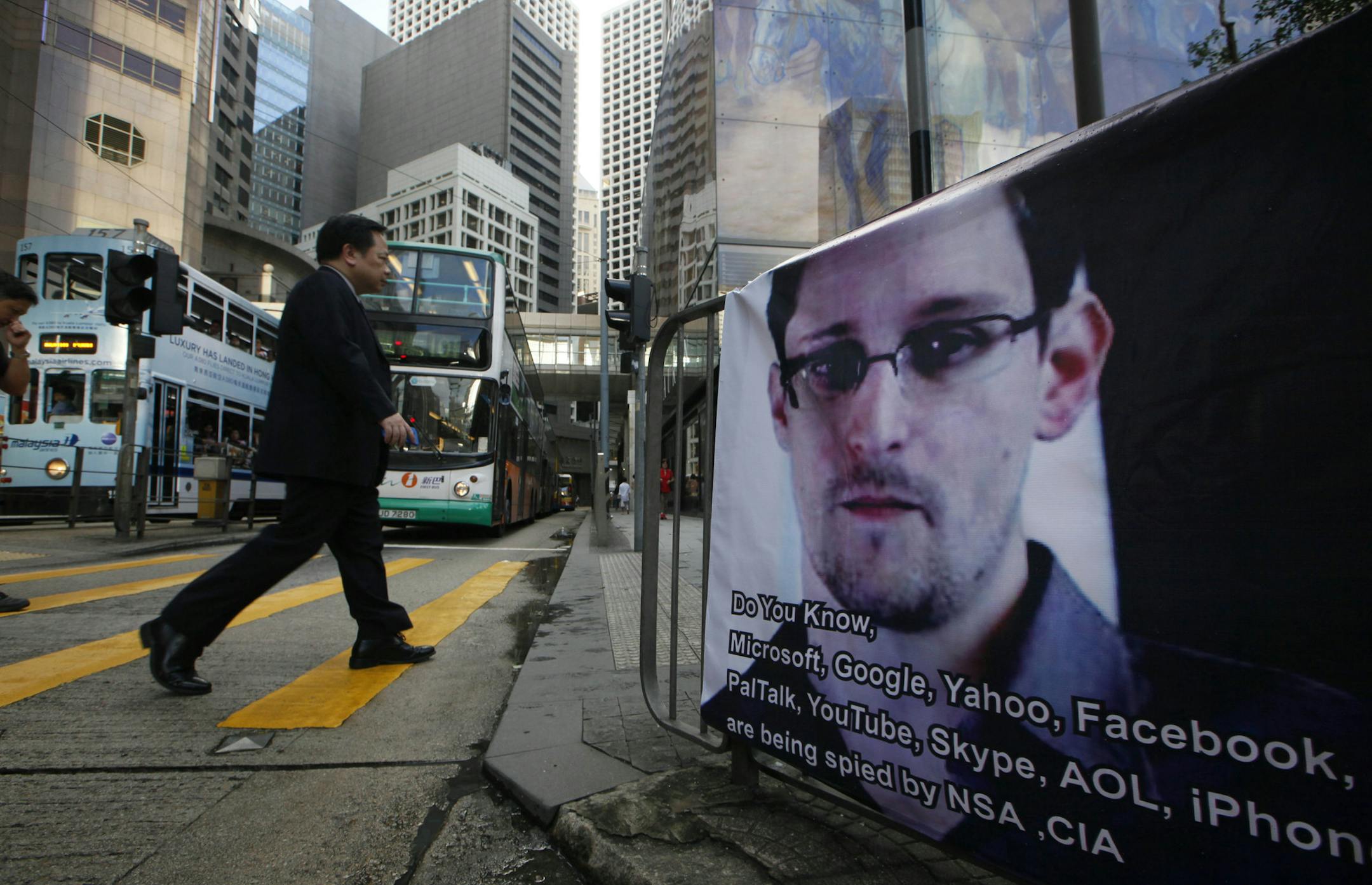
This same question might fairly be asked about the controversy dominating the news since the leak that revealed the intelligence community's highly classified electronic surveillance program. Why are we so fascinated with this case? Why are some Americans outraged at the government while others are outraged at the leaker? Why do so many of us have such firm and passionate views about all of this?
At one level, the answer is simple: Intelligence is a sexy subject, particularly in the post-9/11 era. And the surveillance program was a secret, so who wouldn't be interested? But this controversy taps into deeper cultural strains that go to the very heart of the intelligence community's role in America, and perhaps our maturation as a nation. The bottom line is that intelligence, as a profession, still does not sit comfortably in our polity. There are a number of reasons for this.
• • •
First, the essential qualities of good intelligence inevitably clash with the underlying values of an open, pluralistic and free society such as ours. The effectiveness of our democracy depends on an informed citizenry; effective intelligence depends on withholding and protecting information deemed sensitive. As citizens, Americans cherish their privacy; intelligence officers, subject to frequent background checks, polygraphs and intrusive financial disclosure, are accustomed to giving it up. The functioning of our system revolves around the rule of law; the functioning of intelligence, while based in American public law, relies on the willingness of its officers to "get chalk on their cleats" to quote former CIA Director Michael Hayden — and to actually break the laws of other countries by secretly recruiting foreign nationals as agents. So as the curtain is pulled back on the NSA's surveillance program, many of us instinctively recoil.
Second, we are a "young" intelligence nation, and intelligence is still the most novel tool in our foreign-policy kit. The United States was the last major country to organize intelligence at the national level. To be sure, intelligence played a role in the Civil War, and our military services have long had specialized intelligence services. But as late as 1929, the secretary of state, Henry Stimson, could declare in all seriousness that "Gentlemen do not read each other's mail," as he cut his department's funding for America's first cryptanalysis organization — the so-called Black Chamber. By contrast, the French had had a "cabinet noir" as far back as the 16th century — an organization within the post office tasked by the king specifically with reading other people's mail. The Chinese have thought systematically about intelligence since strategist Sun Tzu's historic writing in the sixth century B.C.; the British had an organized spy service under Elizabeth I in the 16th century; the Russians have embraced the profession for centuries, as have most of our European partners. But it was not until 1947 that intelligence really entered the U.S. national conversation with the creation of the Central Intelligence Agency.
In other countries, intelligence still holds plenty of fascination for the public, but many older nations, unlike the United States, have domestic intelligence services and have integrated the profession more comfortably into their cultures. Besides, they do not "leak" intelligence at anywhere near the frequency that we do, so material with the potential to shock or startle is much less plentiful.
Third, modern intelligence controversies are occurring at a moment when surveys by Pew and other polling organizations show that American distrust of government is at an all-time high, ranging between 73 and 80 percent in the last few years. I recall some years ago seeing a Ted Koppel interview with a successful Chinese businessman who, when asked if he liked his government, said: "I don't like it, but I trust it." I wonder if we have not come to think exactly the reverse in the United States. In my lifetime, I have seen us move from broad acceptance of governmental competence and authority in the Eisenhower era through a series of events that have led us to this low point — the multiple assassinations of the 1960s, bitter division over Vietnam, the Watergate affair, Iran-contra, the Clinton-era scandals, the Iraq imbroglio, and now the IRS controversy.


