

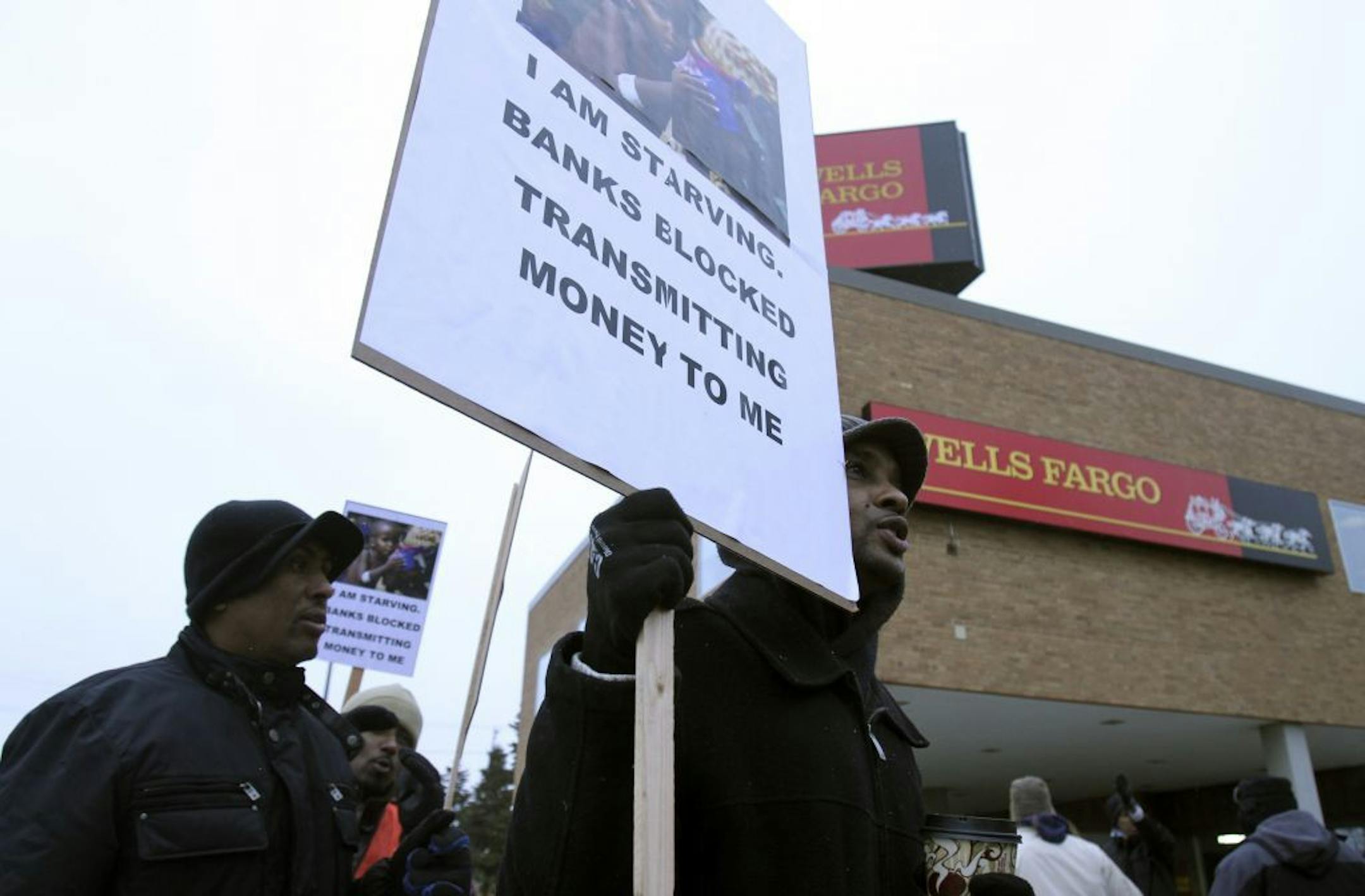
Frustrated by Minnesota banks' refusal to deal with Somali wire transfer businesses that send money to Africa, some members of the Twin Cities Somali community are taking action.
Scores of Somali-American customers went to a Minneapolis Wells Fargo bank branch Friday afternoon to close their accounts to protest the bank's policies regarding the money wire outfits, also known as hawalas. Others are considering legal action to try to force a change.
The number of local Somalis who have closed their Wells Fargo bank accounts in what organizers dubbed "Somali Family Move Your Money Day," was not immediately known. But the purchasing power of Minnesota Somalis has been estimated between $150 million and $300 million annually, according to Bruce Corrie, business professor at Concordia University who studies the economic impact of immigrant groups.
In another move to end the impasse, a group called the Somali-American Humanitarian Relief Association formed earlier this week to assess a possible legal challenge to U.S. government regulations on banks.
Years ago, several Minnesota banks had accounts with the Somali money service businesses. But amid tightened federal regulations designed to crack down on funding streams for terrorists, the banks discontinued their business connection. Wells Fargo officials and Somali leaders are planning to meet next week to discuss their concerns.
Until recently, only one local banking company -- Sunrise Community Banks -- did business with the hawalas. That changed on Dec. 30, when Sunrise, too, closed its accounts, citing fears of being held liable should money from those accounts fall into the wrong hands. Without a bank, the Minnesota money service businesses have been shut down, and many Somalis say they now have no other way to send money that their families in Africa depend on to survive.
Sunrise officials have been in talks with members of the Somali American Money Services Association, a coalition of hawala owners, and with federal officials to try to find a way to reopen the accounts.
But with no solution yet, some Somali-Americans are demanding that other banks step in and restore their services.


