

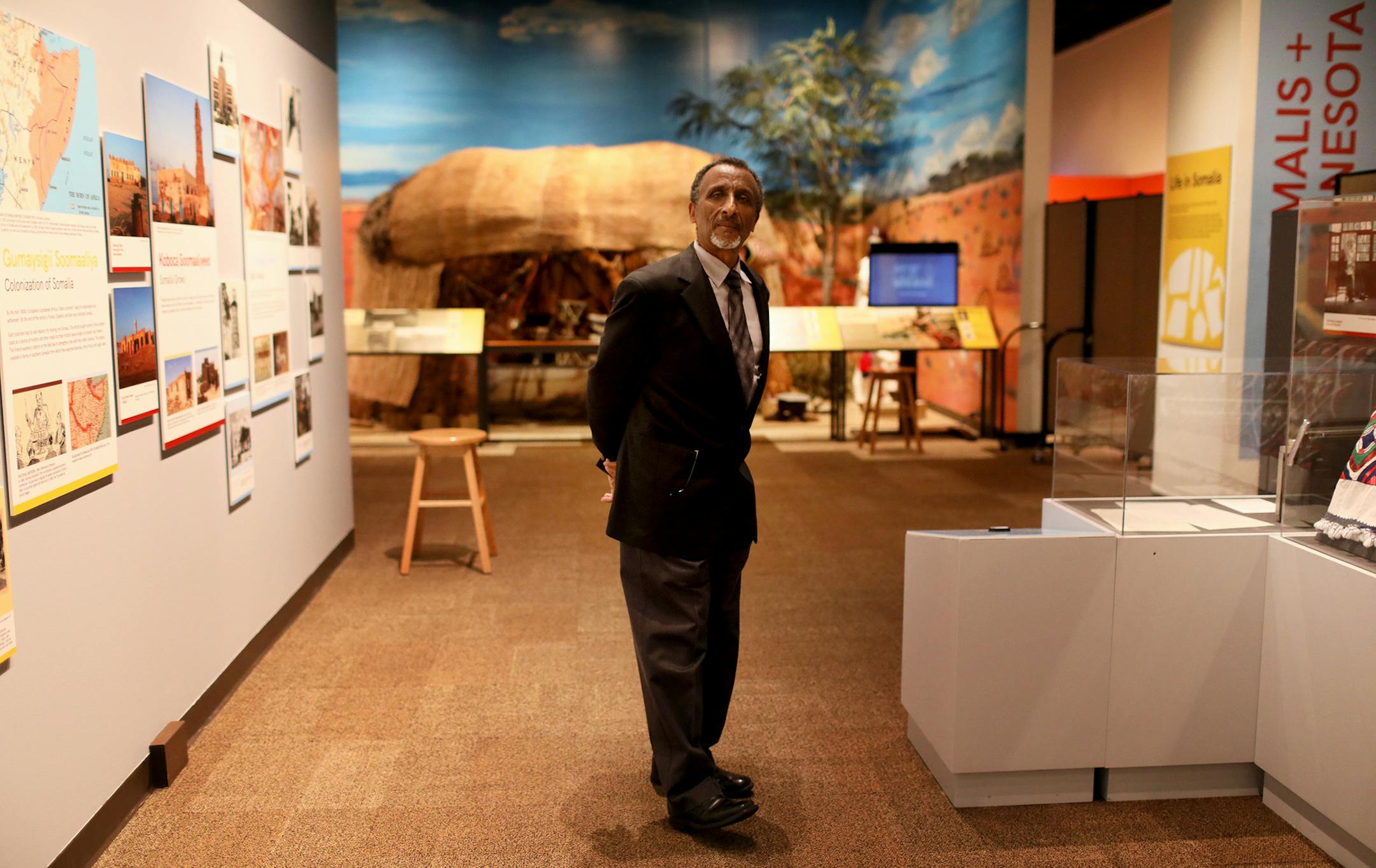
Luqman Mohamed grew up hearing his grandfather's stories of the nomadic life in Somalia, of family members loading their possessions onto the backs of camels and moving frequently in search of water.
"The camel is an important symbol in my family," said Mohamed, a student at Metropolitan State University.
But like many young Somalis in Minnesota, he hadn't seen much to reflect that heritage as photos and family relics were scarce, left behind or destroyed in the journey to the United States.
Now those stories are coming into focus through photos, artifacts and even a full-sized nomadic home at the Minnesota History Center's "Somalis + Minnesota" exhibit opening Saturday. It's the first long-term exhibit about the East African nation's culture, heritage and diaspora at the state's premier history museum.
The historic photos of the people and the landscape are the most moving, said Mohamed, an intern hired by the Minnesota Historical Society to help recruit volunteers for the exhibit.
"I am amazed," Mohamed said. "The second generation born here is not aware of all this history."
Minnesota is home to the largest Somali population in the United States — 57,000 people, according to the census, though the actual number is believed to be much higher.
"With Somali people in almost every sector of Minnesota's workforce, now is the time to celebrate the strength and resilience of the Somali people and to help build bridges in understanding what it means to be an immigrant," said Steve Elliott, the historical society director and CEO in a statement.
![The Minnesota History Center will throw open the doors to "Somalis + Minnesota" on June 23, the first long-term exhibit about the east African nation's culture, heritage and diaspora at the state's premier history museum. Minnesota is home to the largest Somali population in the United States. Here, Osman Ali, founder and Executive Director of The Somali Museum of Minnesota, who helped facilitate the exhibit, seen at the Minnesota History Center Tuesday, June 19, 2018, in St. Paul, MN.] DAVID JO](https://arc.stimg.co/startribunemedia/BHEXIBTEXZ6H3XFDGTOEB6MQEI.jpg?&w=1080)
![The Minnesota History Center will throw open the doors to "Somalis + Minnesota" on June 23, the first long-term exhibit about the east African nation's culture, heritage and diaspora at the state's premier history museum. Minnesota is home to the largest Somali population in the United States. Here, a weaving loom and textiles purchased from a weaver in Somalia at the exhibit at the Minnesota History Center Tuesday, June 19, 2018, in St. Paul, MN.] DAVID JOLES ï david.joles@startribune.com](https://arc.stimg.co/startribunemedia/F3VV27ELDALVNZGJ56WTXQCTPQ.jpg?&w=1080)
![The Minnesota History Center will throw open the doors to "Somalis + Minnesota" on June 23, the first long-term exhibit about the east African nation's culture, heritage and diaspora at the state's premier history museum. Minnesota is home to the largest Somali population in the United States. Here, a mudul, a permanent house used by farm families in Somalia at the exhibit at the Minnesota History Center Tuesday, June 19, 2018, in St. Paul, MN.] DAVID JOLES ï david.joles@startribune.com The](https://arc.stimg.co/startribunemedia/2TIANCCUG4XFYUKYEQMSTFS7W4.jpg?&w=1080)


