

MOGADISHU, Somalia -- The guerrilla artists come out in the darkness of the Mogadishu night. Three of them are old hands with a brush, but they've never been out on such a crazy mission at a time when sensible people stay indoors.
They gather for work in a converted garage, with a wildly paved floor and clutter of paint pots dribbling gaudy colors. Muhiyidin Sharif Ibrahim, 62, uses an old car seat as a chair, reflectively sharpening a pencil with a razor, then honing it to a perfect point by scraping it on the stone floor. He delicately sketches out his next work on a scrap of cardboard with his long, thin fingers.
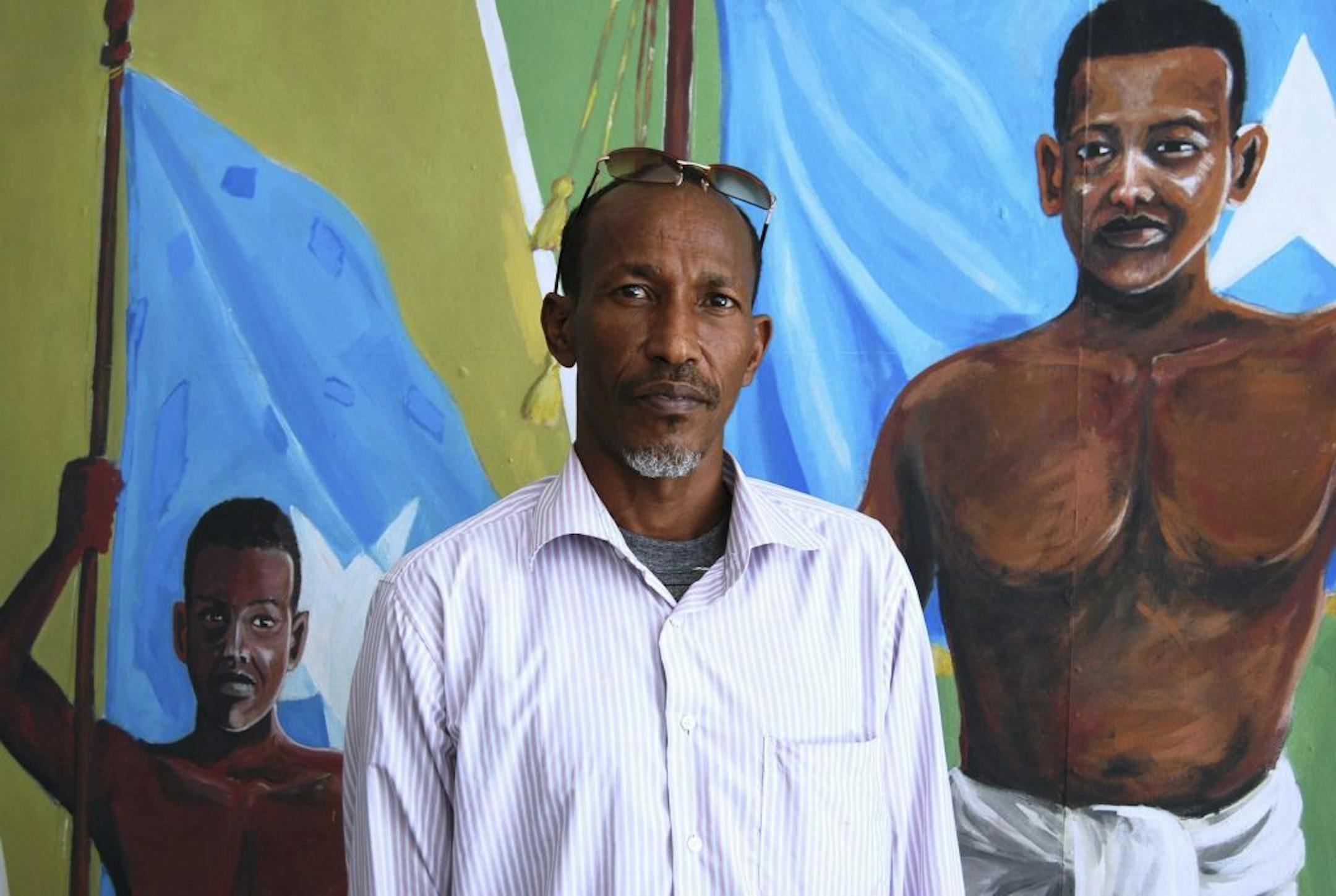
The artists paint by daylight, then load the canvases on a big truck and, with the help of students they've taken under their wing, plant them around the city.
No one here has seen anything like it. The political paintings that pop up every few days are like brave flags, cheeky and revolutionary.
They take potshots at the most dangerous people, like Somalia's blood-sodden clan warlords and its ever-present Islamic militants.
The men have lived their lives in a country with no tradition of artistic freedom or democracy. When a tiny window of freedom cracked open in recent months in Mogadishu, it seemed like a last chance to be who they really wanted to be.
Ibrahim, who once was among Somalia's most famous artists, claims to have painted the first official portrait of the country's first president. Adan Farah Affey, 50, started as a young artist in the propaganda department of the ruling party but resigned because he wasn't allowed to depict the truth. As for Mohamed Ali Tohow, 57, his real passion was portraits, but he enjoyed his job painting billboards until the day the Islamists threatened to kill him.
The walls of their garage studio are decked out with giant canvases, ready to hang in the streets of the capital. One depicts a crowded city street with men on bicycles or pushing wheelbarrows, women in traditional Somali dress and buildings free of bullet holes.


