

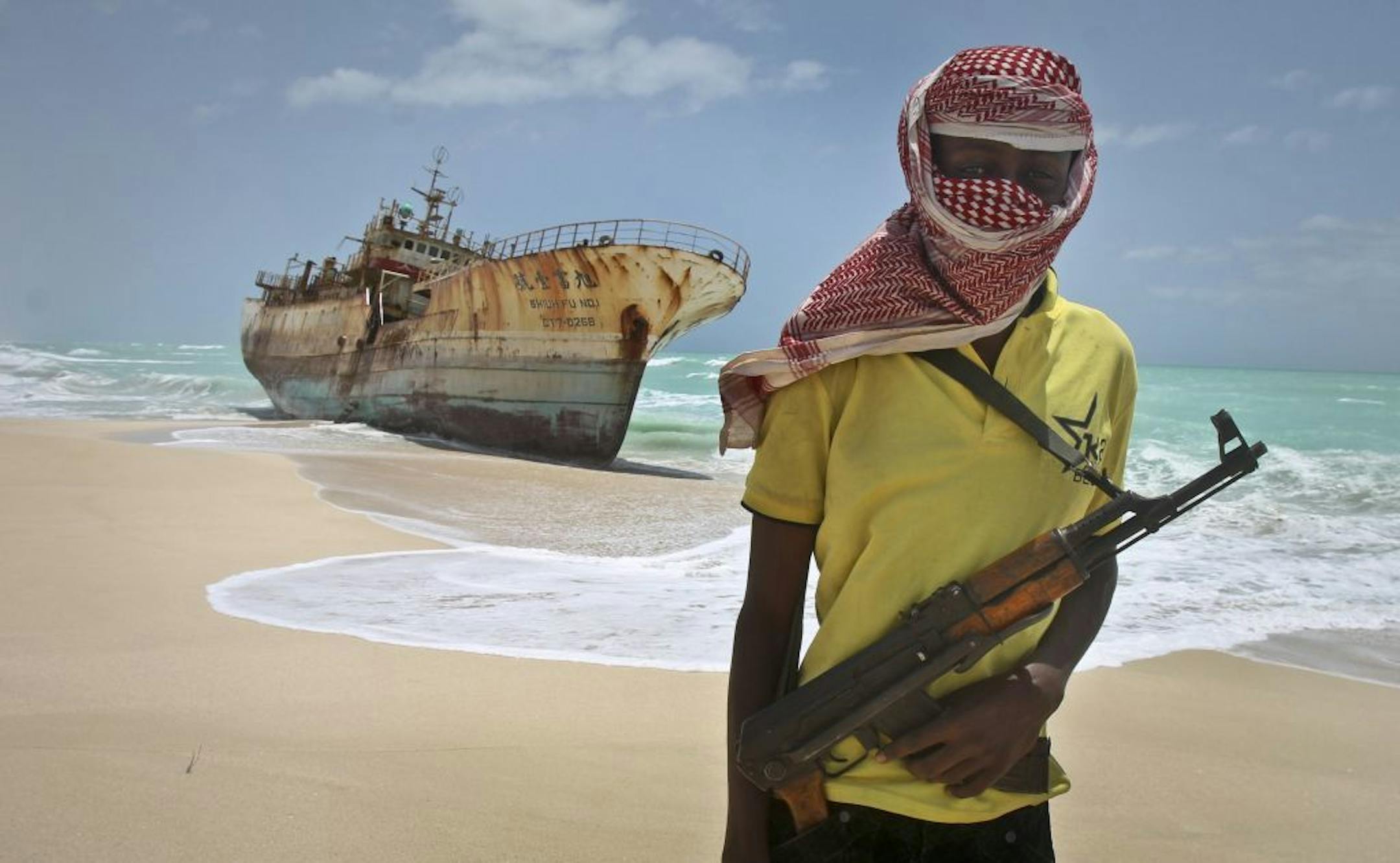
NAIROBI, Kenya — Frustrated by a string of failed hijacking attempts, Somali pirates have turned to a new business model: providing "security" for ships illegally plundering Somalia's fish stocks — the same scourge that launched the Horn of Africa's piracy era eight years ago.
Somali piracy was recently a fearsome trend that saw dozens of ships and hundreds of hostages taken yearly, but the success rate of the maritime hijackers has fallen dramatically over the last year thanks to increased security on ships and more effective international naval patrols.
Somali pirate gangs in search of new revenue are now providing armed protection for ships illegally fishing Somali waters. Erstwhile pirates are also trafficking in arms, drugs and humans, according to a report published this month by the U.N. Monitoring Group on Somalia and Eritrea.
The security services for fishermen bring piracy full circle. Somali pirate attacks were originally a defensive response to illegal fishing and toxic waste dumping off Somalia's cost. Attacks later evolved into a clan-based, ransom-driven business.
Up to 180 illegal Iranian and 300 illegal Yemeni vessels are fishing Puntland waters, as well as a small number of Chinese, Taiwanese, Korean and European-owned vessels, according to estimates by officials in the northern Somali region of Puntland. International naval officials corroborate the prevalence of Iranian and Yemeni vessels, the U.N. report said.
Fishermen in Puntland "have confirmed that the private security teams on board such vessels are normally provided from pools of demobilized Somali pirates and coordinated by a ring of pirate leaders and associated businessmen operating in Puntland, Somaliland, the United Arab Emirates (UAE), Oman, Yemen and Iran," the report said.
The "security" teams help vessels cast nets and open fire on Somali fishermen in order to drive away competition. "The prize is often lucrative and includes large reef and open water catch, notably tuna," the report says.
The nearly 500-page U.N. report also accuses Somalia's government of wide-ranging corruption. In response, Somalia's presidential spokesman said that the report contains "numerous inaccuracies, contradictions and factual gaps."


