

You've bought a brand new car or truck and it's filled with the latest in high-tech equipment, including an infotainment system, seat heaters, a starter button and a navigation system. It will even cut power to some of its cylinders while cruising the freeway to save fuel. Isn't modern technology wonderful?
It is, except none of these notions are new. In fact, they are not just decades old; one dates to the earliest days of the auto industry. Take a tour of the newest in old ideas.
Starter buttons
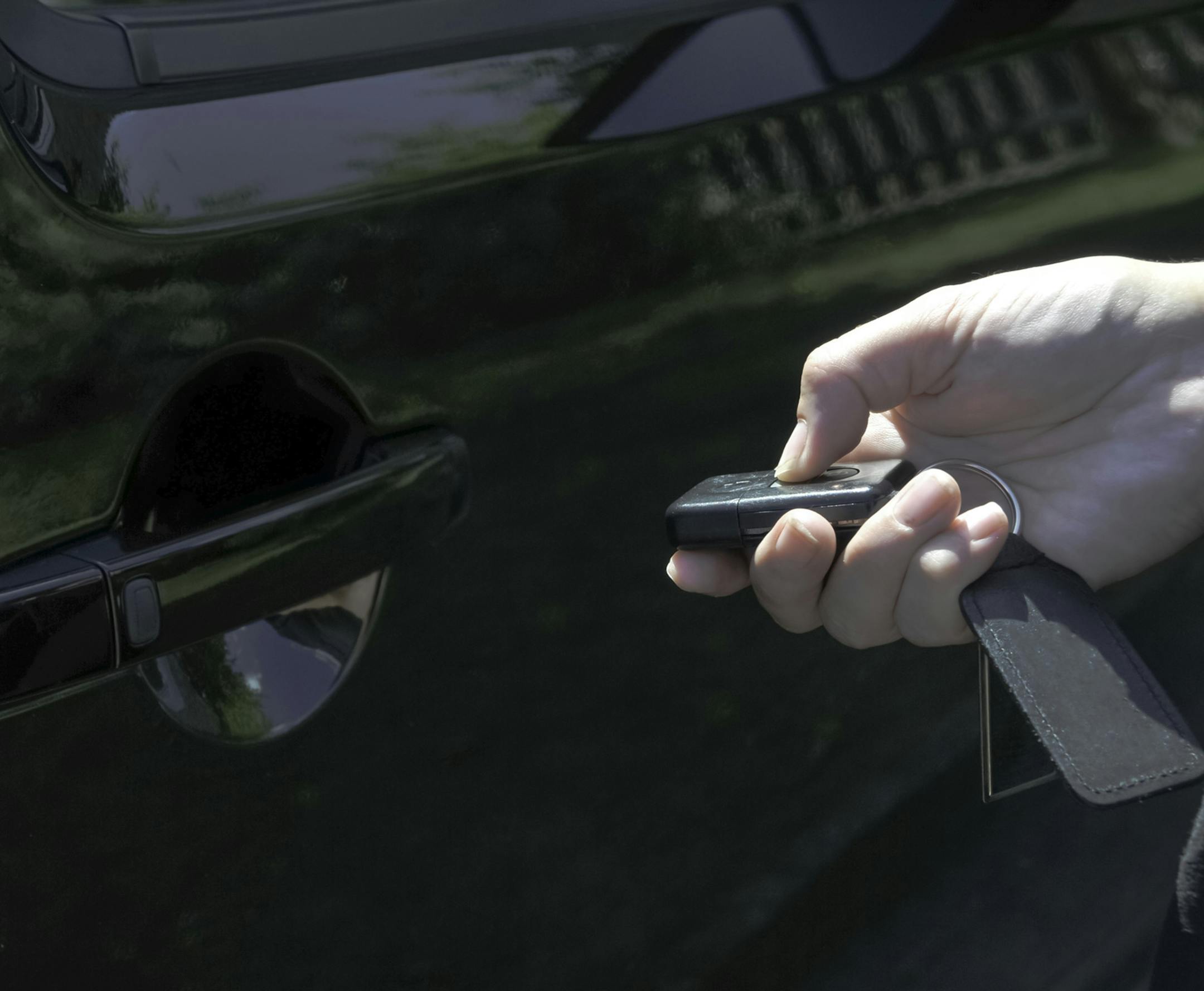
Today: In 1998, Mercedes-Benz introduced "Keyless Go" on the fourth-generation S-Class. Using technology developed by Siemens, Keyless Go allowed drivers to walk up to their locked car with a key fob in their pocket or purse and open it by pulling on the door handle, getting in, and pushing a button to start the car. The feature is now widespread among many car brands and models.
Yesterday: After his friend died while trying to crank start a stalled car, Cadillac founder Henry Leland turned to Charles Kettering of the Dayton Engineering Laboratories Co. in Dayton, Ohio, to find a better way. Kettering realized that a car's starter motor didn't have to be large to briefly handle a large power flow. Once the engine started, it needed much less power for running the generator. It was introduced on the 1912 Cadillac. In 1949, Chrysler replaced starter buttons with a key starter; the rest of the industry soon followed.
Cylinder deactivation
Today: Under light loads when little power is needed to sustain speed, such as highway cruising, half of an engine's cylinders are shut off to conserve fuel. This system is commonly found on larger vehicles, such as pickups.
Yesterday: The first known car to feature cylinder deactivation is not the 1981 Cadillac and its notorious V-8-6-4 engine; it's one you've never heard of—- the 1905 Sturtevant. Made in Boston, the Sturtevant's six-cylinder engine had two magnetos, one to spark a set of three cylinders. This allowed the driver to cut power to three cylinders by turning off power to one of the two magnetos. In 1917, the Enger Twin-Unit Twelve had a lever on the steering column that allowed the driver to shut off six of the car's 12 cylinders. Neither proved successful (nor did the 1981 Cadillac's V-8-6-4 engine).
Seat heaters
Today: Have you noticed how cold it is outside? Seat heaters are as welcome in your car as a steaming cup of hot chocolate. Just hit a button and heating elements in the seat envelope your backside with welcome warmth on a cold winter's morning.
Yesterday: While Saab gets credit for making seat heaters standard, they were not the first to offer them. That honor goes to Cadillac, which held the 1955 patent. It offered optional heated seats on 1966 Cadillac Fleetwoods. They were triggered automatically when the ignition was turned on and the temperature was below 50 degrees. They were installed up front except for the chauffeur-driven Fleetwood 75, where they were in the rear. The seats shut off once the heater fan came on or when turned off by the driver. Poorly marketed at the time, they were offered through 1968.


