

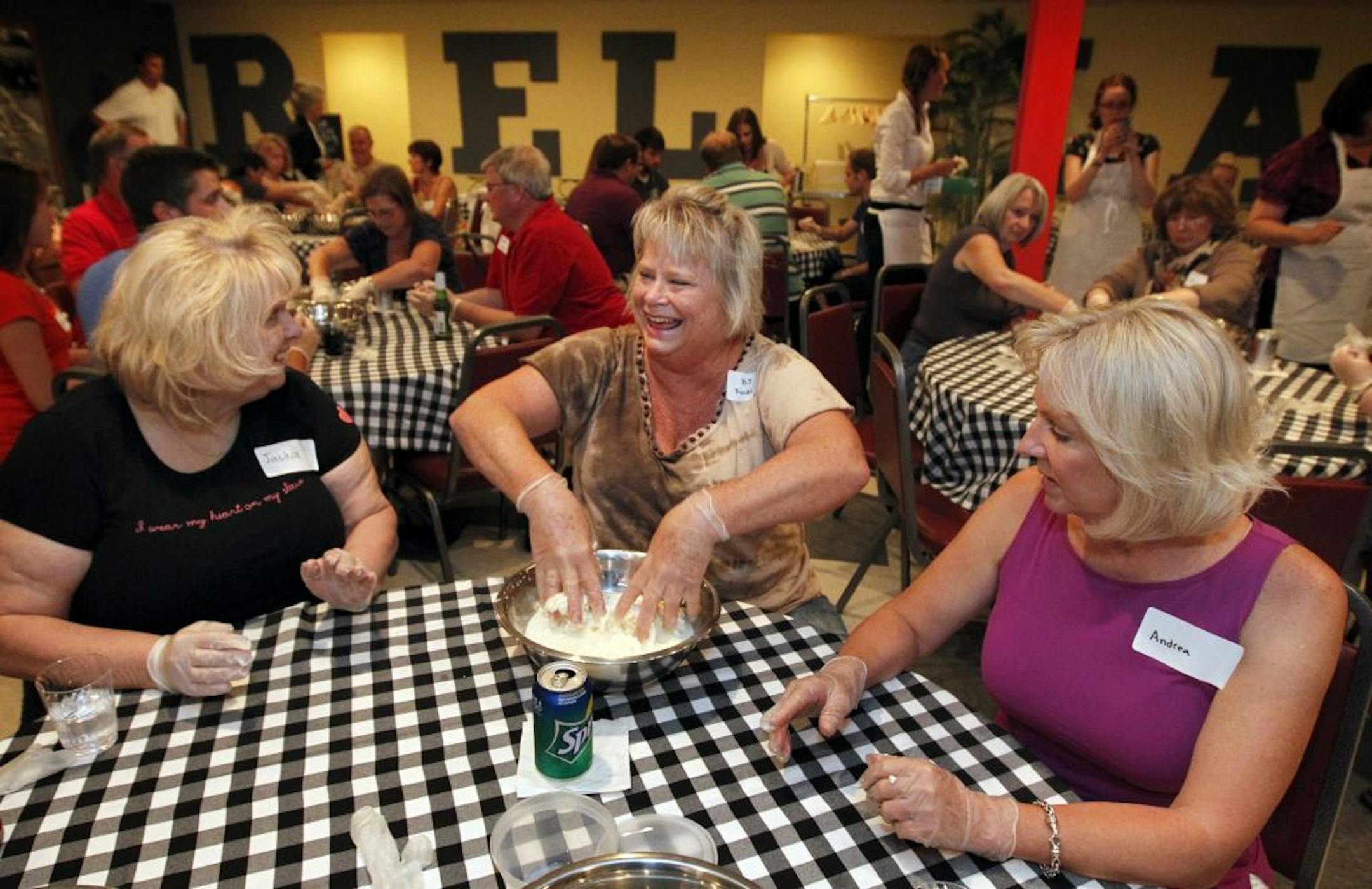
After Tess Gallagher moved to Minneapolis for a new job, the 24-year-old Michigan graduate didn't try to make friends at the gym or the grocery store. Instead, she logged onto Meetup.com, where she found three groups whose members shared her eclectic interests -- reading, rock climbing and theater.
While traditional fraternal and social organizations continue to lose steam, the online-based organization has attracted more than 16 million members globally who have signed up to meet in real life.
"Meetups are an evolving tool to find like-minded people who are passionate about the same things," said Shayla Thiel-Stern, who teaches courses about new media and culture at the University of Minnesota. "People have become less afraid of face-to-face meetings with people they find on the Internet. They're comfortable moving from online to offline."
In the Twin Cities, there are about 975 Meetup groups devoted to narrow niches (fans of pinochle, pugs, Portuguese, raw food, running, the Red Sox) and categories as broad as happy hour. The groups typically gather in public spaces, such as libraries and restaurants. Organizers pay a small monthly fee to Meetup.com, which often is passed on to members through dues.
Although its main purpose is to facilitate the formation of what used to be called clubs, Meetup also is training new crops of leaders.
"It's DIY community building, where anyone can step into a leadership role," said Kathryn Fink, community manager for the New York based company. "Within the Meetup ecosystem, groups beget groups. The cell divides."
That explains why there are meetups not just for mothers, but for working mothers, bereaved mothers, single mothers, lesbian mothers, mothers of children adopted from Ethiopia and mothers of children with anxiety.
While there are meetups for scooter riders, British ex-pats and fans of the "Dr. Who" television show, meetups devoted to food, wine and cooking are among the most active.


