
Snowmobile trails disappearing in suburbs

The days are numbered for some suburban snowmobile trails as development and park regulations combine to squeeze them out.

December 19, 2009 at 4:10PM
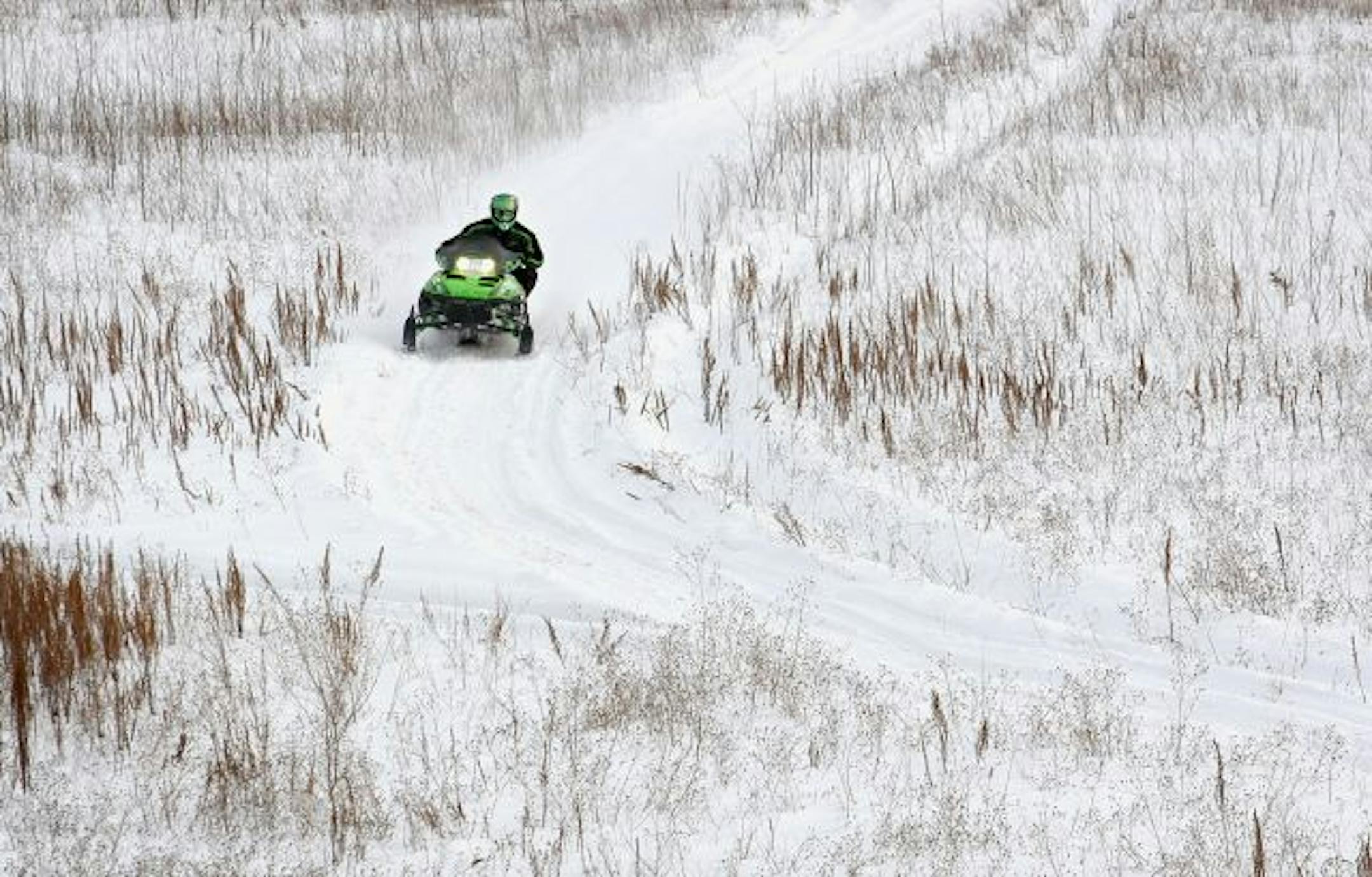
Snowmobiling near Thief River Falls, Minn.
Snowmobiling near Thief River Falls, Minn. (Star Tribune/The Minnesota Star Tribune)

For three decades, Craig Wissink has seen to it that snowmobilers have trails to ride through the northwest suburbs of Hennepin County.

Development has whittled away 50 miles of those trails, and Wissink -- Maple Grove trail captain for the Northwest Trails Association -- worries that future construction will leave suburban snowmobilers in his area maybe five more years to enjoy trails close to home.

Because riders typically go out for the day, they look for 50, 75, even 100 miles of connecting trails to roam. And if the connections are broken, even the scenic stretches skirting Three Rivers parks will be of no use, he said.

Minnesota has more than 22,000 miles of snowmobile trails, but segments are being closed every year in the Twin Cities metro area and around Duluth, St. Cloud and Rochester as well, said Ron Potter, snowmobile policy and program manager for the Department of Natural Resources.

"They keep disappearing. It's harder and harder to maintain a trail system," he said.

In the northwest suburbs, snowmobile trails have been cut from a peak of 150 miles to 100 miles today. And in Washington County, snowmobile trails have dropped from a peak of 180 miles to 133 miles.

Because most snowmobile trails are operated under temporary DNR permits that can be canceled from year to year, the DNR started about five years ago to set aside $500,000 a year for the purchase of permanent trail easements from willing sellers. But now the money is most often used for trail bridges because it makes no sense to buy an easement on one parcel of land if the parcels on either side are not secured, Potter said.

When trail segments close, the fallback option is to move trails to road ditches, which lowers their quality, Potter said. "Riding in a road ditch is nothing too exciting. You can get from point A to point B, but it's not an enjoyable trail."

Popular in the metro

Greater metro area residents own about half of the 253,000 snowmobiles registered in the state.

"On a good weekend, if we've got temperatures in the teens to mid-20s and good snow, there will be at least 1,000 sleds that will go through some points of our trail," Wissink said.

Wissink, 69, started volunteering to route snowmobile trails when he was 38. He and trail captains in neighboring cities work with parks, local governments and private landowners to line up a continuous trail from Maple Grove to Rogers, most of it running along either side of County Road 81.

He remembers when the northwest suburbs had 150 miles of trails. Maple Grove alone had 25 miles of connecting trails, and the County Road 18 trail ran from Rogers all the way across Maple Grove into Osseo. Now the northwest suburbs have about 100 miles of trails, and Maple Grove has only about 5 miles of the County Road 81 trail left on its northwest side.

"I think there is going to be a point where Northwest Trails reaches a decision that it is no longer practical to maintain trails on private property, and we will basically dissolve our organization," Wissink said.

"Three or four years ago, development was so aggressive and so intense, we thought we might not even be operating this year. But with the slowdown in the housing market, it has given us a few more years."

If the trails do close, there will be other options for snowmobilers; the loss will be in time spent traveling to trails when they no longer have one nearby, Wissink said.

Watching over trails

The Northwest Trails Association was formed by snowmobilers in 1974. Each fall, trail captains review city plat maps to see if any property on trail routes has changed hands.

"Every year we run into a change in ownership of private land that gets subdivided into new lots," Wissink said. "We have to get agreement from the new landowner, or if it's under development, we have to find a new route. "

A lot of trails cross through Three Rivers parks, but park policy requires that as segments connecting to the parks are lost, so will the trails through the parks.

The Park District wants to emphasize activities that are compatible with the environment, said Tom McDowell, assistant superintendent of outdoor education and recreation. Because snowmobiles are noisy and burn fossil fuels, they are "not central to the types of recreation that the Park District provides," McDowell said.

A district policy dating to the late 1970s states that "snowmobile trails will exit only on the periphery of park reserves and regional parks or adjacent to roadways where impact can be minimized," McDowell said.

That means that snowmobiles can't loop around parks or make the parks a destination. They may enter on one side and leave on the other to connect with longer trails. When a park segment is no longer connected with a longer trail on either side of the park, the park segment will close, McDowell said.

That already happened with segments in Baker and Carver park reserves, he said.

Southwest trails also stressed

"It's nice to ride through a park," said Todd Kuntz, a volunteer trail coordinator with the Southwest Trails Association, which establishes trails in west Hennepin and Carver counties. "They have some beautiful trails. We have been using the parks as connecting trails as a way for city of Victoria residents to get out to the west, where there are more areas to ride the snowmobile."

But Kuntz said snowmobile trails in the southwest suburbs are under the same development pressures that Wissink described in the northwest suburbs.

Victoria shut down a snowmobile trail to a popular restaurant after a condominium complex was built along the trail and residents didn't want snowmobiles there, he said.

For now, the immediate focus for snowmobile enthusiasts is getting the trails ready to go. Volunteers work at keeping the trails in good shape throughout the season.

Wissink said his group will put a $160,000 groomer to work on its trails. "It removes all the bumps and fills in all the voids."

Laurie Blake • 612-673-1711

about the writer

about the writer

LAURIE BLAKE, Star Tribune