

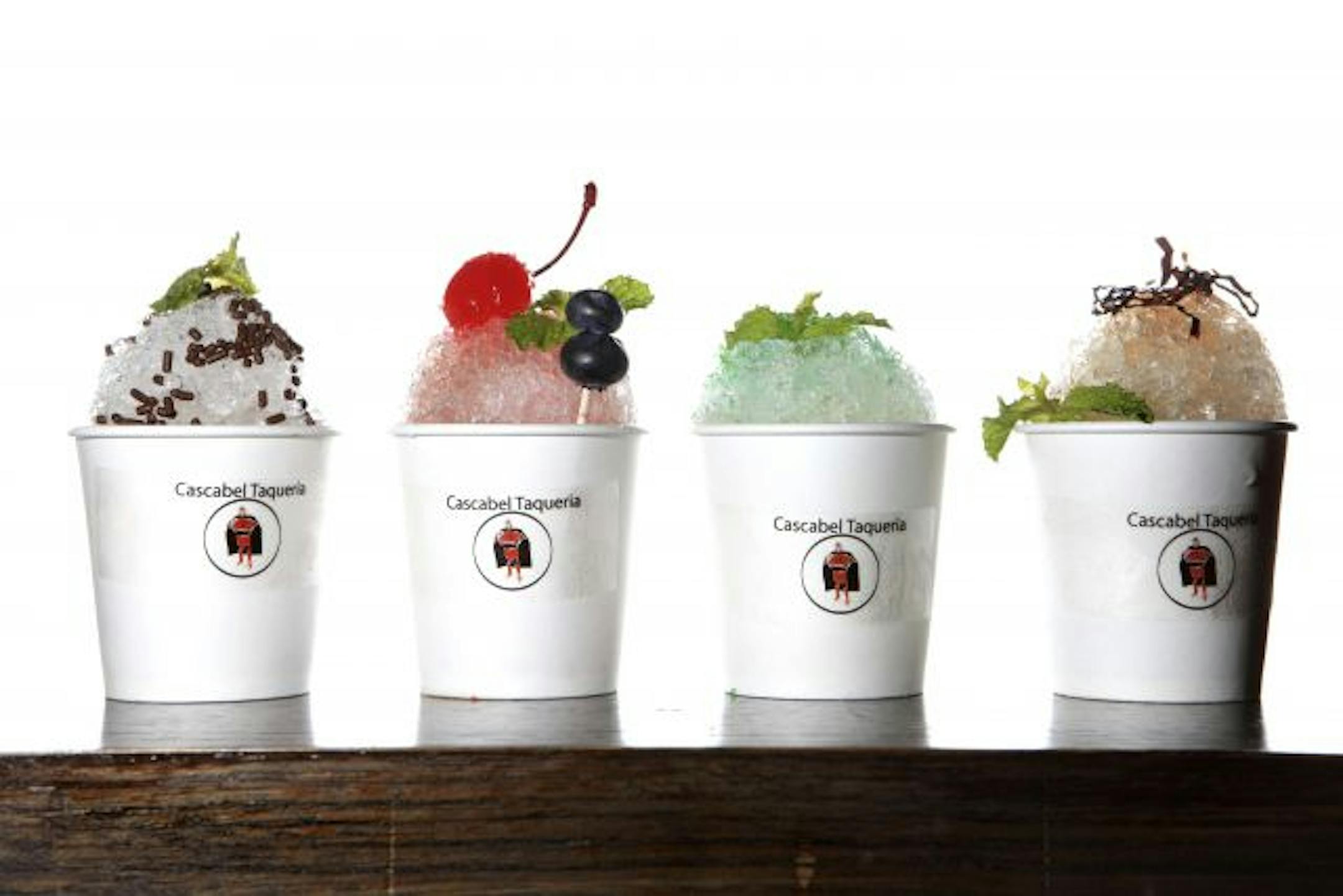
A snoball is to a snow cone as Warren Beatty is to Shirley MacLaine: closely related, but prettier, smoother and infinitely cooler.
And no wonder -- a snow cone is usually a mound of crunchy hailstones sitting in a pool of synthetic sugar syrup. The ice is crushed into pellets that send shivers up into the brain, and the flavoring has no chance of being absorbed into the ice.
But there is another way. A way of scraping ice so that it falls softly into cups like a January snowfall, and soaks up flavor the way dry ground soaks up rain in July. This is shaved ice, and it is a game-changer.
American food lovers who seem to be re-examining every humble snack -- beef jerky, pretzels, soft-serve -- for artisanal potential, are now turning their attention to shaved ice. They are abandoning the Day-Glo aesthetic and fake flavors that they grew up with in favor of the true colors of summer fruit.
The new snow moguls draw inspiration from a whirling blizzard of these treats around the world: Hawaiian shaved ice, Mexican raspados, Korean bingsu, Baltimore sky-blue "snowballs" topped with marshmallow, and Taiwanese bao bing flavored with palm sugar syrup.
Indian golas and chuskis, sold by street vendors or gola wallahs in California, are flavored with rose, cardamom, orange and saffron.
Most of them hail from places where summers are hot, and fruit plentiful: Latin America is packed with shaved ice treats, such as Puerto Rican piraguas -- named for their pyramid shape -- Cuban granizados, and frio-frio (cold-cold) from the Dominican Republic and Puerto Rico.
Instead of having the creamy texture of a sherbet (which is churned like ice cream), or the crunch of crushed ice, or the large ice crystals of a granita, properly shaved ice is soft and snowy on the tongue, and disappears instantly when pressed against the palate.

