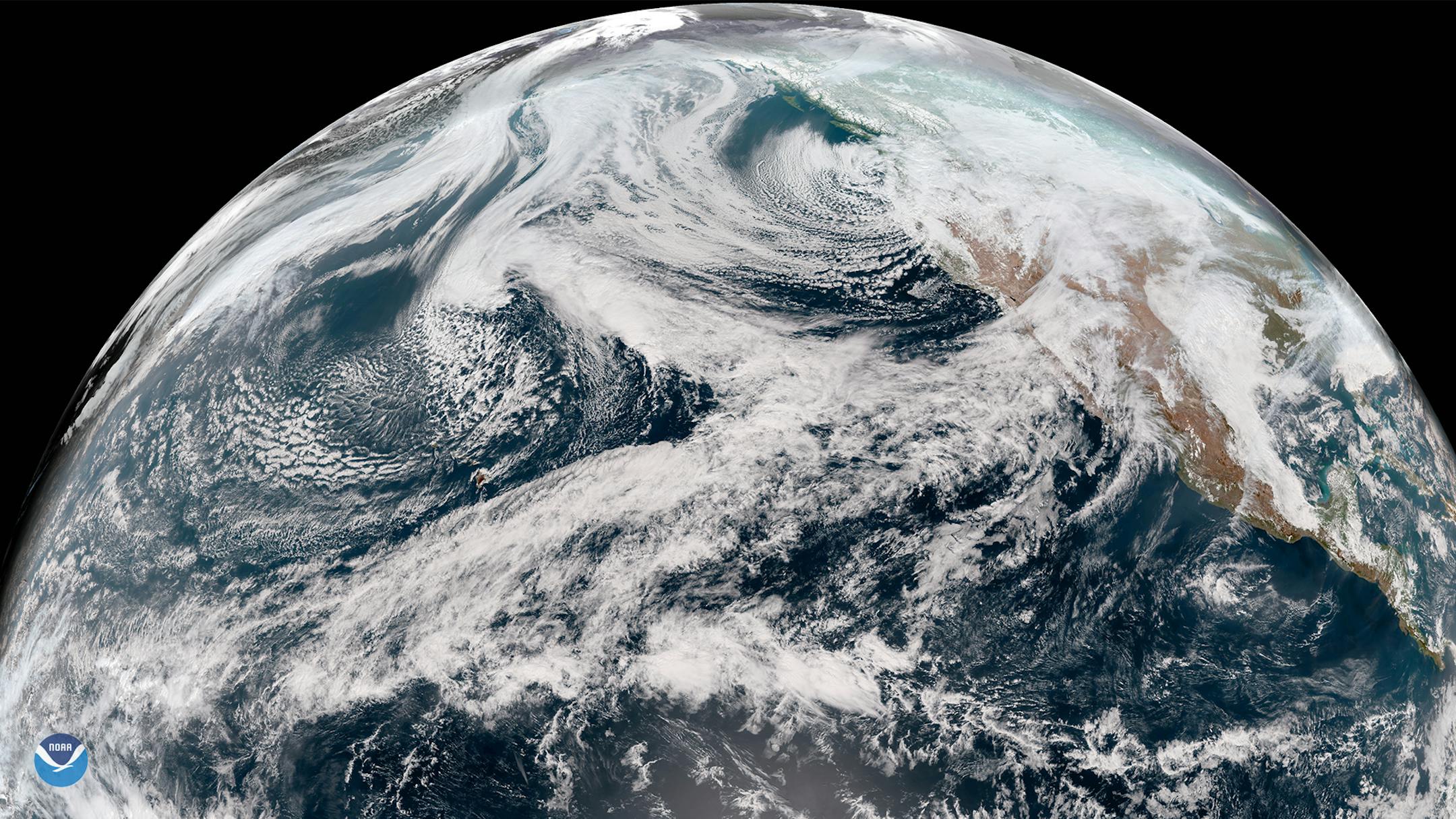
Smoky Skies on Sunday
Skies on Sunday where sunny, but were hazy due to wildfires burning in Canada. At times, the air did smell a bit smoky, but air qualities remained in the moderate levels. Below is a satellite loop around midday Sunday and you can see the hazy smoke layer drifting south into Minnesota from Ontario Canada.
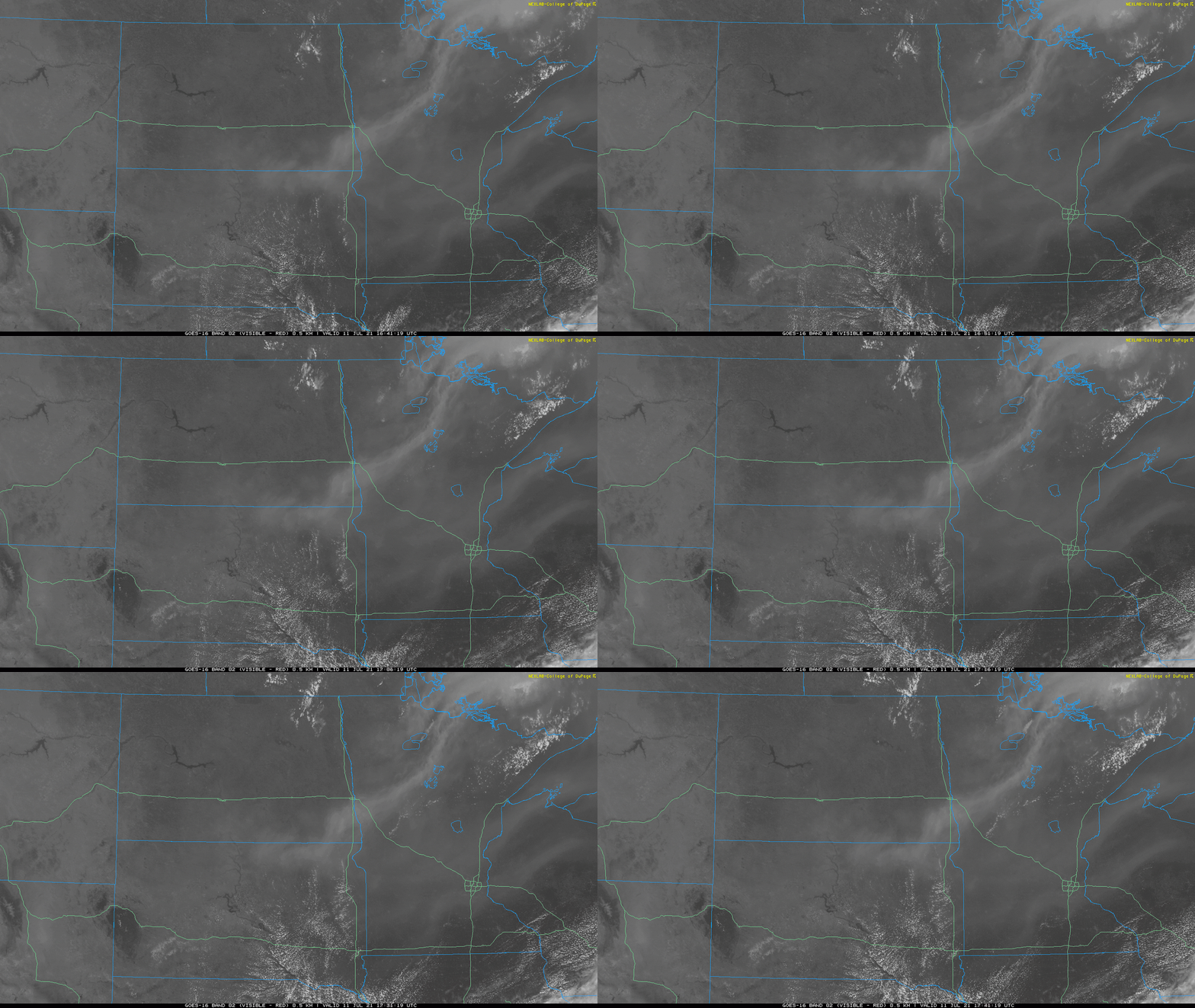
Smoke Analysis on Monday Around Midday
Here is NOAA's HRRR smoke analysis forecast for midday Monday and note the brighter red areas across the Western US and into the Midwest, this is where hazy/smoky skies will be found once again. Sunrise & sunsets will appear quite red/orange in these areas.
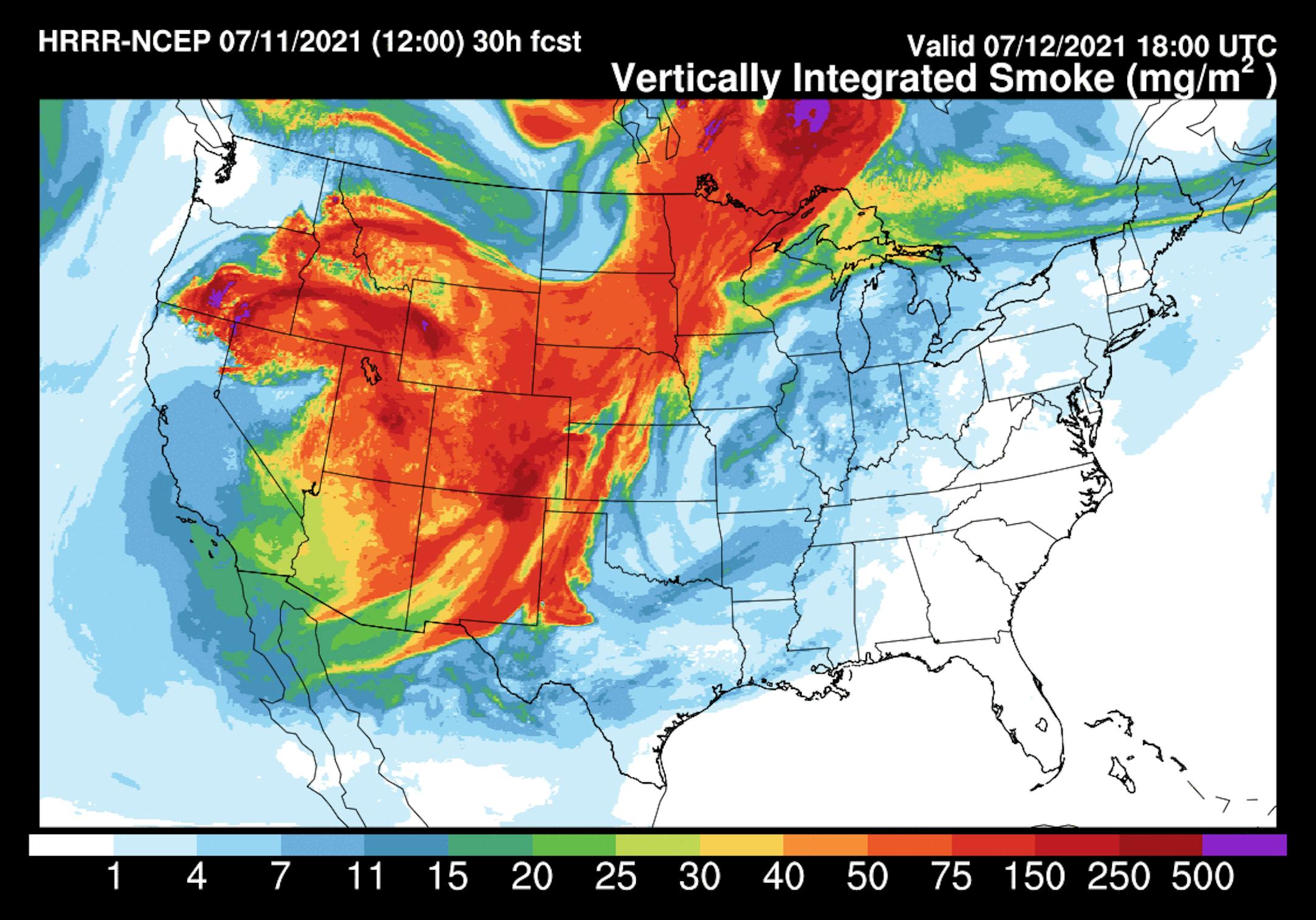
"U.S. climate summary for June 2021: hottest June on record"
"The June contiguous U.S. temperature was 72.6°F, 4.2°F above the 20th-century average, ranking warmest in the 127-year record and surpassing the previous record for June set in 2016 by 0.9°F. The year-to-date average temperature for the contiguous U.S. was 49.3°F, 1.7°F above the 20th-century average, ranking in the warmest third of the January-June record. The June precipitation total for the contiguous U.S. was 2.93 inches, exactly average. Averaged over the first six months of the year, the precipitation total for January-June was 14.64 inches, 0.67 inch below average, ranking in the driest third of the record."
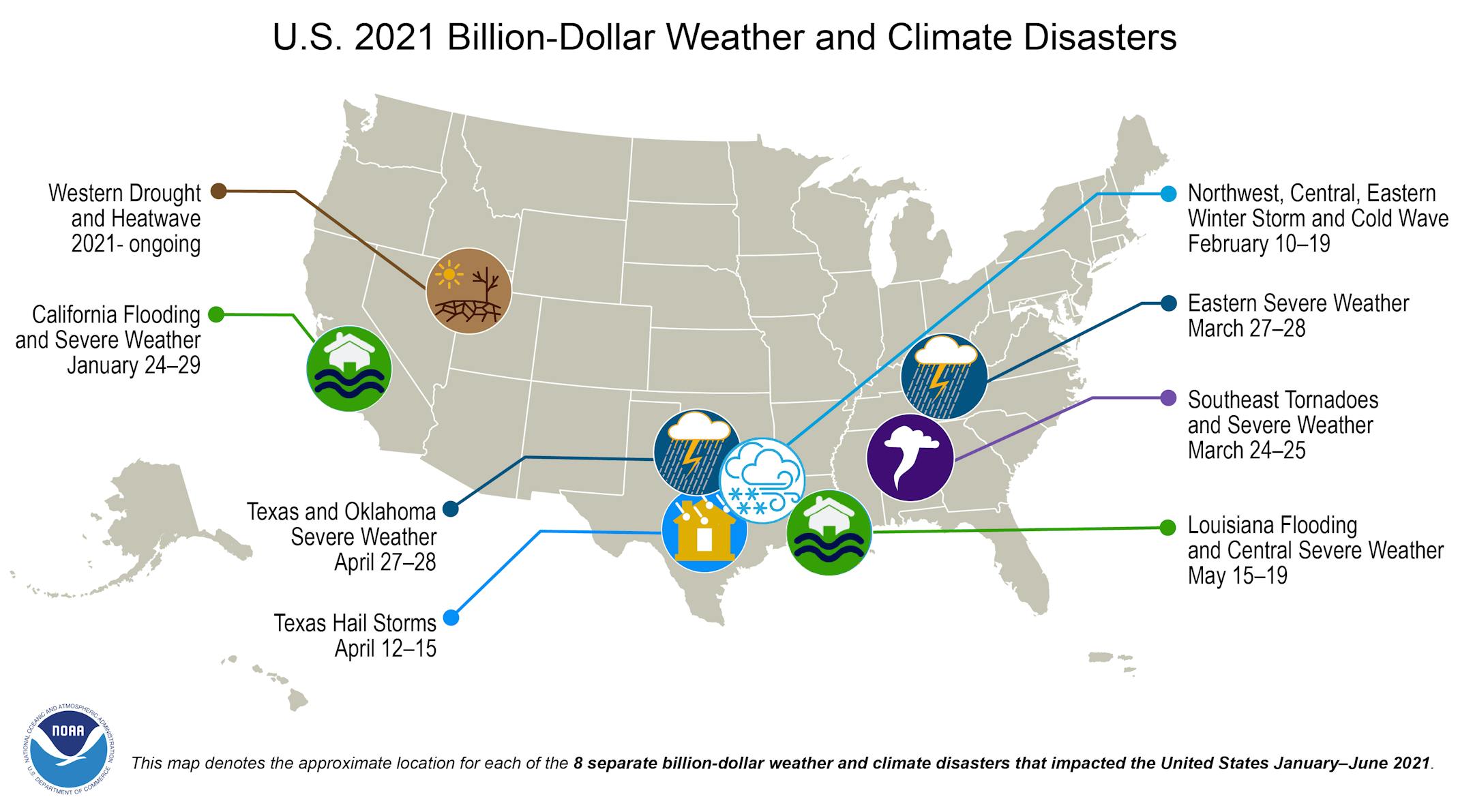
"(8) Billion-Dollar Weather & Climate Disasters So Far in 2021"
"In 2021 (as of July 9), there have been 8 weather/climate disaster events with losses exceeding $1 billion each to affect the United States. These events included 1 drought event, 2 flooding events, 4 severe storm events, and 1 winter storm event. Overall, these events resulted in the deaths of 331 people and had significant economic effects on the areas impacted. The 1980–2020 annual average is 7.1 events (CPI-adjusted); the annual average for the most recent 5 years (2016–2020) is 16.2 events (CPI-adjusted)."
Minnesota Drought Update
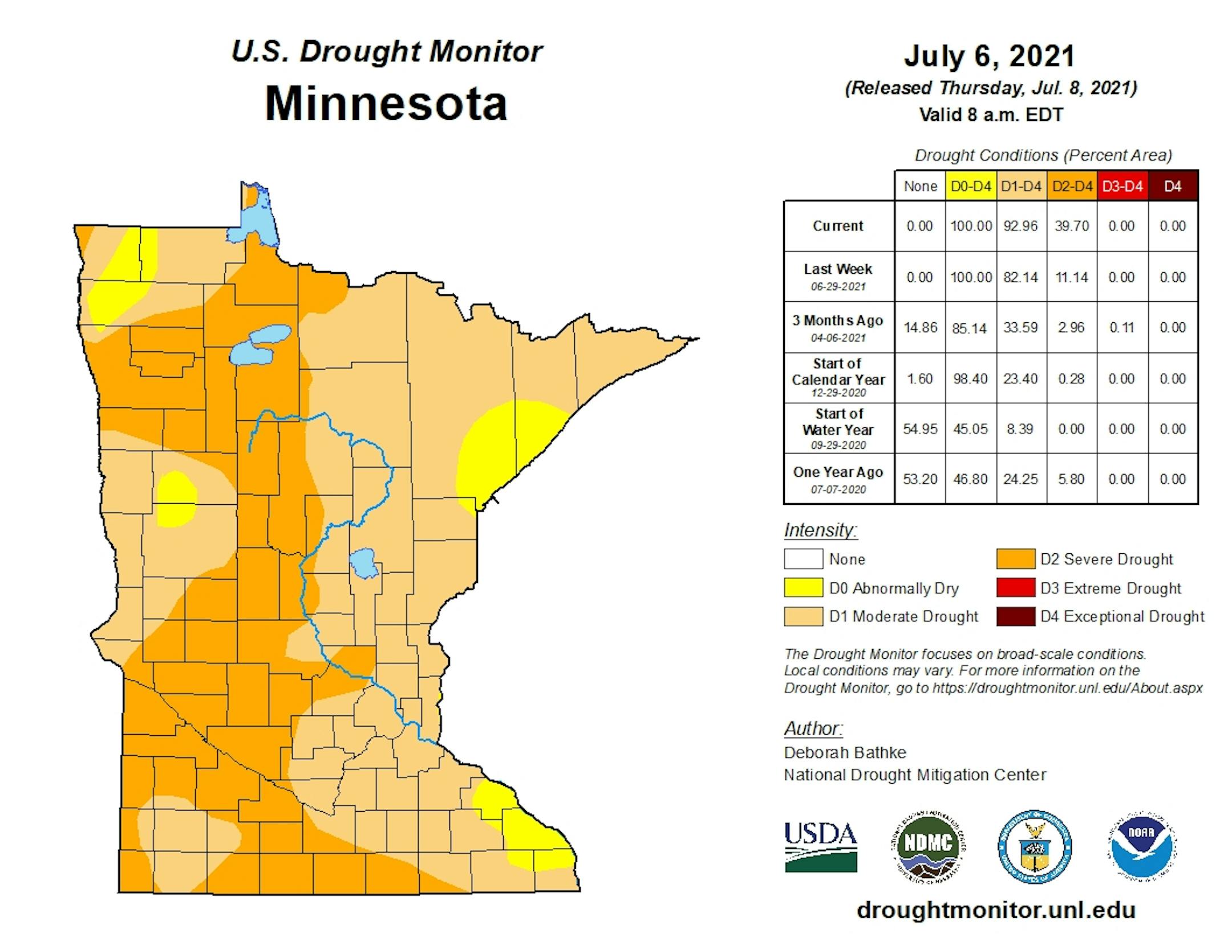
According to the US Drought Monitor, nearly 40% of the state is now considered to be in a severe drought, which has increased from 11% last week. Also, nearly 93% of the state is included in a moderate drought (including the Twin Cities), which has increased from 82% last week. Last year at this time, only 5% of the state was in a severe drought and 25% was in a moderate drought.
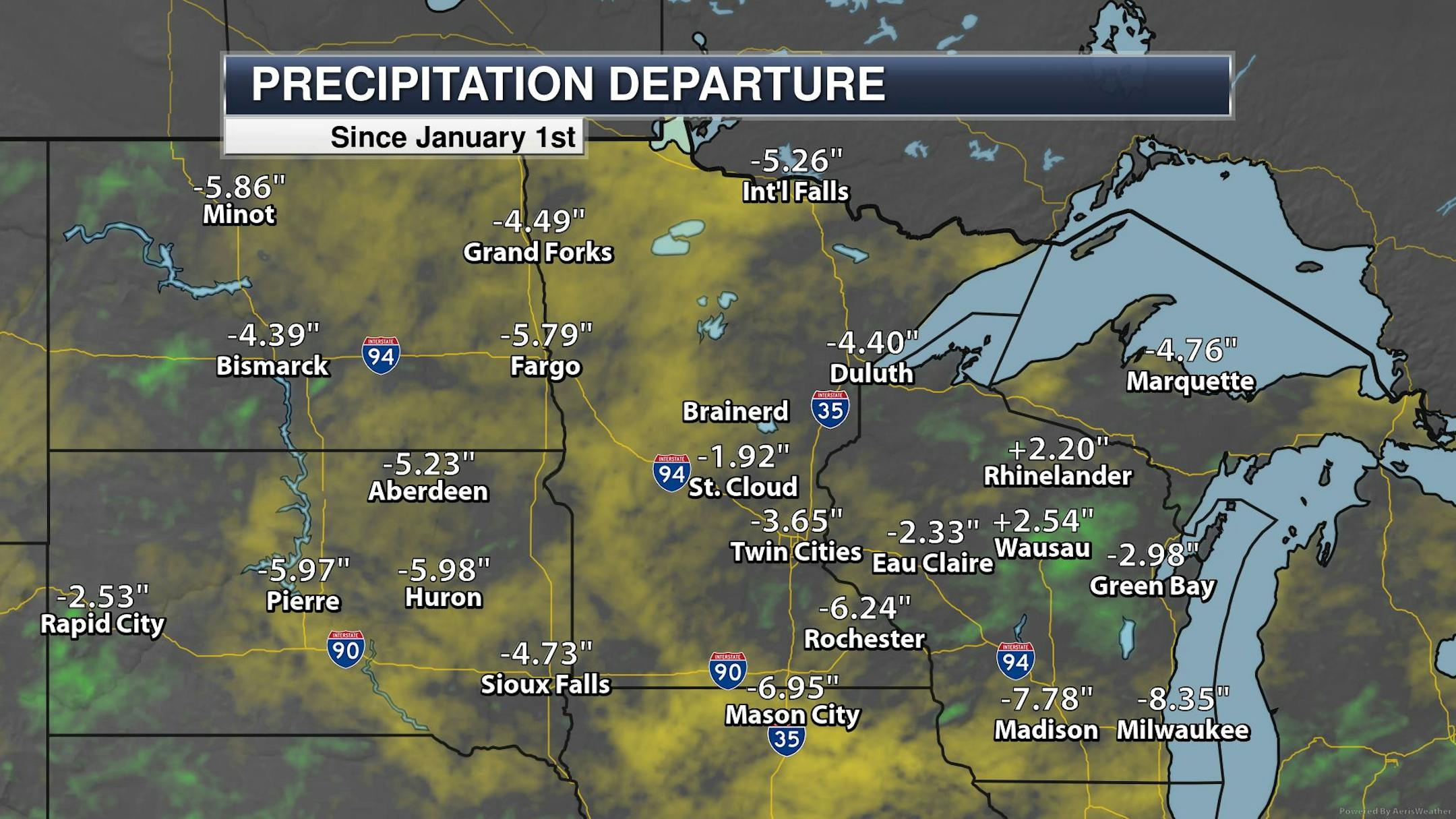
Precipitation Departure From Average (Since Jan. 1st)
Take a look at the precipitation deficits around the region and since the beginning of the year, many locations are running several inches below average, including the Twin Cities. Below are a list of cities and their precipitation deficits so far this year and the rank of how dry the January 1st to July 9th has been.