Smithsonian's new African American museum opens Saturday in Washington

President to dedicate black history museum Saturday.

Tribune News Service
September 21, 2016 at 10:03PM
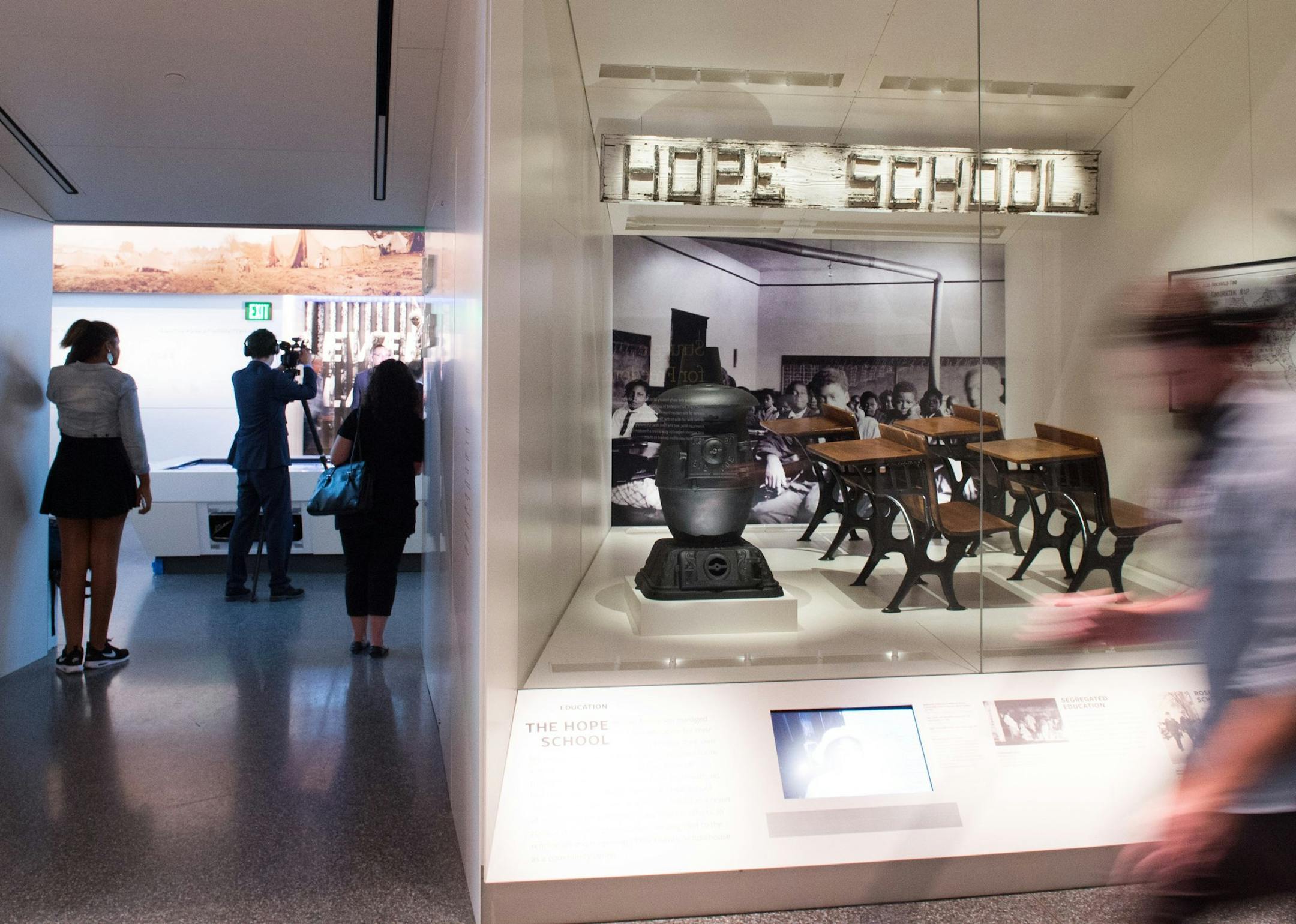
Desks and a wood burning stove from the Hope School are on display at the Smithsonian National Museum of African American History and Culture on Sept. 14, 2016 in Washington, D.C. (Ken Cedeno/McClatchy/TNS)
Desks and a wood-burning stove from Hope School on display at the Smithsonian’s Museum of African American History. (The Minnesota Star Tribune)

WASHINGTON – The National Museum of African American History and Culture may have started out at a distinct disadvantage. But it has already begun to overcome its humble roots.

The first of the Smithsonian Institution's 19 museums to begin without a dedicated collection, its 3,000-plus artifacts were mostly donated by private individuals and organizations. Already, more than 100,000 people have registered as museum members, a Smithsonian record.

Designed to resemble an African wooden column, the museum's exterior is covered with 3,600 bronze-colored aluminum panels that resemble 19th-century ironwork created by New Orleans slaves.

The $540 million, 400,000-square-foot facility comes more than 100 years after black Civil War Union Army veterans first called for a memorial to honor the contributions of black soldiers and other blacks in 1915.

President Calvin Coolidge signed legislation in 1929 authorizing a "National Memorial Commission" to construct a building to serve as a tribute to African-American contributions. But racial opposition in Congress blocked the appropriation of seed money. The stock market crash of 1929, the Great Depression and World War II also kept the project from moving.

It wasn't until December 16, 2003, when President George W. Bush signed legislation creating the National Museum of African American History and Culture, that the effort finally began to take shape.

Some view the museum as a small down payment on reparations and recognition that are owed to blacks after centuries of state-sanctioned bondage, inhumanity, violence and disenfranchisement in the United States.

The attitude is understandable, considering the horror of the Middle Passage, the false promise of Reconstruction, the shame of Jim Crow and the nation's violent resistance to the civil rights movement.
But others see the museum as a long-overdue acknowledgment of America's great failings on race and a salute to the resilience, faith and pride that helped black Americans overcome it and thrive.

The museum, which will be dedicated Saturday by President Obama, explores the nation's racial history and the priceless cultural gems that somehow emerged.

They include people like Muhammad Ali, Harriet Tubman, Frederick Douglass, Dr. Daniel Hale Williams and Ida B. Wells. They also include jazz, blues and hip-hop — creative self-expressions of pain and pride that drew from African oral and rhythmic traditions. Yet they are all uniquely American art forms.

"The music, dance, distinctive foods, art and artists that people outside the United States associate with 'American culture' were and are originally African-American," said V.P. Franklin, professor emeritus of history at the University of California, Riverside and editor of the Journal of African American History. "White Americans are much more African-American than most will admit."

Serving as a portal to the past and window to the future, the museum has the capacity to "touch lives and transform the way people see the world and interact with each other," Smithsonian Secretary David Skorton said. That theory will be put to the test immediately.

"Opening now at a time when social and political discourse remind us that racism is not, unfortunately, a thing of the past, this museum can, and I believe will, help advance the public conversation," he said.

A festival celebrating the museum begins Friday at the Washington Monument.


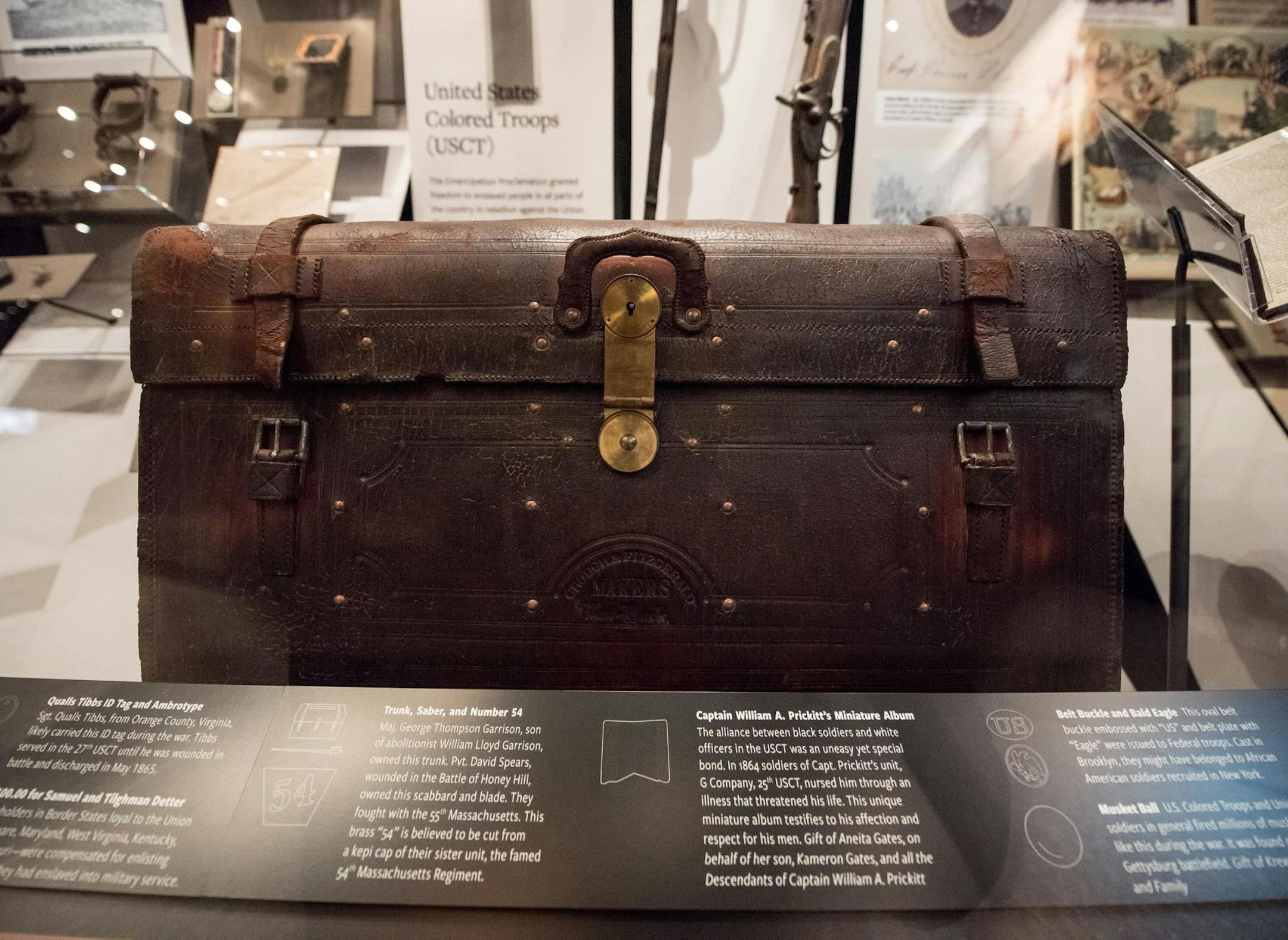
Traveling trunks used by George Thompson Garrison in the Civil War are on display at the Smithsonian National Museum of African American History and Culture on Sept. 14, 2016 in Washington, D.C. (Ken Cedeno/McClatchy/TNS)
Traveling trunks used by George Thompson Garrison in the Civil War are featured in the museum, which opens Saturday. (The Minnesota Star Tribune)
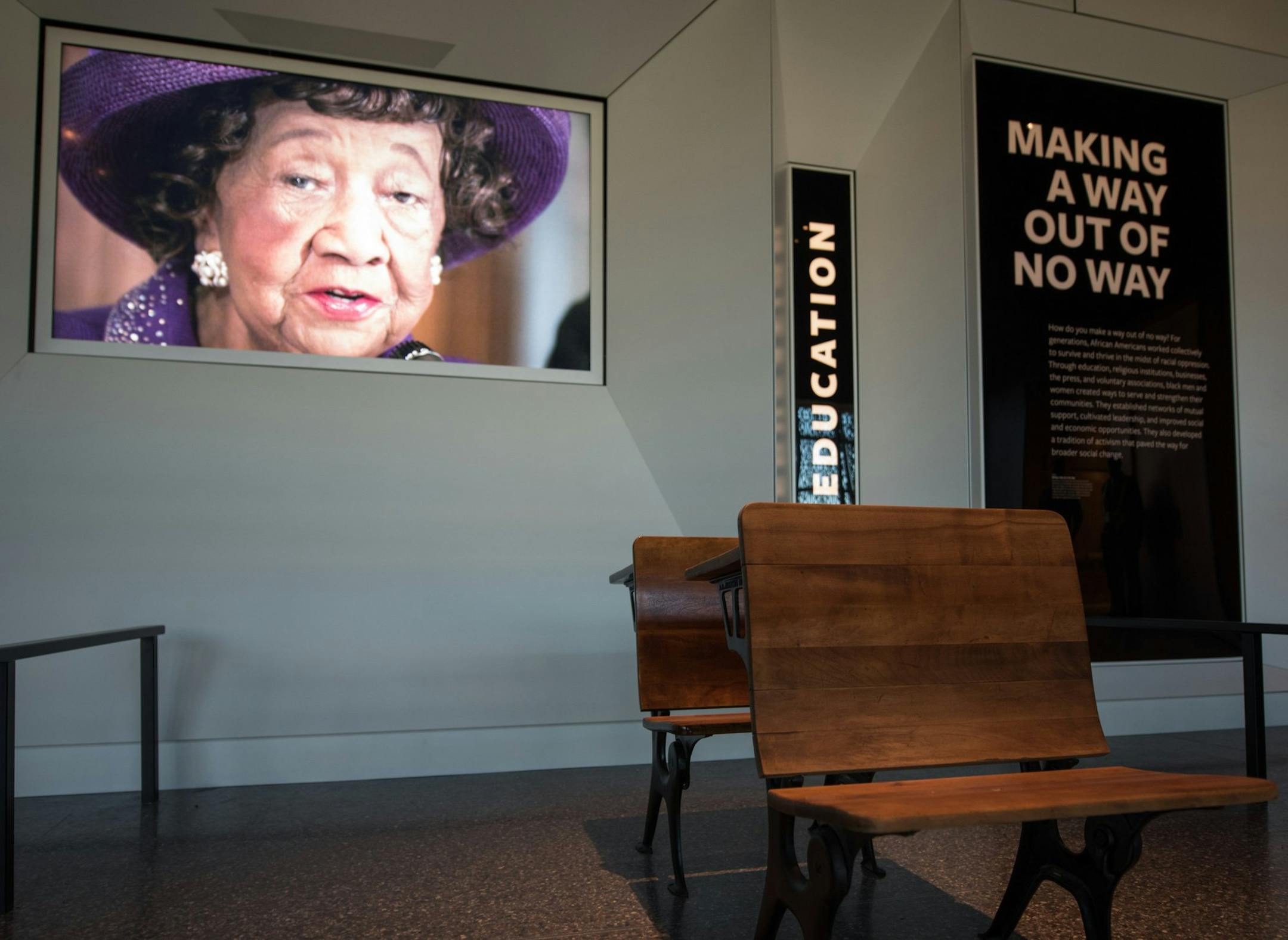
Desks from the Hope School in Pomaria, S.C. are on display at the Smithsonian National Museum of African American History and Culture on Sept. 14, 2016 in Washington, D.C. (Ken Cedeno/McClatchy/TNS)
The museum features desks from the historic Hope School in Pomaria, S.C., which served rural black children in the 1900s. (The Minnesota Star Tribune)
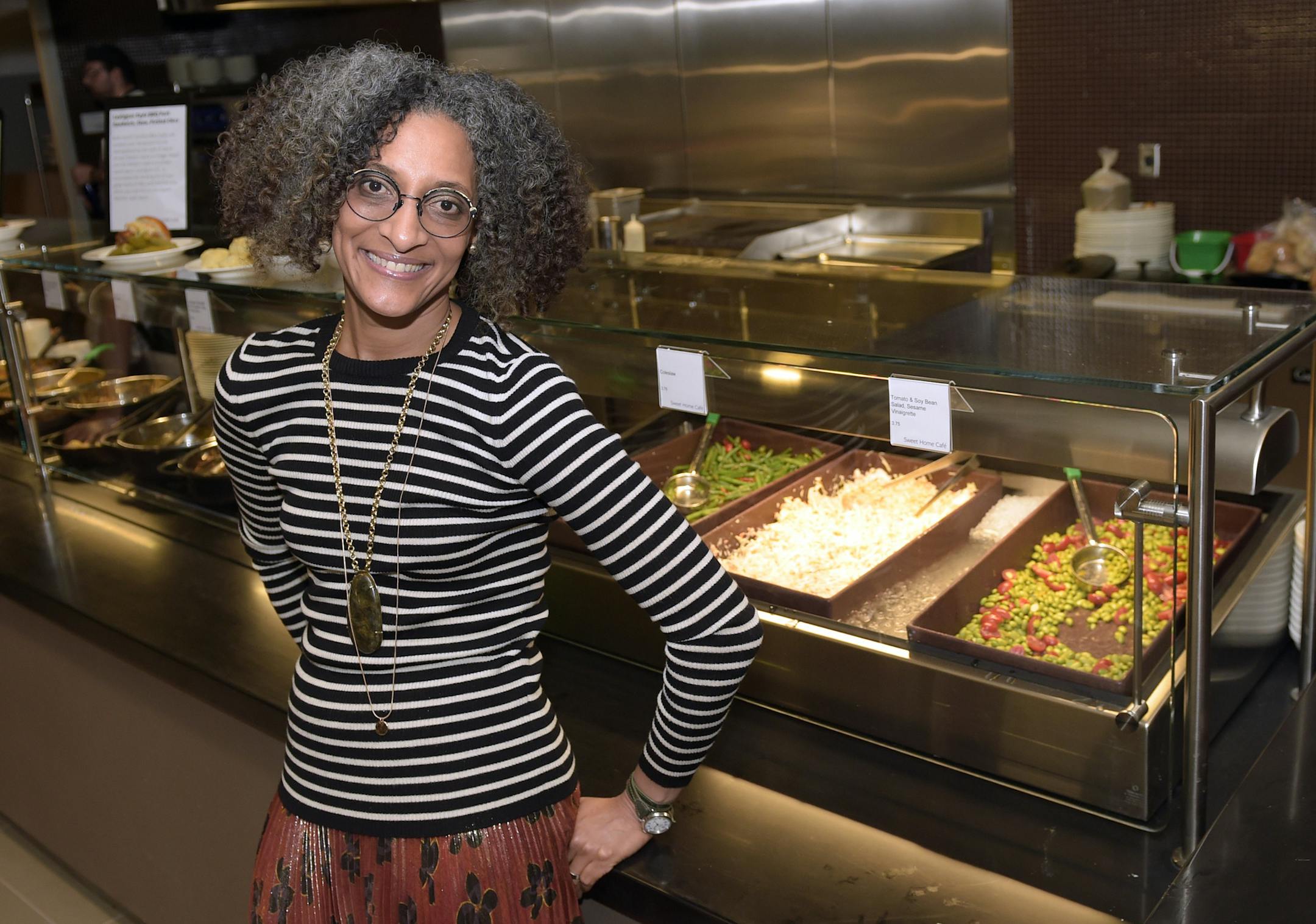
FILE - In this Sept. 14, 2016 file photo, Carla Hall, the Chew co-host and Top Chef alum, poses for a photo inside the North Star Cafe at the National Museum of African American History and Culture in Washington. The museum, opening later this month, will be an experience aimed at feeding the soul, literally. The Sweet Home Cafe is the museum's restaurant, with a menu featuring culturally authentic fare and modern-day-inspired foods. The restaurant is a journey through the agricultural south, Cr
FILE - In this Sept. 14, 2016 file photo, Carla Hall, the Chew co-host and Top Chef alum, poses for a photo inside the North Star Cafe at the National Museum of African American History and Culture in Washington. The museum, opening later this month, will be an experience aimed at feeding the soul, literally. The Sweet Home Cafe is the museum’s restaurant, with a menu featuring culturally authentic fare and modern-day-inspired foods. The restaurant is a journey through the agricultural south, Creole coast, northern states and the Southwest. (AP Photo/Susan Walsh, File) (The Minnesota Star Tribune)
about the writer

about the writer

Tony Pugh

More from No Section

See More
FILE -- A rent deposit slot at an apartment complex in Tucker, Ga., on July 21, 2020. As an eviction crisis has seemed increasingly likely this summer, everyone in the housing market has made the same plea to Washington: Send money — lots of it — that would keep renters in their homes and landlords afloat. (Melissa Golden/The New York Times) ORG XMIT: XNYT58
Melissa Golden/The New York Times

It’s too soon to tell how much the immigration crackdown is to blame.