

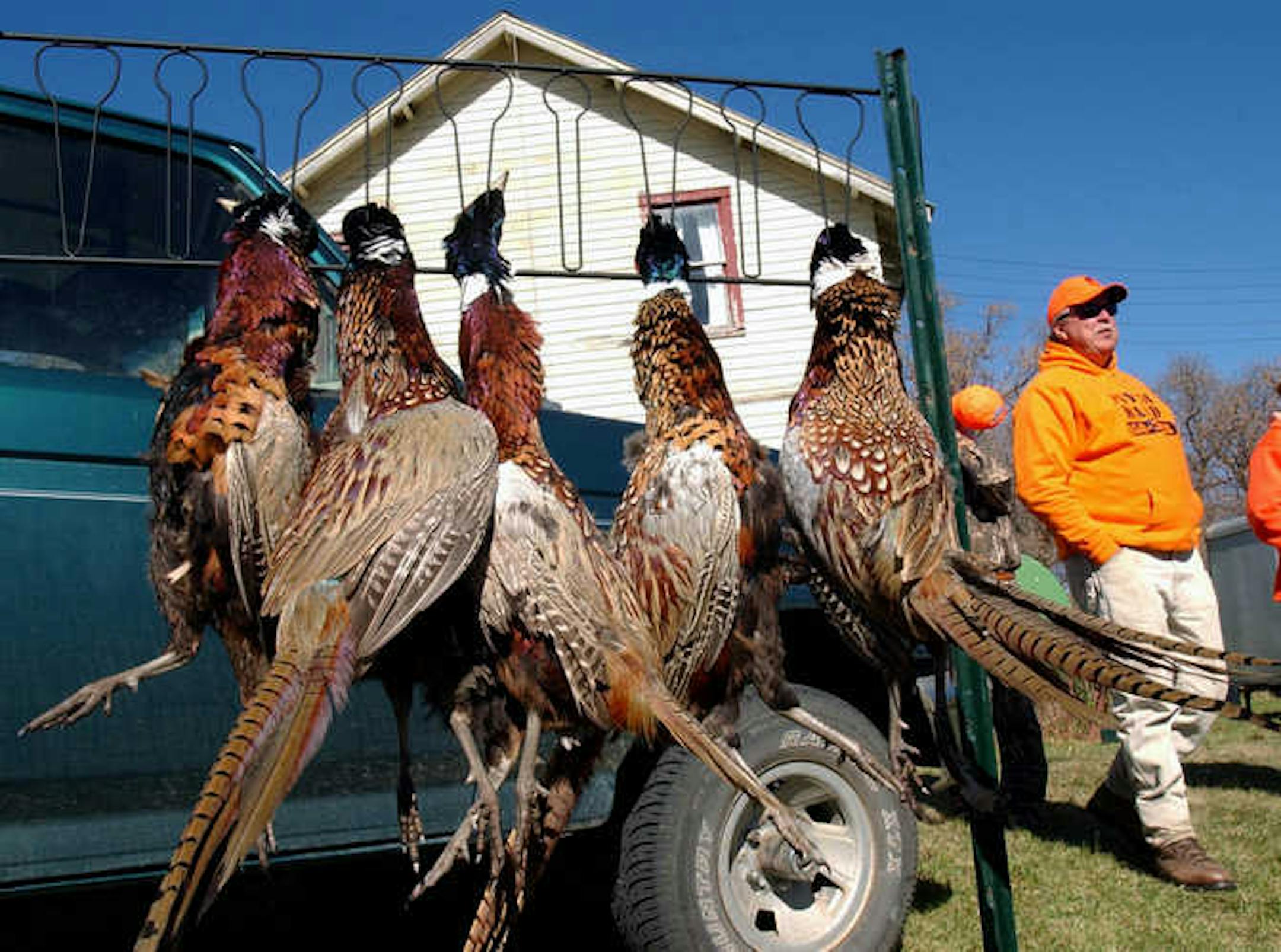
Better, but not great.
That's the prediction for this fall's Minnesota pheasant hunting season.
The ringneck population index is up 68 percent, boosted by a mild winter and decent spring nesting weather. But it's still only half of the 10-year average.
Translation: Hunters should find more birds this fall, but not nearly the numbers they saw from 2003 through 2008, when they shot an average of 550,000 birds.
"We're forecasting a harvest of 290,000 this year," said Kurt Haroldson, Department of Natural Resources wildlife biologist. That's considerably better than last year, when hunters killed only 204,000 birds -- the lowest in 25 years.
"We're moving in the right direction," Haroldson said.
The DNR's August roadside wildlife survey, released Tuesday, confirmed what some wildlife managers had been reporting: Pheasants are rebounding from two consecutive devastating winters in 2010 and 2011, and poor spring nesting weather.
Officials counted an average of nearly 39 pheasants per 100 miles this summer, compared to 23 birds per 100 miles last year. The highest counts were in the west-central region (58 birds per 100 miles), the east-central (55 birds per 100 miles), and the southwest (52 birds per 100 miles).


