Smarter (or luckier) than the average bear

A northern Minnesota black bear has survived for an amazing 36 years, making her one of the oldest on record.

March 31, 2010 at 4:31AM
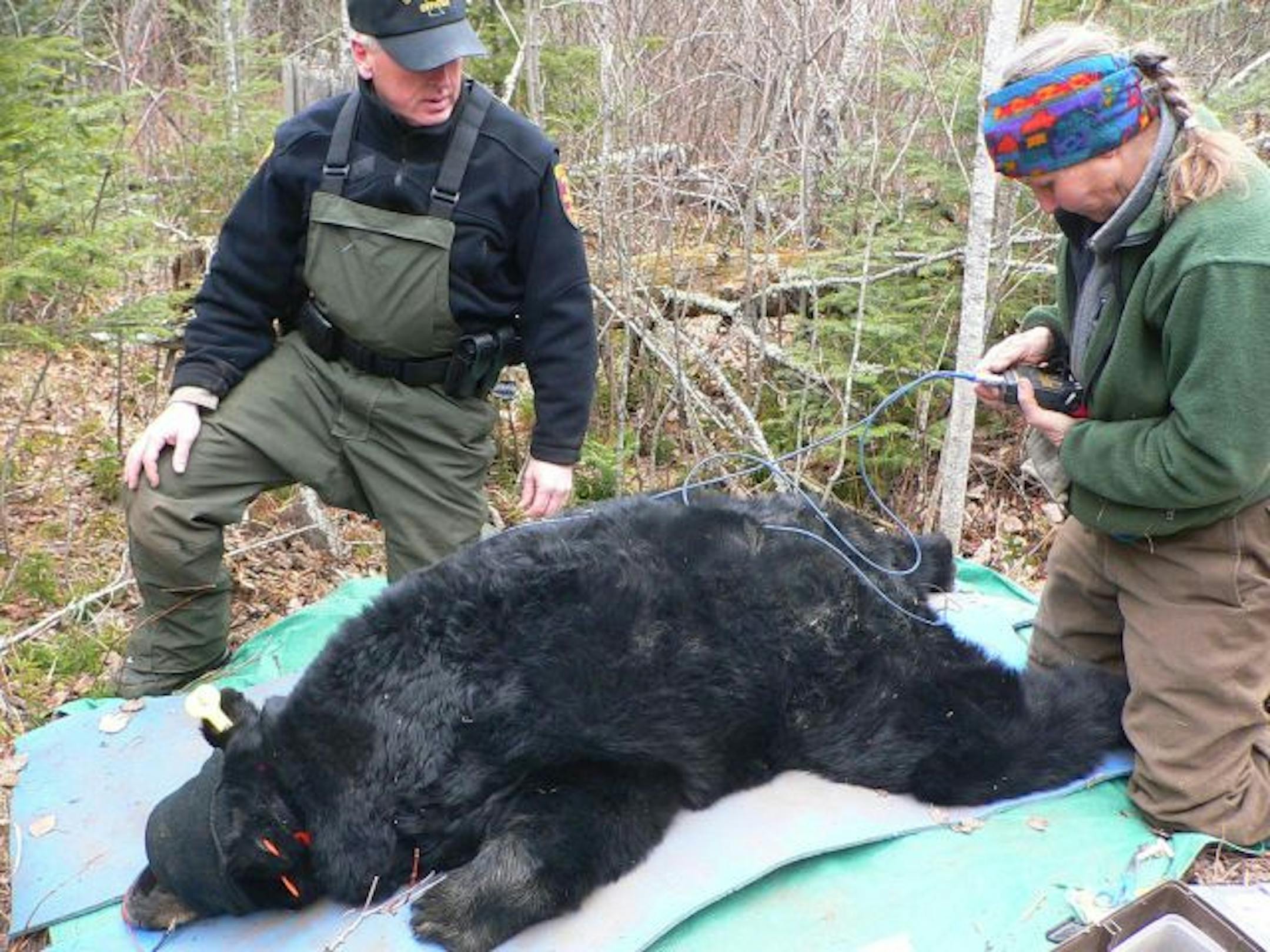
Ken Soring, now a DNR enforcement manager, helped officials work on the bear last week — the first time he has seen her since 1981. Soring watched as DNR researcher Karen Noyce used an electronic device to measure the bear's body fat. Noyce also attached bright yellow and orange ear tags to the bear and a yellow tag to her collar in hopes that hunters won't shoot her.
Ken Soring, now a DNR enforcement manager, helped officials work on the bear last week — the first time he has seen her since 1981. Soring watched as DNR researcher Karen Noyce used an electronic device to measure the bear’s body fat. Noyce also attached bright yellow and orange ear tags to the bear and a yellow tag to her collar in hopes that hunters won’t shoot her. (DNR/The Minnesota Star Tribune)

The bear is simply called No. 56, but "Lucky" might be a better name.

The northern Minnesota black bear has beaten long odds, living to a ripe old age of 36 -- one of the oldest -- if not the oldest, wild black bears on record.

She was first caught and outfitted with a radio collar in 1981, when she was 7. Since then, she's survived 29 hunting seasons and avoided cars on highways and clashes with rural residents.

How rare is she?

The average age of a bear killed by a hunter in Minnesota is 3.7 years old. About 80 percent of her 26 cubs died by age 6. And the oldest bear ever killed here by a hunter was 31, based on 35 years of data using teeth to determine the age of harvested bears.

"Obviously she's really a special bear," said Department of Natural Resources research biologist Karen Noyce of Grand Rapids, who has been monitoring No. 56 since she first tranquilized and attached a radio collar to the bear back in 1981.

Of the hundreds of bears that have been radio collared since then, the longest that any survived was 23 years, Noyce said.

"Very few bears live past 25," said Dave Garshelis, DNR bear research scientist. "This is really old for a wild bear. She has found a way to beat the odds."
Cautious by nature

But Noyce and Garshelis say there's probably a reason, beyond chance or luck, for her longevity.

"It has to be something behavioral," Garshelis said. "She has avoided going to hunters' baits, though there are hunters where she lives. Whether she learned early in life from her mother ... we just don't know."

Said Noyce: "Some of that might be her personality; she might have a somewhat more cautious nature than other bears."

People assume a bear is a bear, but Noyce said studies of many animals are showing that they can be quite different. Bears don't all act the same. A bold or reckless one might not last long.

No. 56 -- called that because of the numbered tag she was given -- lives in a remote area without a lot of permanent human residences. But there are roads, trails and access by hunters, who typically place bait in the woods to attract bears each fall.

But for whatever reason, she has ignored them.

And she's apparently passed on that sense of caution to her offspring.

Noyce said No. 56 had at least 26 cubs. All but three survived the first year and one-third survived to age 4.

"That's a little better than average," Noyce said.

One of her cubs lived 16 years, another is still alive at 15. At least five of her cubs bore another 47 "grandchildren," and one of those lived 22 years and bore 28 great-grandchildren. Researchers only tracked the female cubs, so that doesn't account for reproduction from male descendents. The bear was 26 years old when she had her last litter of cubs.

She also could have encountered trouble during her summer wanderings. It's not uncommon for bears to leave their home range and travel in mid-summer in search of food, and No. 56 did quite a bit of traveling in the 10 years her movement was closely monitored. Her home range covers about 15 square miles, but one year she traveled 45 miles away and another year she covered 20 miles.

Researchers have visited No. 56 in person every three years, when Noyce replaces the radio collar with a new one. Noyce, Garshelis and Ken Soring, a former DNR researcher and now DNR enforcement manager who helped collar the bear in 1981, recently went into the woods to find the old gal.

Wanted: A natural death

They tranquilized her while she was hibernating in her den, checked her health and attached a new radio collar.

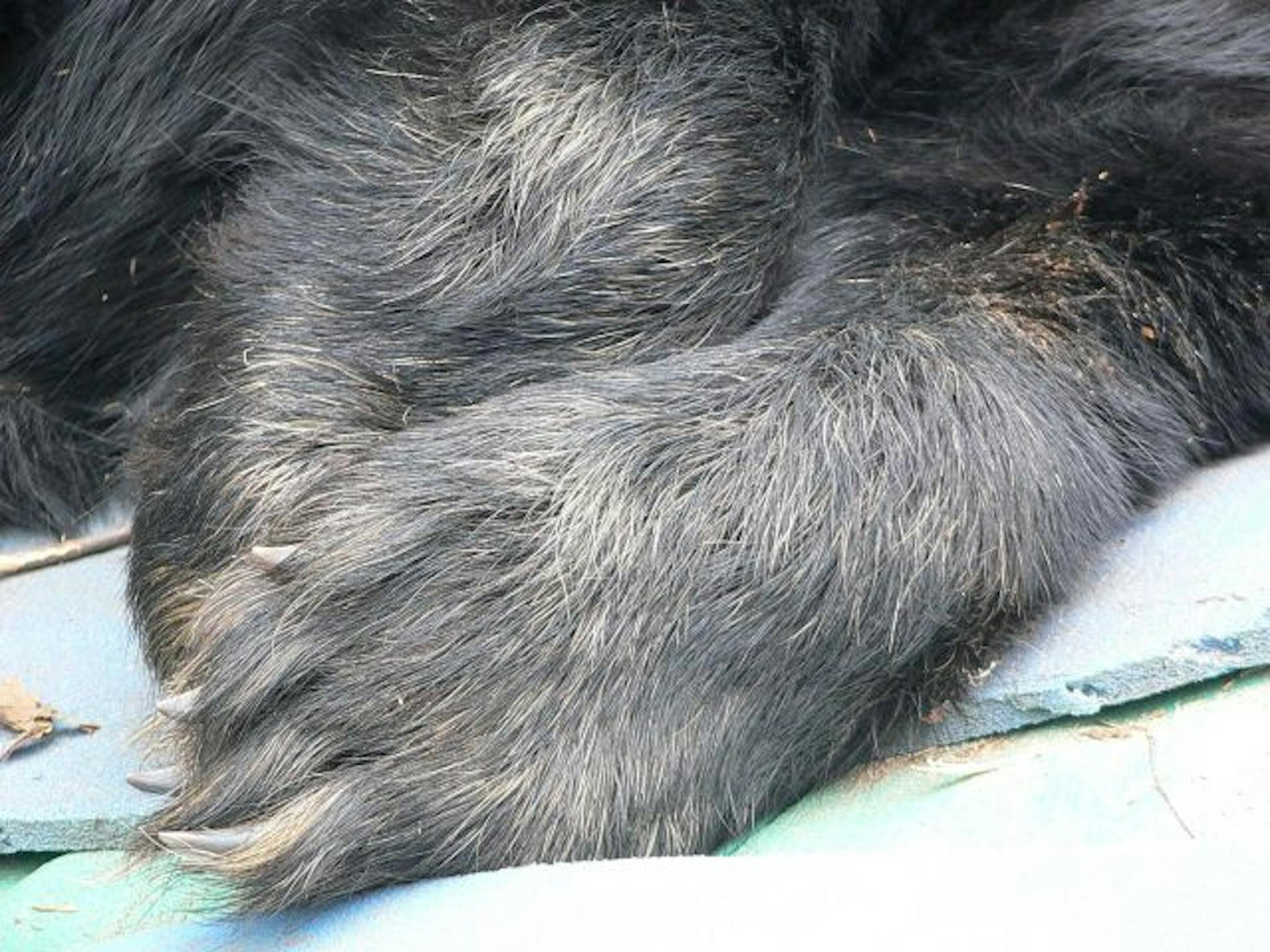
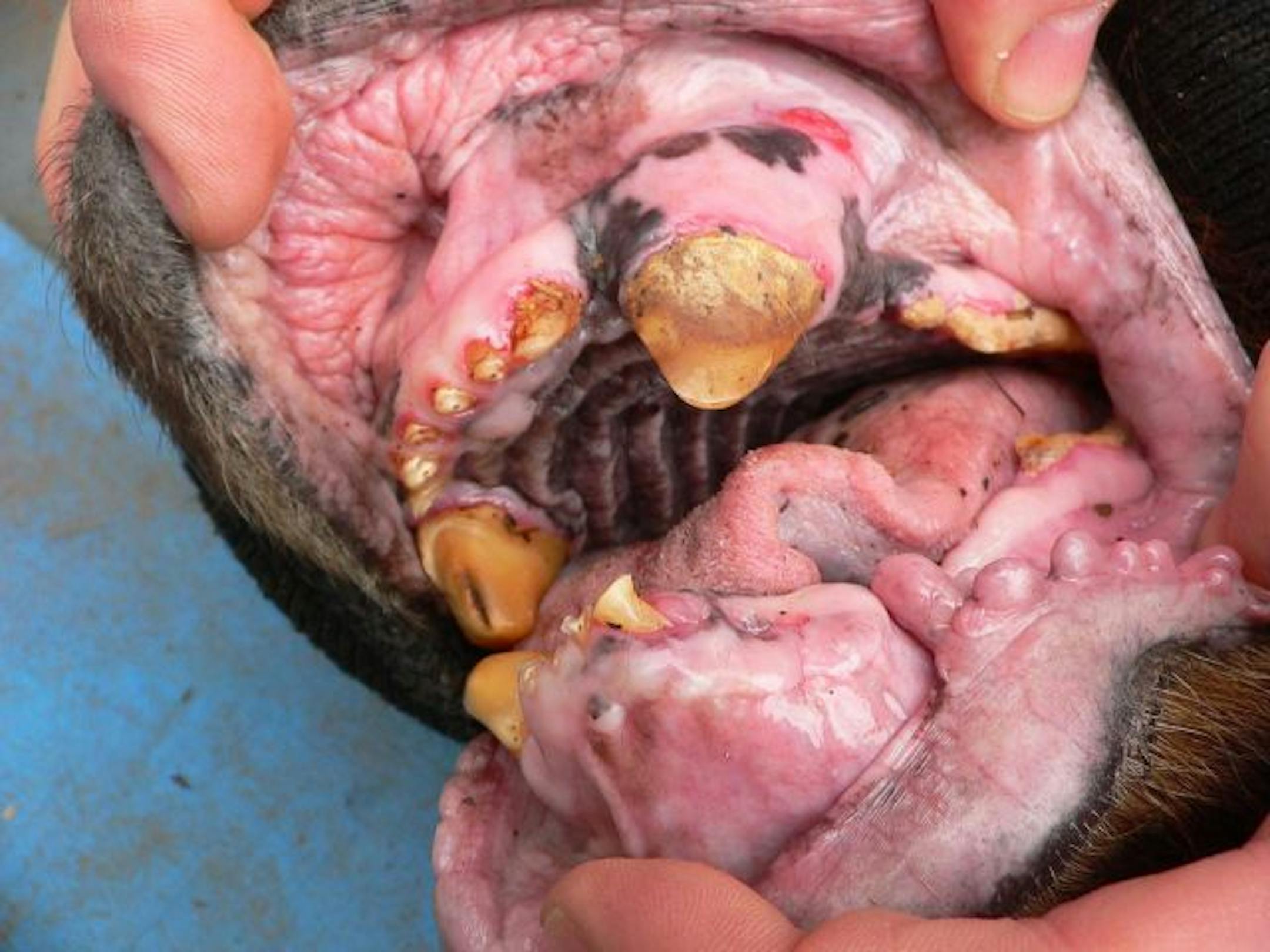
"She's healthy," said Noyce. She weighs about 190 pounds. Her face and paws are gray with age. And her teeth are worn, chipped or missing. And that could affect her chances of survival.

"If she has trouble eating natural foods, she may be more attracted to some other food source," Garshelis said. Like a bait pile.

In recent years, DNR researchers have asked hunters to avoid shooting collared bears so information can continue to be gathered. So to boost her chances of survival, they attached large bright orange and yellow tags on each ear, and on the radio collar.

Noyce and Garshelis don't know how long a bear can survive in the wild, because most are killed before they can die of natural causes. "We've never seen a bear die of old age," Noyce said.

It's hard not to become attached to an animal they have followed for most of their careers, Noyce acknowledged.

"Everything dies, and at some point she will die," Noyce said. "It will be sad, but it will be interesting. It would be disappointing after all these years if she died of a human-related cause."

Said Garshelis: "We hope she dies naturally, which would make a nice ending to the story."

Doug Smith • dsmith@startribune.com

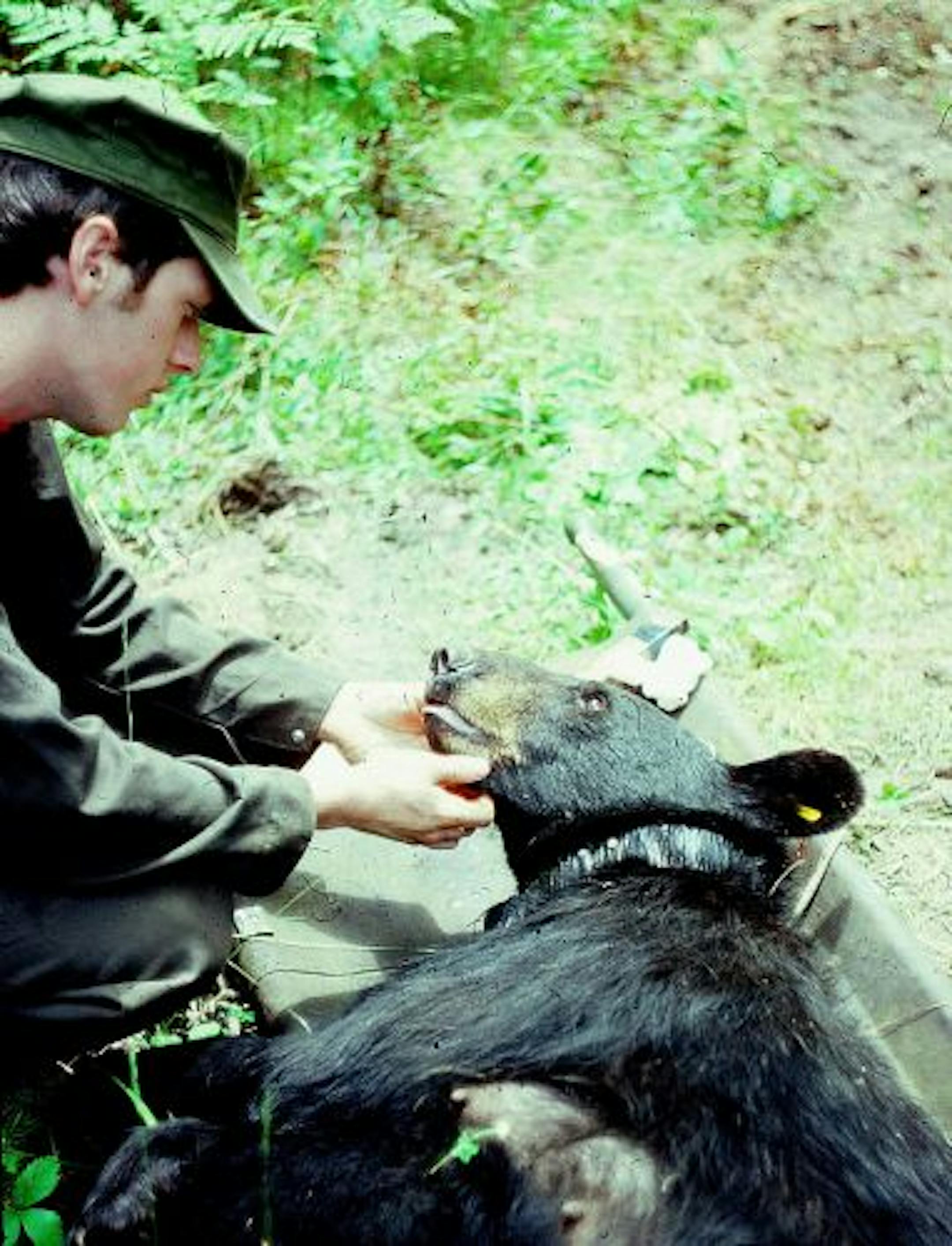
Former DNR researcher Ken Soring examined bear No. 56 back in July 1981, when researchers first captured and radio-collared her. The bear was 7 then.
Former DNR researcher Ken Soring examined bear No. 56 back in July 1981, when researchers first captured and radio-collared her. The bear was 7 then. (DNR/The Minnesota Star Tribune)
After 36 years, bear No. 56's teeth are well-worn, chipped and missing. Still, overall, researchers say she's in good health.
After 36 years, bear No. 56’s teeth are well-worn, chipped and missing. Still, overall, researchers say she’s in good health. (DNR/The Minnesota Star Tribune)
Bear No. 56's paws are turning gray, and her teeth are worn, chipped or missing. Still, overall, researchers say she's in remarkably good health. They are curious to find out how long a bear can survive in the wild.
Bear No. 56’s paws are turning gray, and her teeth are worn, chipped or missing. Still, overall, researchers say she’s in remarkably good health. They are curious to find out how long a bear can survive in the wild. (DNR/The Minnesota Star Tribune)
about the writer

about the writer

Star Tribune

More from No Section

See More
FILE -- A rent deposit slot at an apartment complex in Tucker, Ga., on July 21, 2020. As an eviction crisis has seemed increasingly likely this summer, everyone in the housing market has made the same plea to Washington: Send money — lots of it — that would keep renters in their homes and landlords afloat. (Melissa Golden/The New York Times) ORG XMIT: XNYT58
Melissa Golden/The New York Times

It’s too soon to tell how much the immigration crackdown is to blame.