

BANDA ACEH, INDONESIA - The 2004 tsunami obliterated Pipit's village, wiped out her family and swept her through churning waters, cascading debris and hurtling bodies.
On her first night as an orphan, at the age of 13, she slept next to a row of corpses.
Five years later, she still has moments of sadness, especially during holidays. But like many of Indonesia's more than 5,200 known tsunami orphans, she is making a life for herself. She has enrolled in university, plays the violin and plans to tackle German.
"Most of the time, I don't think about the tsunami," said Pipit, who lives in a comfortable orphanage in Banda Aceh, the capital of Aceh Province and close to the epicenter of the earthquake that unleashed one of the worst natural disasters in history.
"I'm trying to be strong," said Pipit, who like many Indonesians uses just one name.
The December 26, 2004, quake was at least a magnitude 9.1, and unleashed towering waves that leveled communities from Indonesia to Thailand, India and Sri Lanka. About 230,000 people died, more than half of them in Aceh on the island of Sumatra.
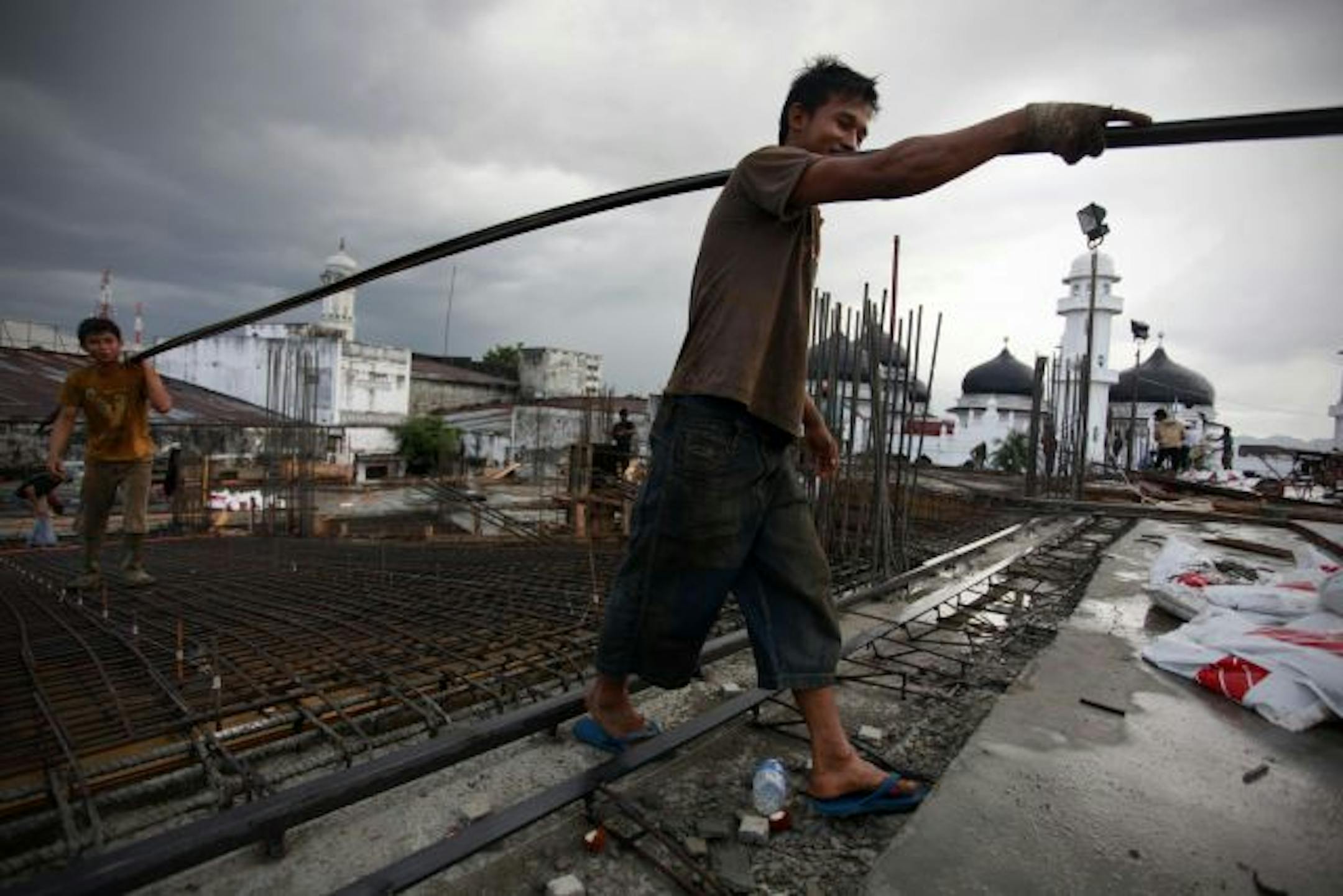
More than $13 billion in donations poured in from around the world, nearly half for Aceh. In some Indonesian communities, only the mosque was left standing. They have been rebuilt. Destroyed homes have been replaced by sturdier ones, new schools have gone up and freshly paved roads crisscross the region.
There are few visible reminders of the tsunami in Banda Aceh today, with one glaring exception: a 5,000-ton ship that was hurled into a residential neighborhood roughly one mile inland. It has become a tourist attraction.


