

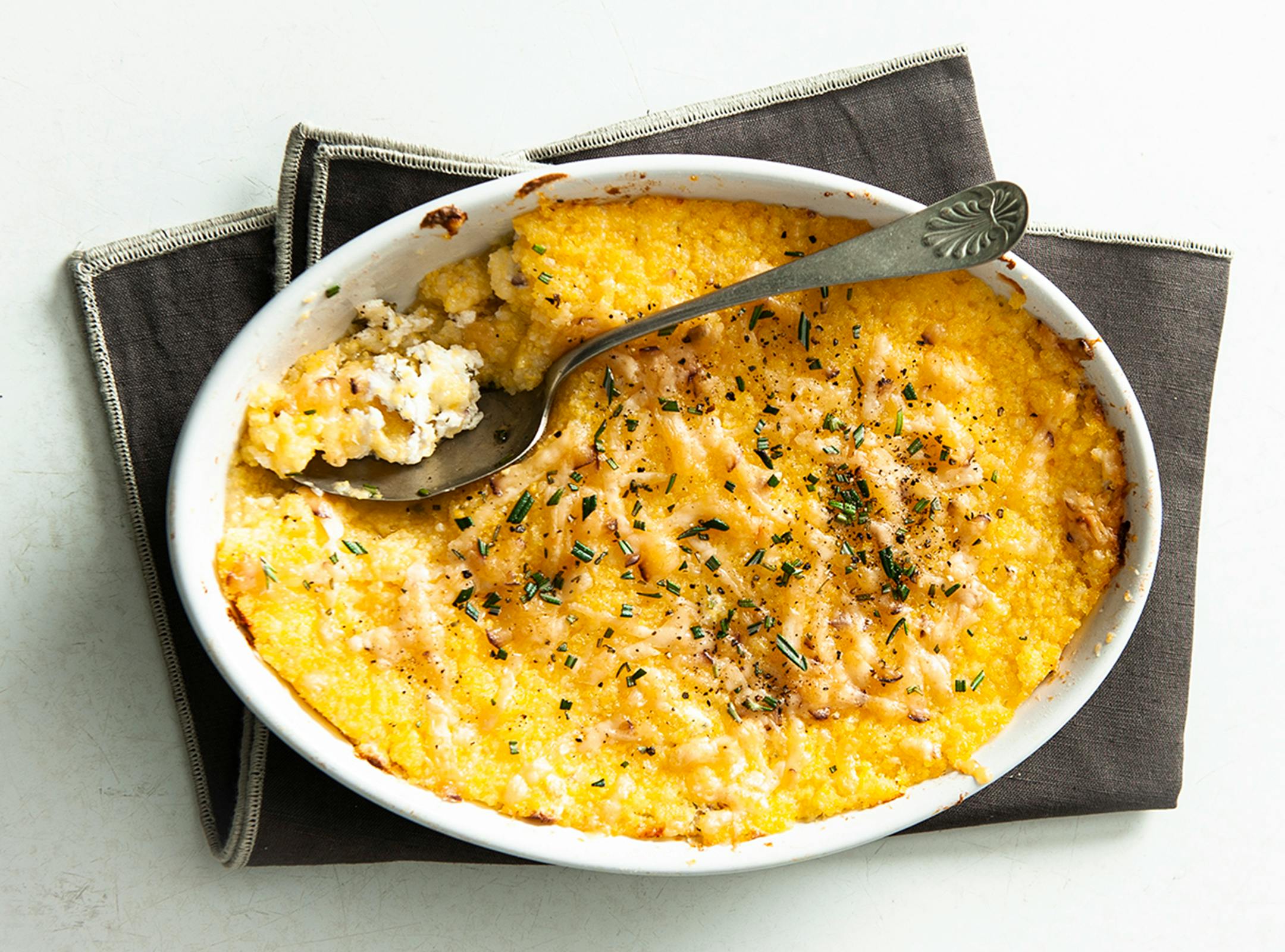
Slowly does it in this wintry world.
That's why I like making polenta: stirring the pot is meditative and warming and allows the cornmeal to swell and fully cook, opening up the sweet corn flavor. Some will argue that baking the polenta frees the cook to move on to other tasks, but I've found that technique yields stiffer, less flavorful results.
There is, however, a happy medium. Start the polenta on the stove and stir constantly for about 20 minutes. Then fold in ricotta cheese and turn the polenta into a baking dish to finish it off in the oven. The cheese melts into the grains, creating a rich, lush texture.
While we associate polenta with northern Italy, the earliest versions were made with various grains — millet, rye, spelt. When Native Americans introduced corn to the Europeans, ground cornmeal became the foundation for this dish. In our country, the term "polenta" is more appealing than its original moniker, corn mush.
Because the primary ingredient in this dish is the cornmeal, make sure to use top quality. Look for stone ground cornmeal because the grinding process retains the hull and germ of the grain. This method gives the polenta its texture and a true corn flavor. I prefer the coarse or medium polenta grinds to the fine grind because they have a pleasing amount of grit. But the fine will work equally well in this dish.
You can find prepared polenta in plastic tubes as well as an instant variety packaged in a box, but these lack the character of real polenta made from scratch. Leftovers, if you have any, are wonderful cut into squares and sizzled off in butter or olive oil. Use them as a base for lasagna or roasted vegetables and cheese. A little effort goes a long way.
Creamy Baked Polenta
Serves 4 to 6.
Note: Polenta is really cornmeal mush and can be made with coarse, medium or fine grind cornmeal. What matters most is the quality. Look for stone ground; it yields the best flavor and texture. From Beth Dooley.


