

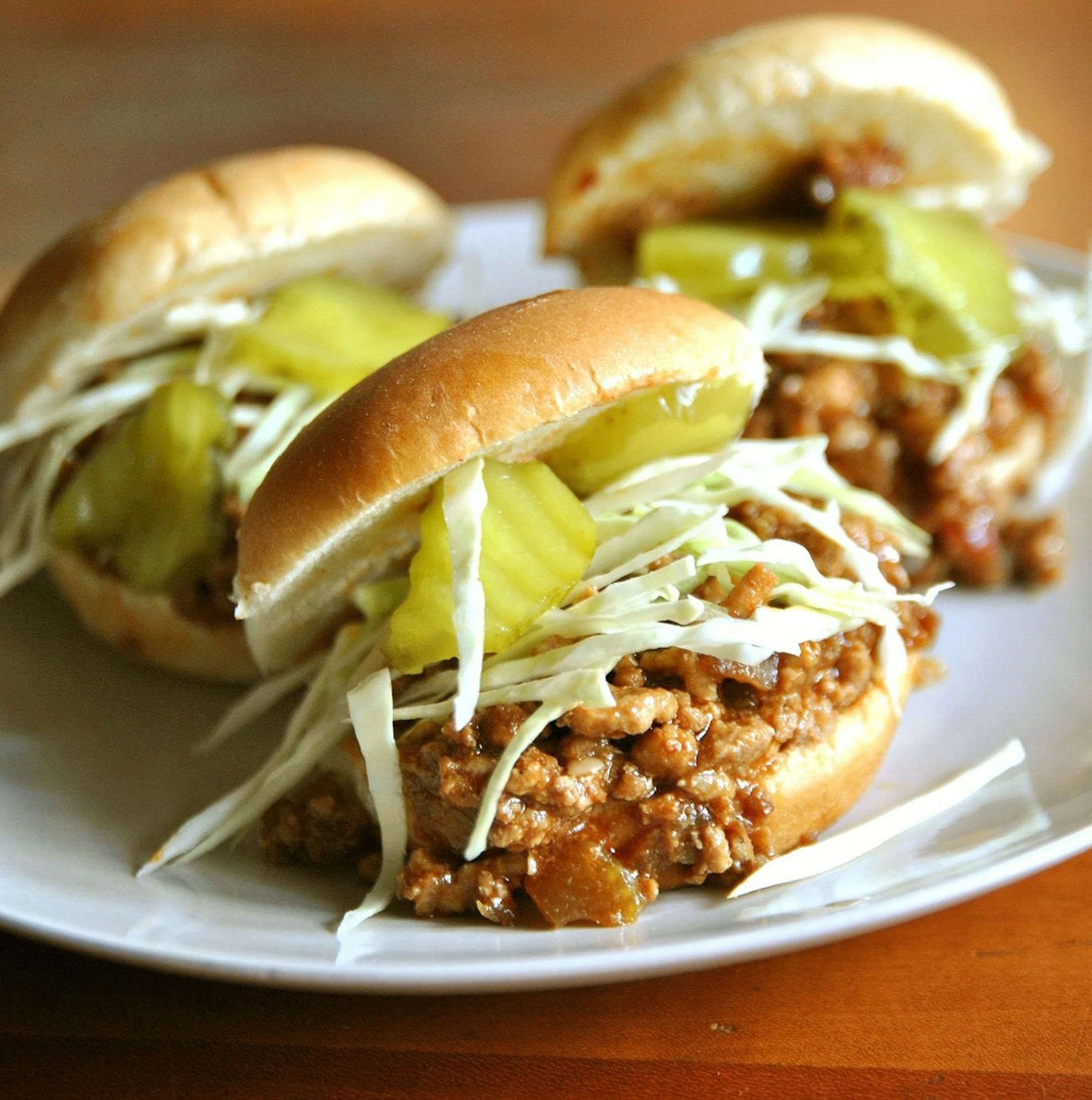
Love 'em or hate 'em, the messy chopped meat and tomato sauce sandwich — I dare you to try eating one without staining your shirt — is for many an iconic lunch food of childhood.
I grew up in the Manwich era, so forgive me if I wasn't always a fan of the sloppy Joe. I always found the canned sauce, introduced by Hunt's in 1969, a bit too sweet and soupy — more like an unsuccessful marriage of barbecue sauce and ketchup than the slightly tangy, slightly spicy sauce that the kitchen gods intended.
But I could be in the minority: The sandwich is so beloved that it merits its own National Food Holiday (March 18), and last year ConAgra sold more than 70 million cans of Manwich.
But a homemade Joe? That can be a beautiful thing, not to mention a quick and easy way to get a filling (and inexpensive) dinner on the table.
The origin of the sloppy Joe sandwich is almost as messy as the dish itself. Some food historians believe the lunchroom staple is as American as apple pie.
Noting that "similar beef concoctions" have graced the pages of cookbooks since the turn of the 12th century, "The Oxford Encyclopedia of Food and Drink in America" reports it may have evolved from a popular dish first served in Muscatine, Iowa, during President Calvin Coolidge's administration.
In 1926, a butcher by the name of Floyd Angell opened Maid-Rite, a walk-up eatery that eventually would become a chain of restaurants specializing in loose meat sandwiches. Also known as a Tavern or a Tastee, the Maid-Rite was made from steamed, lightly seasoned ground beef served on a warm bun.
Others, however, insist the sandwich was inspired by two famous restaurants named Sloppy Joe's Bar — one in Havana, Cuba, owned by Jose Garcia, and another in Key West, Fla., that was a favorite haunt of novelist Ernest Hemingway.


