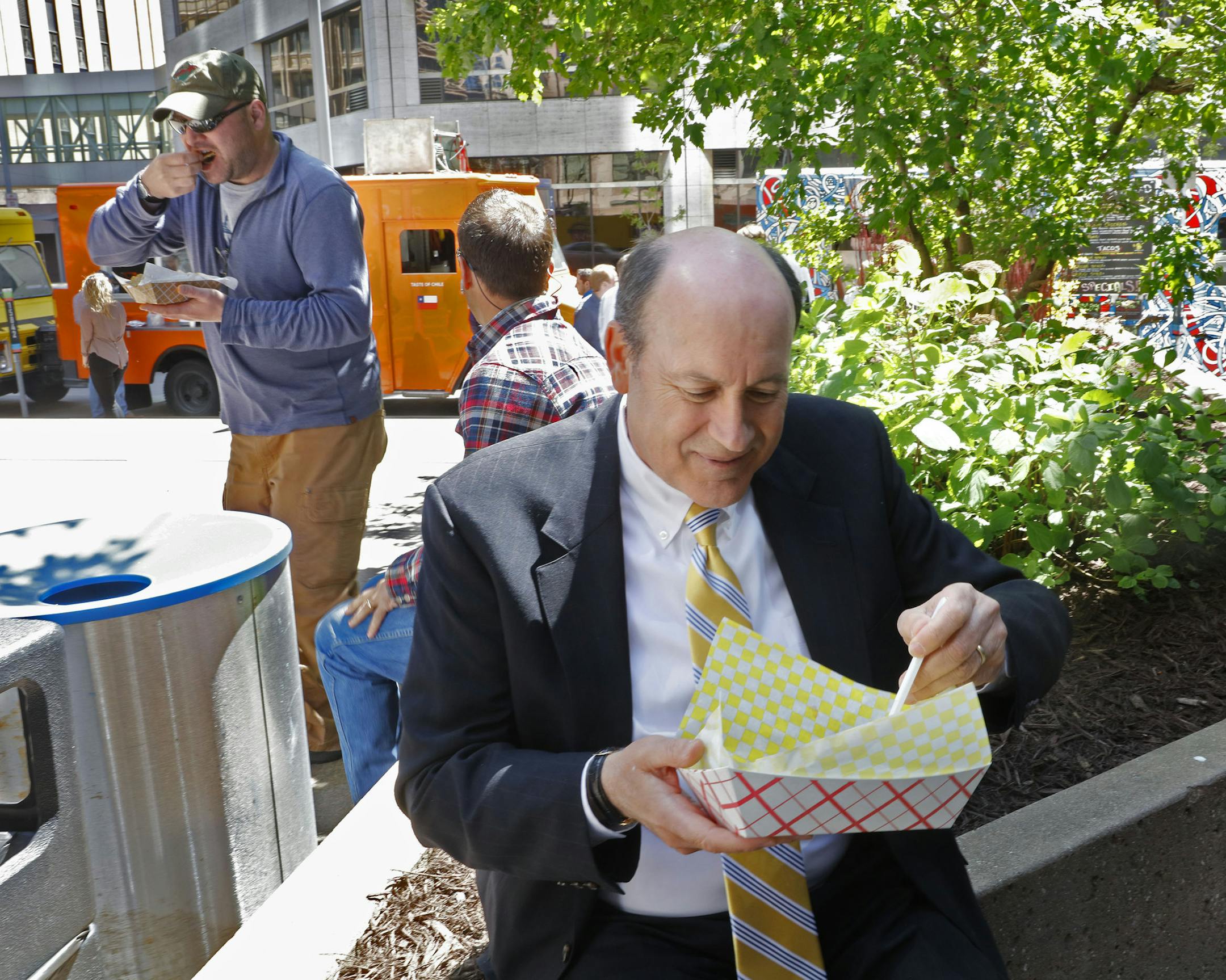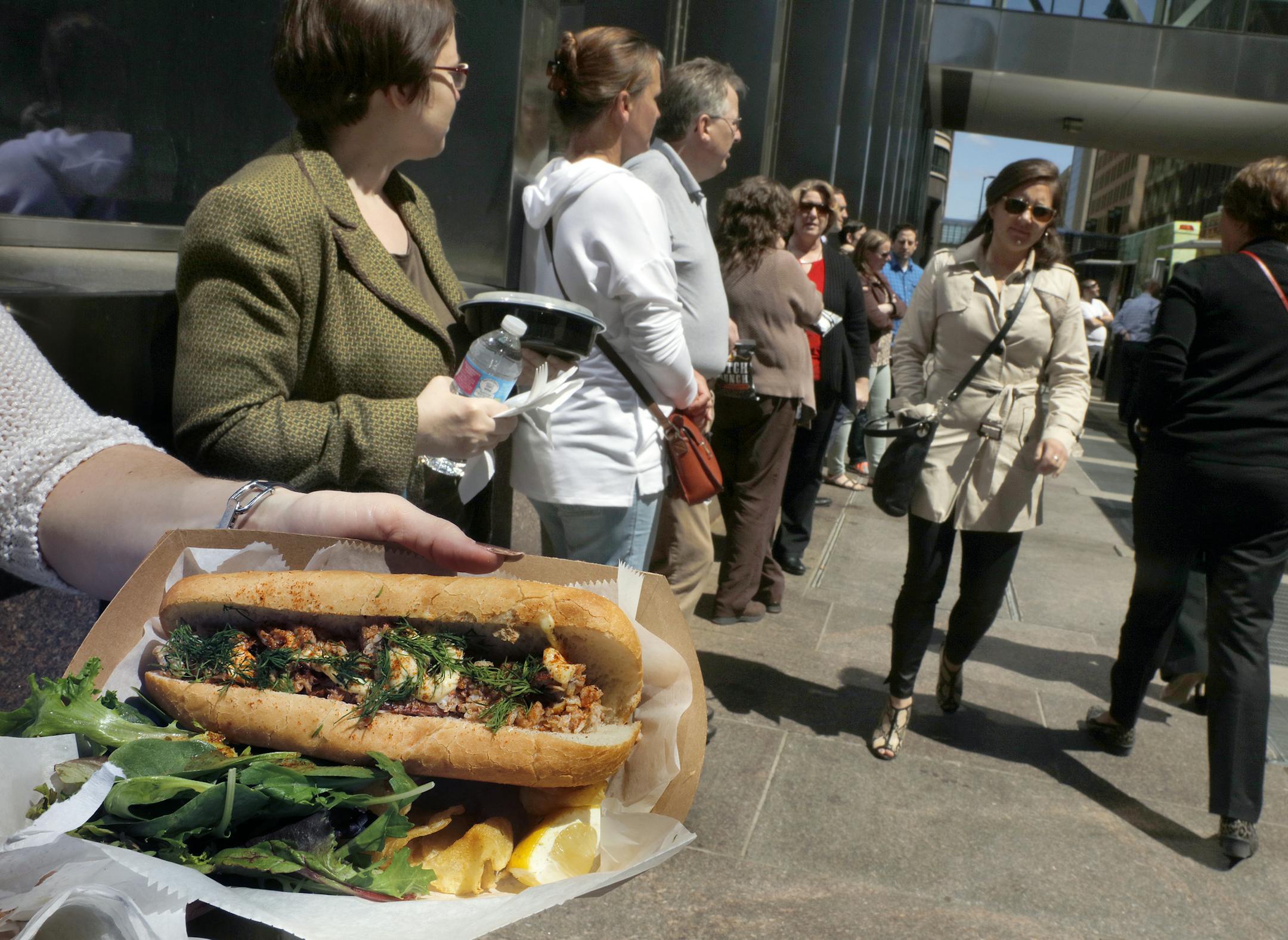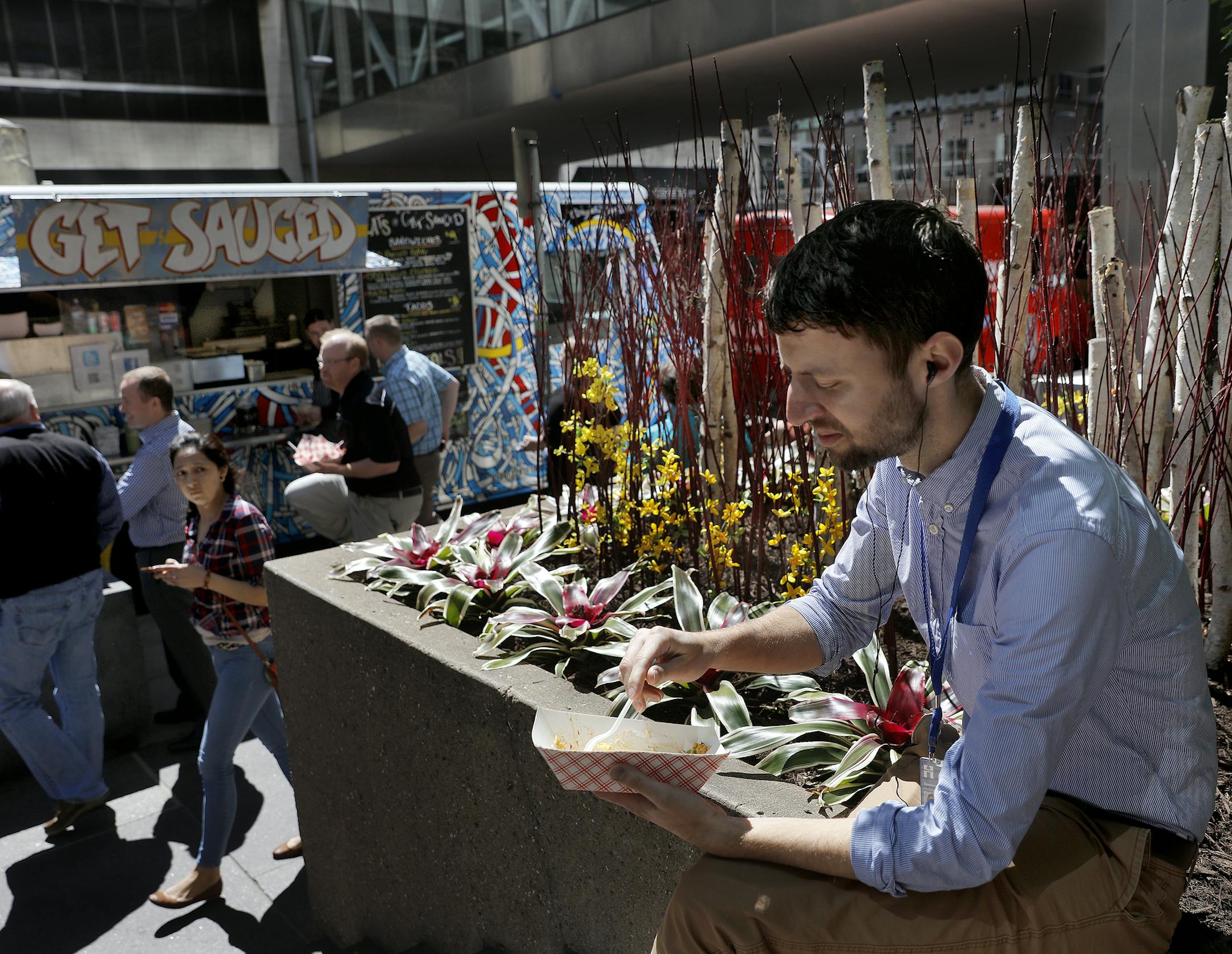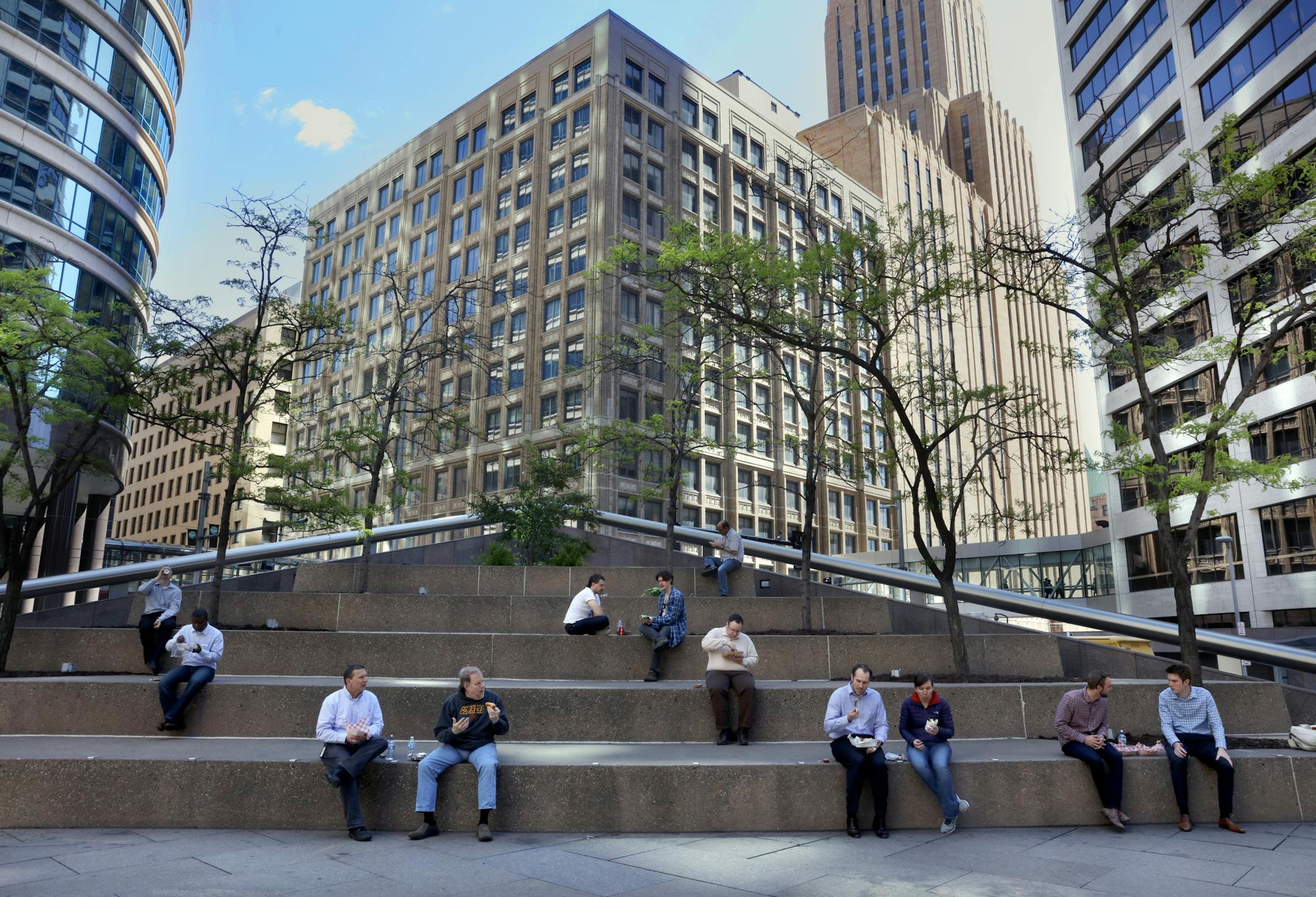
Threescore and 10: the biblical allotment of years a person might reasonably expect to live. It's also the number of days we can have lunch outside. Each spring, the food trucks line up downtown like circus elephants; people queue up for their favorite and then ask the same question: Where to go to eat it? Take it upstairs to the desk and eat like a drone in a beige cage, or find a place outside and enjoy the noontime sun?
It's often the former. Say what you will about your cubicle, at least you know you'll find a space. And that's not always the case when looking for a spot in the sun.
Downtown Minneapolis doesn't abound with great places to have your lunch. St. Paul likewise, although it does have two fine big parks. Does it matter? Well, once upon a time, Star Tribune columnist Barbara Flanagan, indefatigable champion of al fresco dining, pushed for sidewalk seating as an important component of summertime street life, and she was right: When you walk past a cafe with patrons sipping and chatting, servers darting here and there with trays and dishes, the city feels more alive, more interesting.
But there aren't many great options if you have a box or a bag, and it's almost impossible to change that.
For now.
Consider what we have. There's Government Center on the edge of the core. It offers two choices: the barren arid plaza on the east, with its clunky square slabs that give you a great view of the perpetually broken fountain, and the verdant west side, which has a limited number of benches where you can try to balance your food on your lap. The former is charmless — no one ever says "Meet me at the statue of melted guns, we'll do lunch!" — and the latter hasn't much space, seeing as how the center of the park is a big mound of grass whose swell discourages sitting.
Across the street is the inviting greensward of the Turf Club, a park for the 333 South 7th building. It has chairs. It has sofas. And it's PRIVATE.
It's for the building's tenants and their guests. They probably won't run you off if you're just sitting there, unless you bring a party of 20 and set up card tables. It's a model for what a city should have in abundance, except it's hard to convince landowners to devote their property to something that requires a lot of maintenance and generates zero revenue.