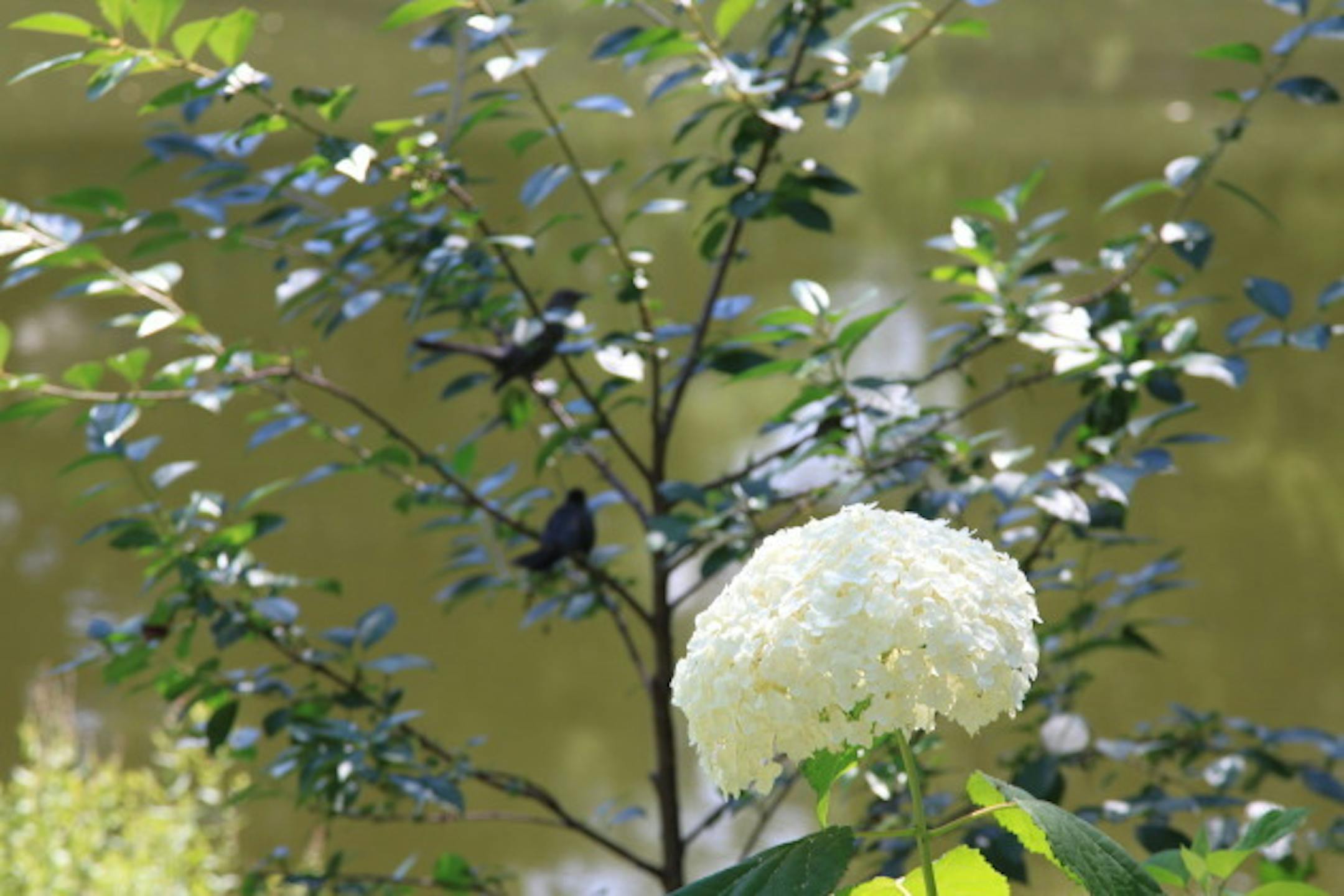
In the last several years my gardening has gone from feeding my family to supporting the wildlife around my home. It's the most logical progression in my need to nurture now that my kids are scattered and somewhat independent.
While my entire yard is about creating habitat for every animal, from bugs to butterflies to birds and even bigger critters, all except snakes, (Please, snake people, I know, I know, but I'm a shameless NIMBY when it comes to slithering, legless reptiles), I reserve a special area where I stack the deck with plants known to be guaranteed magnets for all manner of beautiful creatures.
This spot is directly in front of the wicker settee on my porch where I often sit and write this blog. My outdoor office faces an arbor-covered sunken patio and courtyard by a pond where I plant the likes of sunflowers and salvias, fruiting shrubs and seed-producing grain-y spikes. This strategy concentrates all the wildlife entertainment for my optimum viewing pleasure. For this I dubbed it the catbird seat.
This expression,"in the catbird seat", was first used by James Thurber in a short story about baseball which I will admit I've never read. It is meant to describe being in an enviable position.
And then a funny thing happened.
Myew! Myew! Maw!
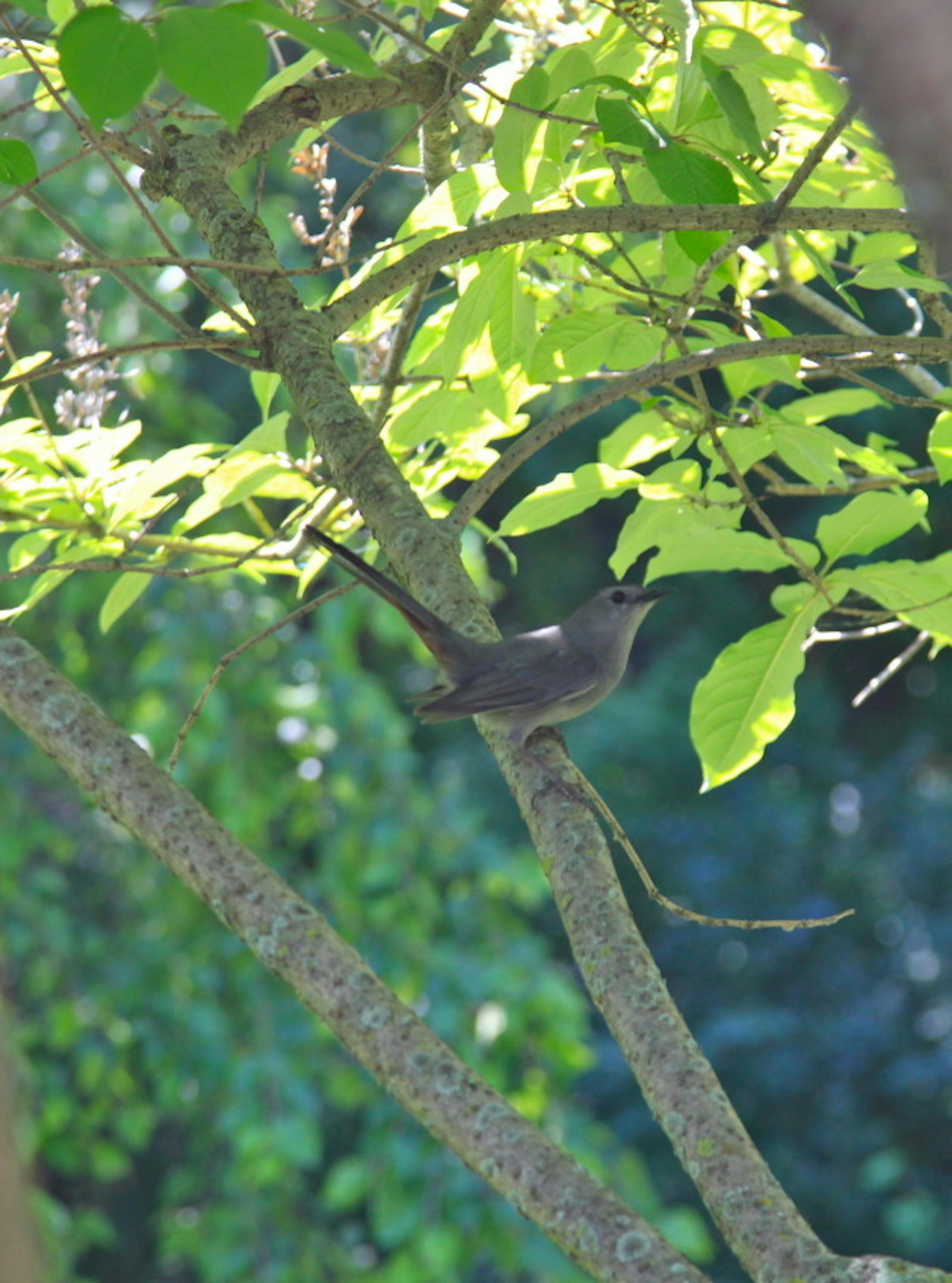
Turns out the tangled vegetation just beyond is the preferred nesting place of the Gray Catbird. More secretive, not as social as the robins, they are a steady presence in my garden announced by their frequent meows and burbling songs. As cousins to the mockingbirds they are capable of imitating other birds, frogs and even mechanical sounds. Astoundingly, their songs can last up to 10 minutes, trilling runs that even outdo Christina Aguilera.
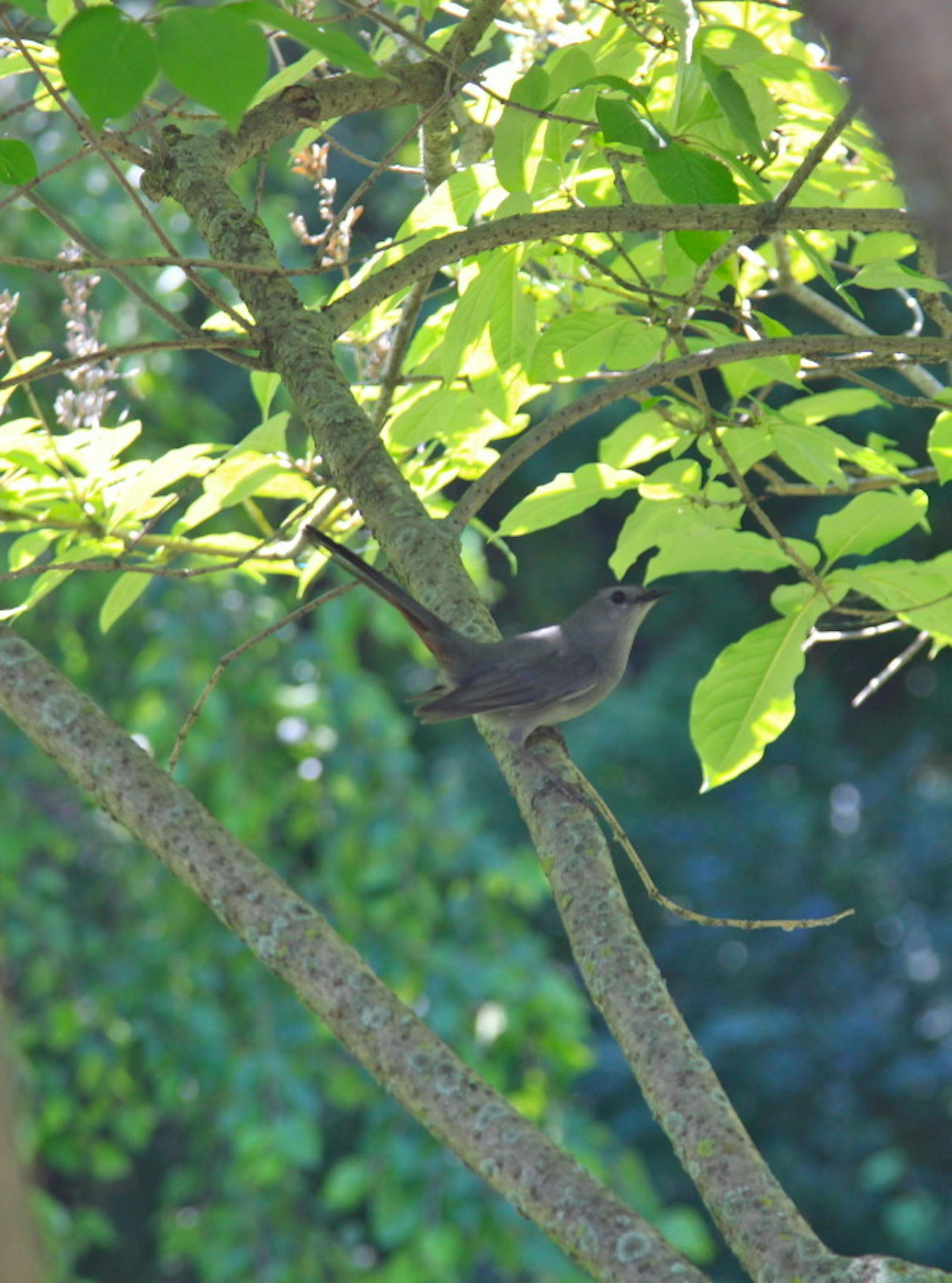
Protective of his territory, the catbird cautions me from the lilac tree