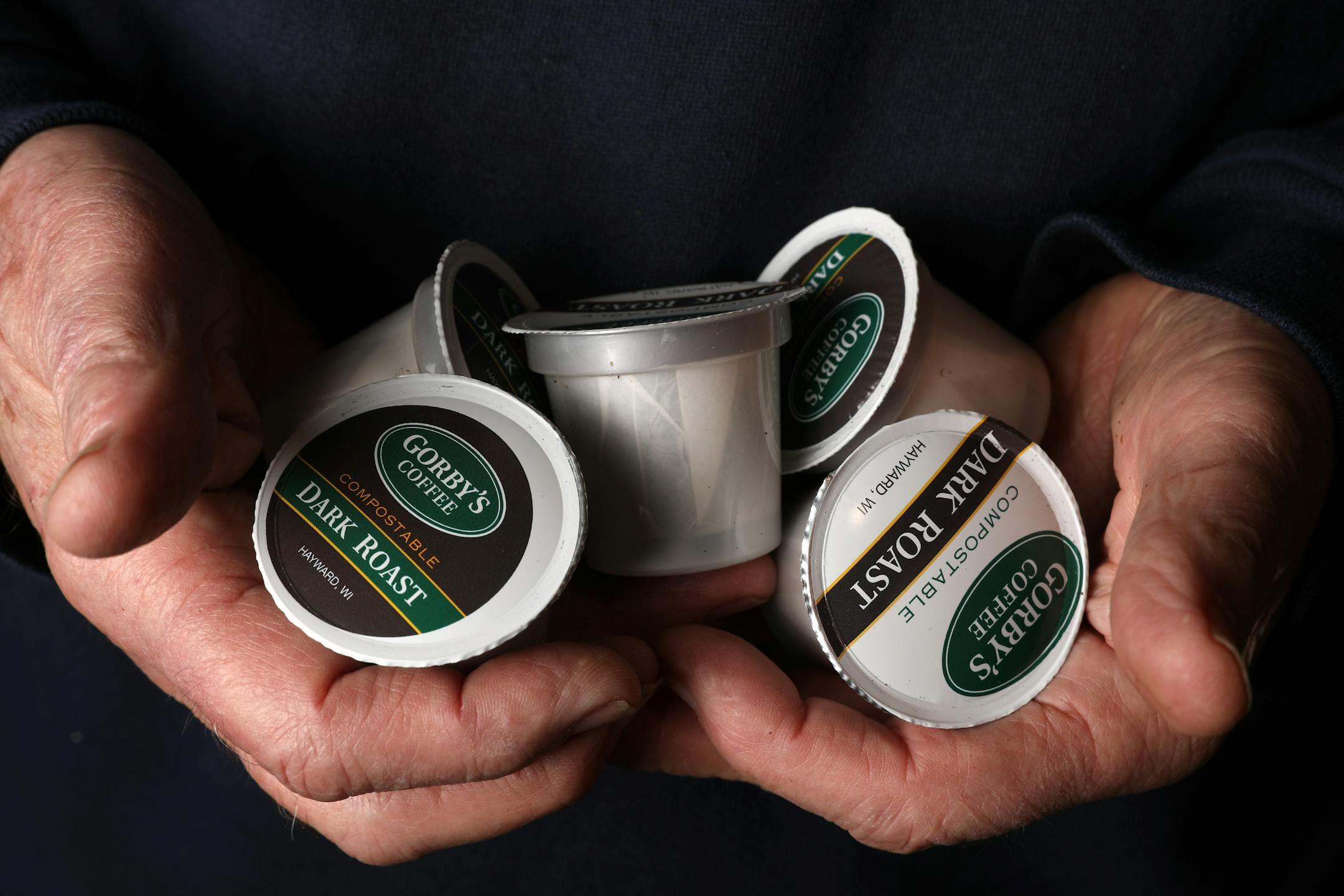
While convenient and popular, single-use coffee pods are viewed by many as an environmental nightmare. But despite the piles of discarded capsules this brewing method leaves behind, it might not be as terrible for the planet as you think.
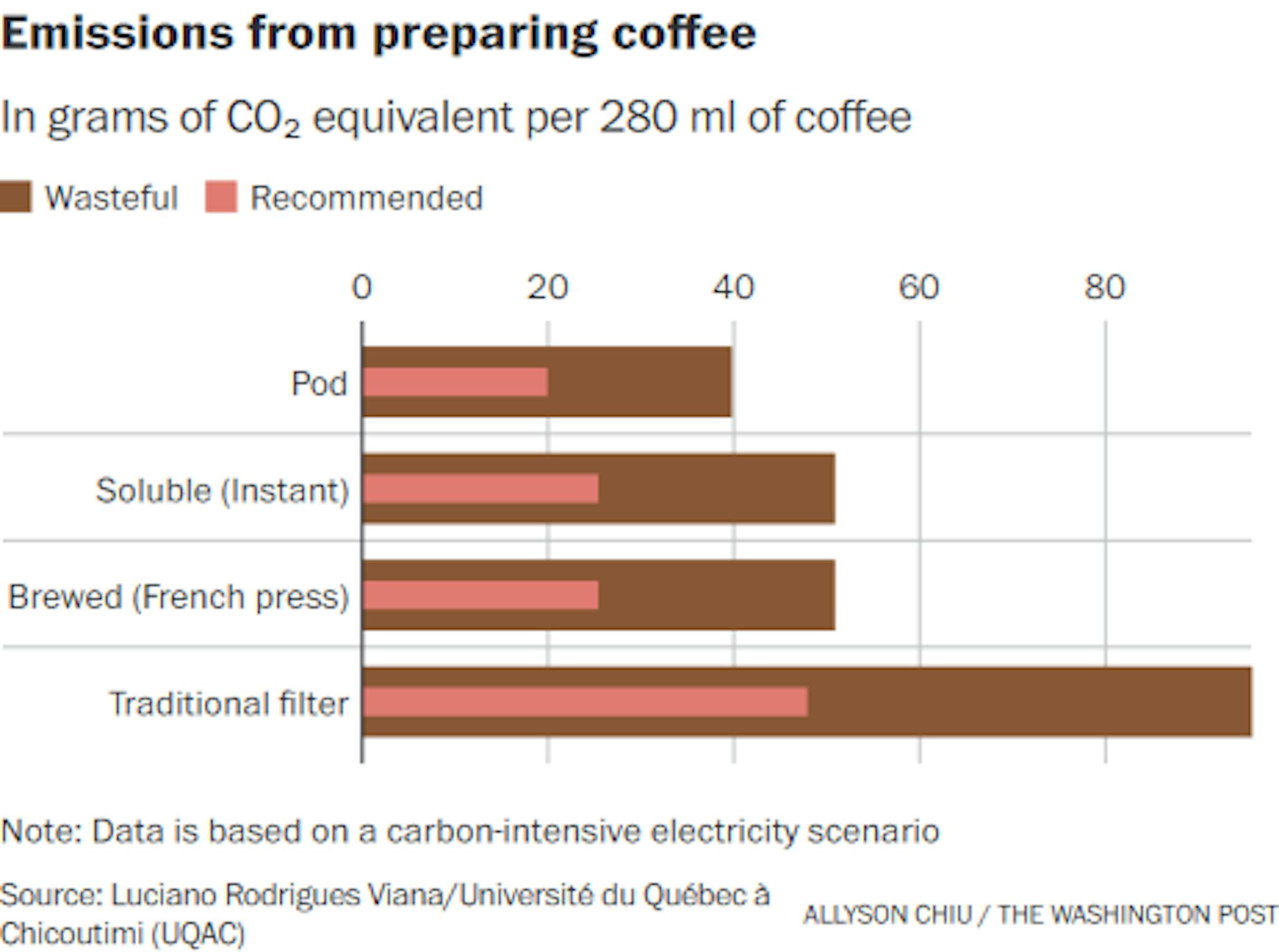
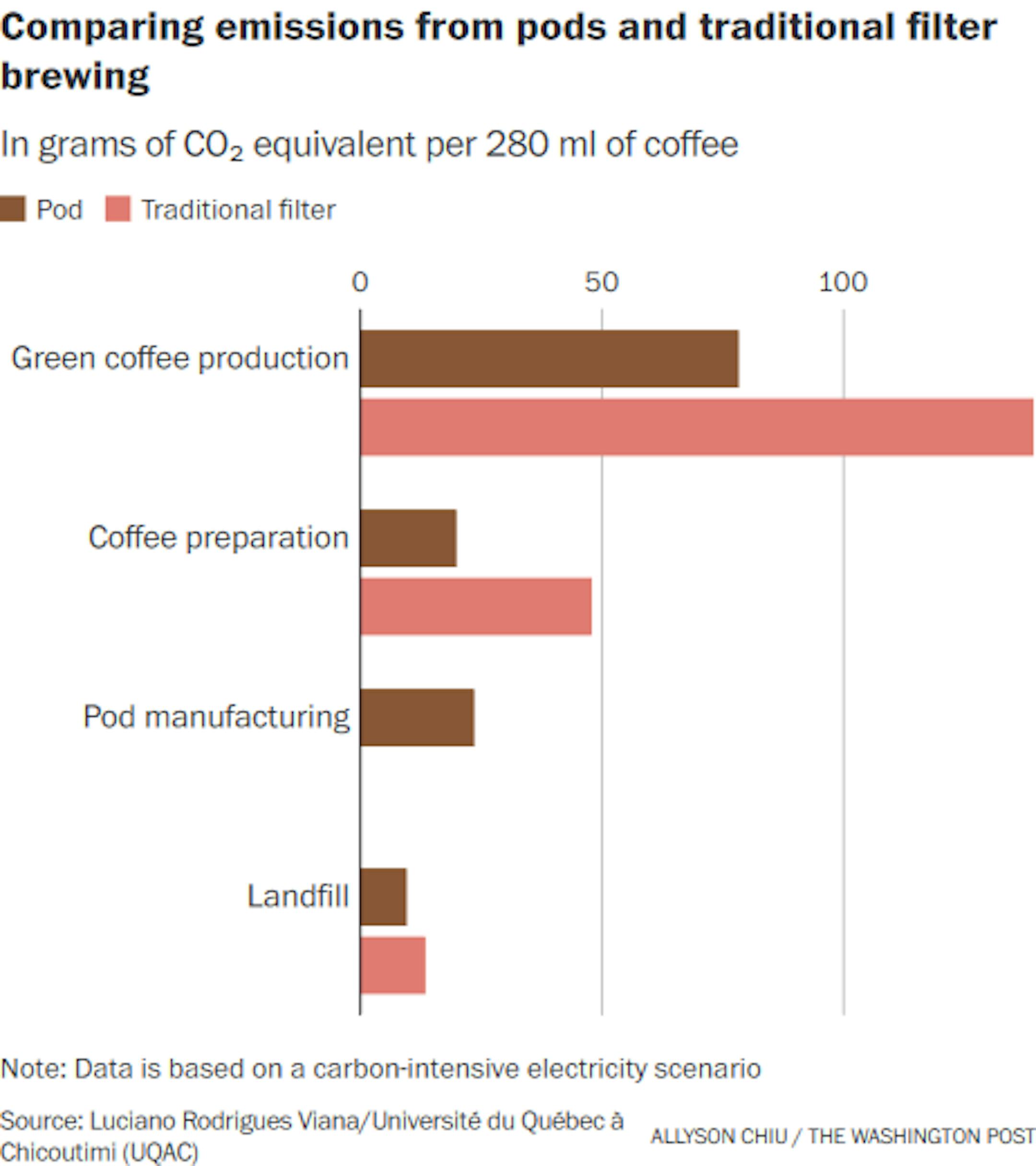
In some cases, brewing a cup of joe in an old-school filter coffee maker can generate roughly 1½ times more emissions than using a pod machine, according to an analysis by researchers at the University of Quebec at Chicoutimi in Canada.
The study adds to a growing body of research that shows assuming packaging does the most harm to the environment is often misguided. Instead, experts say, it's important to look at a product's entire life span — from the time it's made to when it hits the landfill — to figure out which changes might have the biggest effect on improving sustainability. In the case of brewing coffee at home, this latest study shows that it largely boils down to not wasting water or coffee.
"As a consumer, what we're left with is the visible waste in front of us, and that often tends to be packages and plastics," said Shelie Miller, a professor of sustainable systems at the University of Michigan School for Environment and Sustainability, who was not involved in the new analysis. "But the impact of packaging, in general, is much, much smaller than the product itself."
Here are four takeaways from research that can help you lower the carbon footprint of drinking coffee:
Less coffee = fewer emissions
The recent study, which looked at four common brewing techniques, found that instant coffee appears to produce the least amount of emissions when the recommended amounts of water and coffee are used. This is in part because there is typically a small amount of instant coffee used per cup and boiling water in a kettle tends to use less electricity compared with a traditional coffee maker. What's more, the method doesn't produce coffee grounds that have to be thrown out, according to the study's researchers.
Traditional filter coffee, on the other hand, has the highest carbon footprint, mainly because more ground beans are used to produce the same amount of coffee, the researchers wrote. This method, the researchers noted, also tends to consume more electricity to heat the water and keep it warm.