

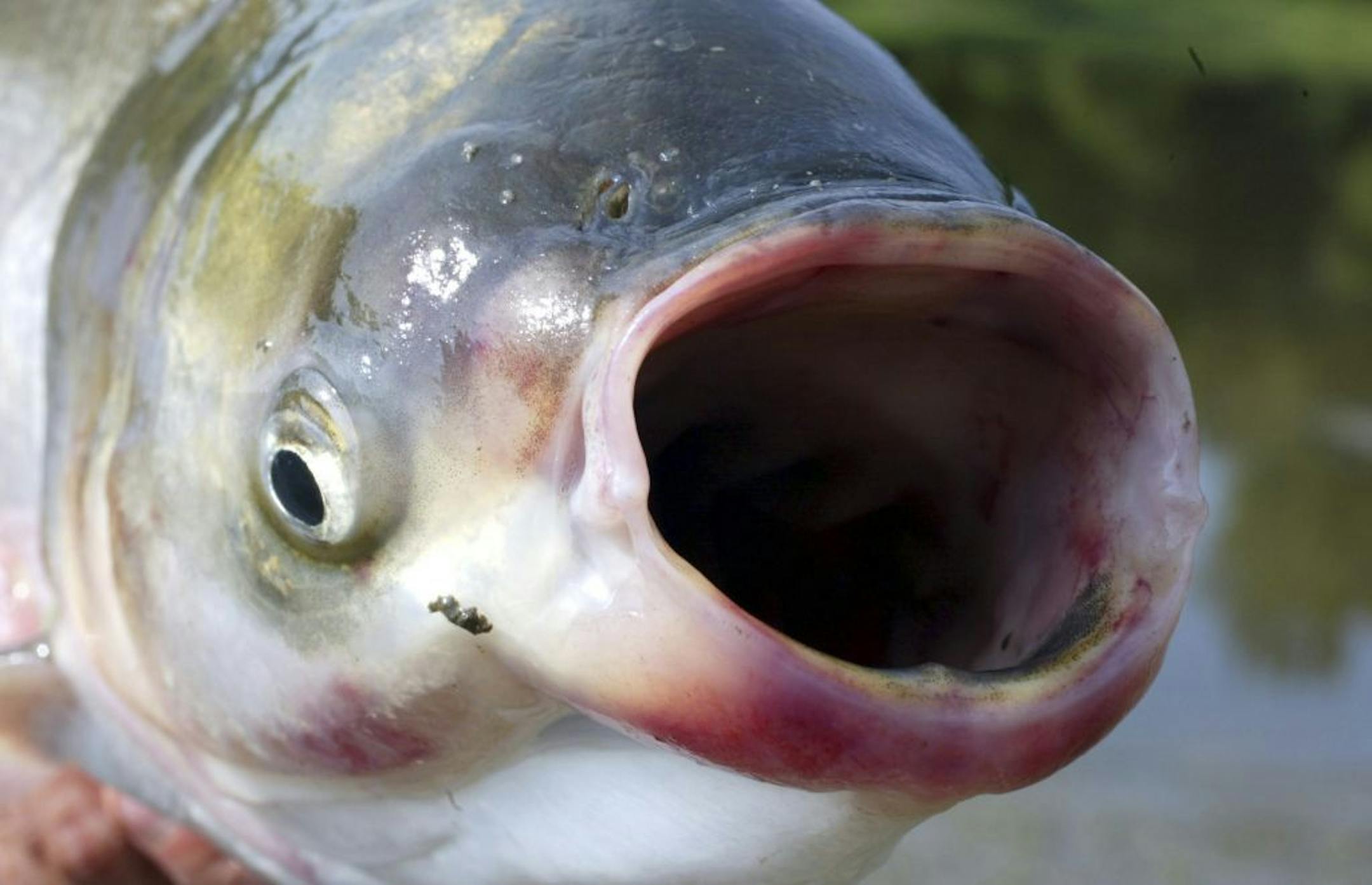
DNA from invasive silver carp has been found in the Mississippi River above the Coon Rapids Dam, raising the alarming prospect that the dreaded leaping fish may already be on its way to Mille Lacs and other popular recreational lakes in Minnesota.
Natural Resources Commissioner Tom Landwehr said on Thursday that the test results will force the state to accelerate its plans to stop the spread of Asian carp from states farther south in the Mississippi basin. But he also acknowledged that the findings raise more questions than they answer. No species of fish native to the lower stretch of the Mississippi has made it beyond the dam, so how could Asian carp, which have appeared only sporadically in recent years, have gotten past? In addition, the widely touted testing, which picks up DNA from carp mucus and excrement, has yet to lead officials to an actual fish in a new area.
State naturalists admit it's a head-scratcher. But because millions of dollars are riding on the outcome, Department of Natural Resources (DNR) officials said that they are acting on the assumption that the silver carp are here, at least in small numbers.
"The risk is too high to assume that there are not live fish north of the dam," Landwehr said.
If some have spread up the Mississippi, it's not too late to prevent them from becoming established, he added.
But conservation groups said the test results are bad news for Minnesota.
"All of the strategies ... relied on the presumption that they were not yet above the Coon Rapids Dam," said Don Arnosti, policy director for the Audubon Society of Minnesota. "I think it's a big shock to everybody."
The tests found DNA from silver carp, infamous for its tendency to leap out of the water at the sound of a motor.


