

I live in an old house with a huge garden. In late summer and fall, nature begins its annual migration indoors -- mice and spiders mostly, though some years we take in squirrels, too.
The discovery last week of inch-long droppings in a kitchen cabinet -- did we have an infestation of (heaven help us) rats? -- prompted a call to the exterminator, who recommended various traps and baits and said that for another $25 he'd also eradicate all those spider webs suspended like fairy hammocks about the basement and any flies, wasps, moths and carpenter ants held captive therein.
I declined the offer when he couldn't come up with a reason why the spiders were anything more than a housekeeping nuisance -- not like some other bugs, he admitted. Bedbugs would be long gone if DDT hadn't been banned. "That's how they handled things in the old days," he added. His admiring tone told me he wasn't referring to the ban but to the DDT.
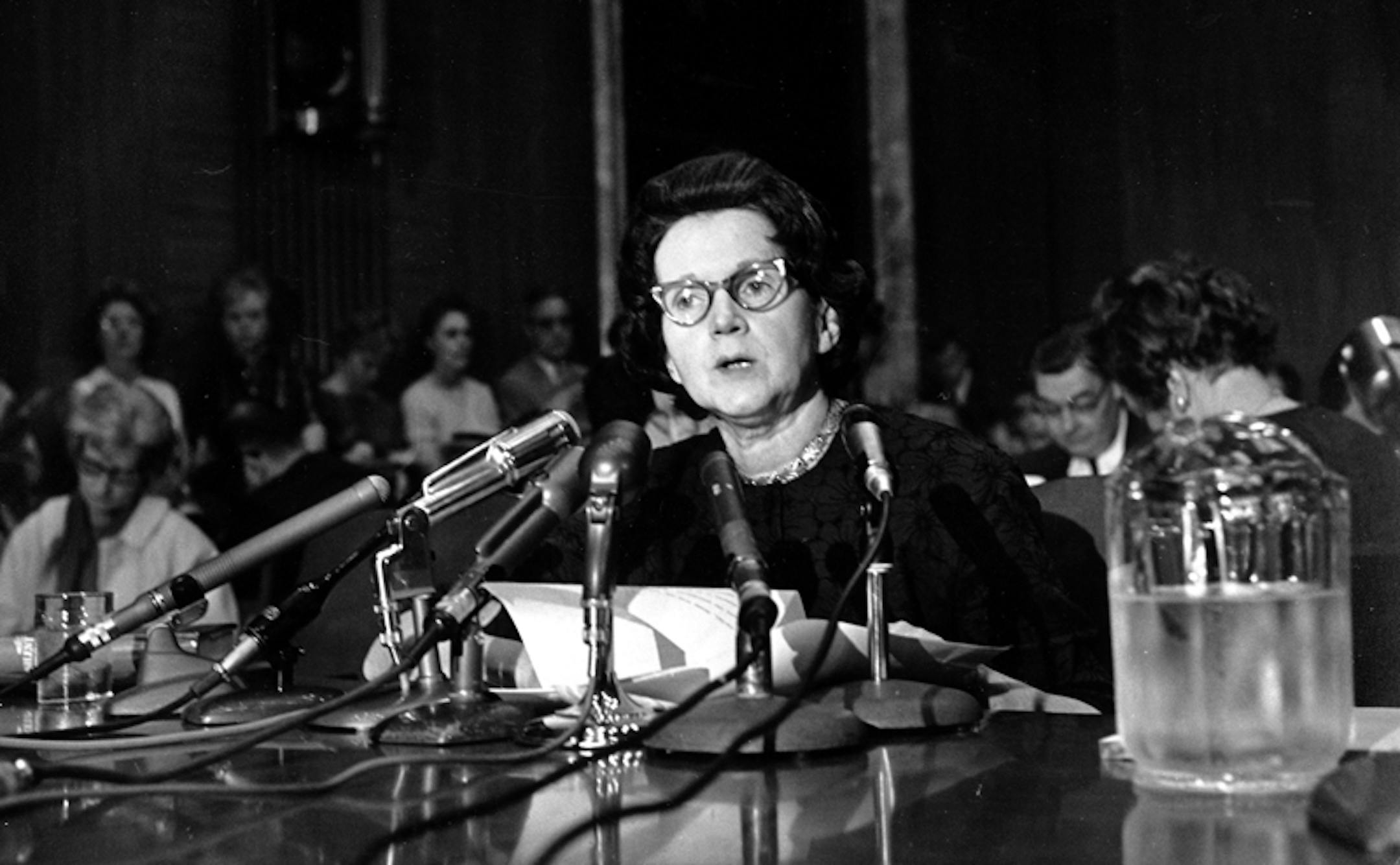
I stifled an urge to deliver a lecture on how in the really old days, back in the late 19th and early 20th centuries, people didn't assume that it was their job to control nature. That's a relatively modern notion, and not a healthy one, as William Souder points out in his book "On a Farther Shore: the Life and Legacy of Rachel Carson."
Carson's most enduring legacy is a critique of pesticide overuse in America called "Silent Spring." Published 50 years ago this week, it is why bedbugs are still with us as well as the American bald eagle.
Carson came of age just after Darwin's theory of natural selection turned human exceptionalism, an 18th-century Enlightenment idea, on its head. Neo-Darwinist biologists like Aldo Leopold saw nature as a system kept in balance by the not-so-peaceful coexistence of predator and prey. Diversity supplies a cushion, or hedge, against one plant or animal getting too much power and upsetting the balance, which is what happens when purple loosestrife clogs a wetland and what would happen were an herbicidal equivalent to DDT deployed to get rid of it. The species most likely to disrupt nature's never-ending pursuit of its own sustainable future, according to this view, is us.
The 20th century served up plenty of challenges to Leopold's theory of nature. After Hitler's fascism came Soviet communism, two sides of the same coin -- hierarchical and rigidly ideological -- and just the opposite of democracy, whose checks and balances in some ways mimic the forces governing the natural world.
The deployment of wartime technologies for peaceful purposes worried Rachel Carson -- not just the chemical poisons but also the nuclear testing that allegedly kept the Cold War from turning hot. Moreover, as a field biologist, Carson had observed firsthand subtle changes in aquatic life being linked to rising temperatures caused by the burning of fossil fuels.


