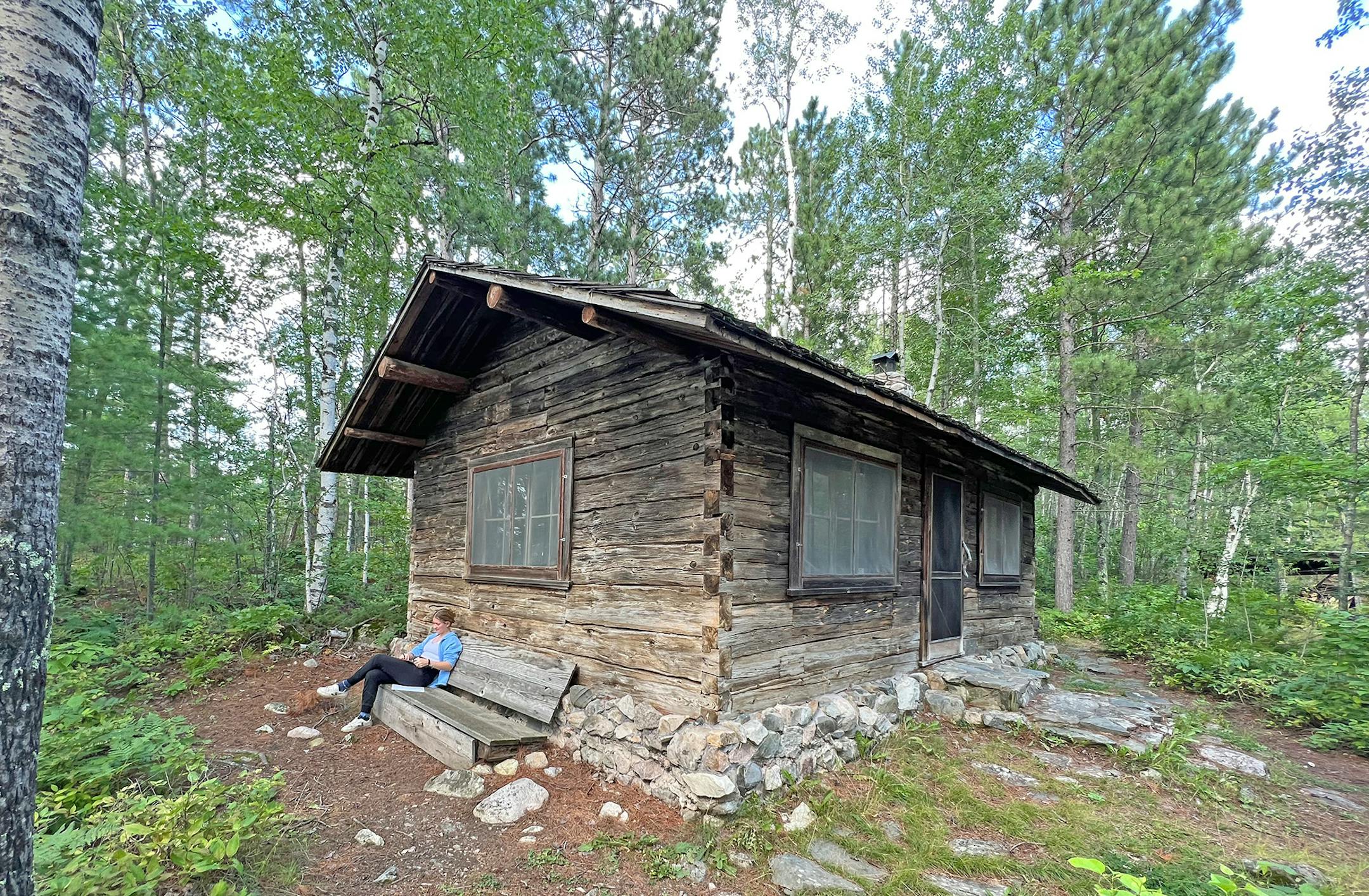
ELY, Minn. — A lot of time passed since I had been to Listening Point, Sigurd Olson's cabin on Burntside Lake outside of Ely, and without help I doubt I would have made the correct turn from what is now a ribbon of smooth blacktop. But once we had parked our vehicles and started up the footpath toward Sig's sauna, and beyond it, his cabin, the place had a familiar feel.
When Sig bought the Burntside lakeshore and 26 acres of land in 1956, he realized a decades-old dream. He and his wife, Elizabeth, had arrived in Ely in February 1923, and he paddled many canoe routes, and traversed many paths — literally and figuratively — between then and the time he purchased the land and, the following year, erected his cabin.
For most of his life Sig couldn't afford a hideaway. By the time I moved to Ely in 1977, he and Elizabeth were comfortable. Their house was roomy and bore Elizabeth's refined, yet relaxed, taste and style. A stone's throw away was Sig's writing shack, with a canoe alongside, and the patio between the shack and the home was often a gathering space for important people and, as regularly, admirers.
The scene was light-years from the converted coal shed Sig and Elizabeth rented when they first came to Ely, a structure that was so cold, according to Sig's biographer, David Backes, they wore knit hats to bed at night.
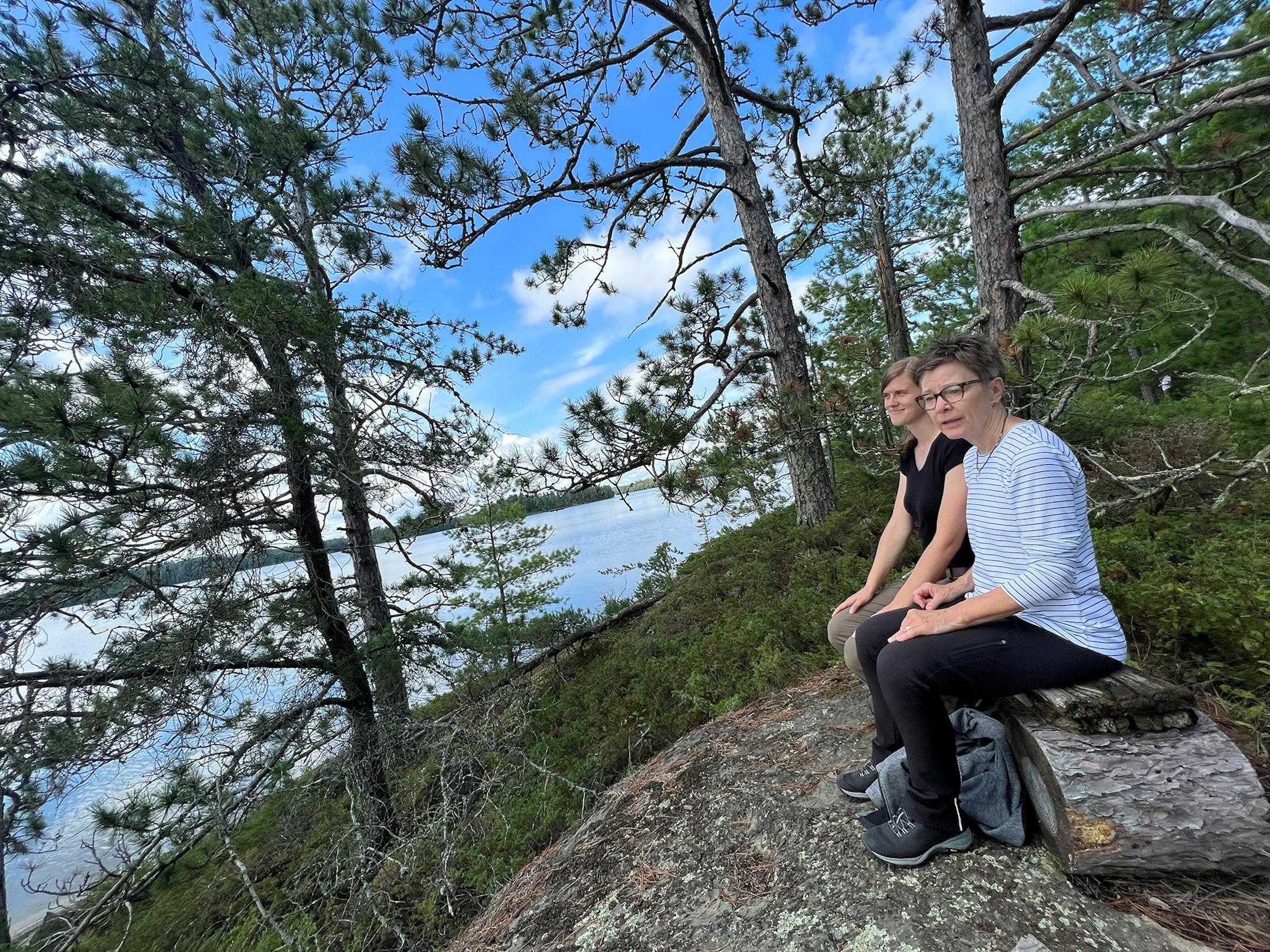
With me at Listening Point on a recent day were Steffi O'Brien, executive director of the Listening Point Foundation, which now owns and caretakes the cabin and land, and the foundation's president, Patsy Mogush.
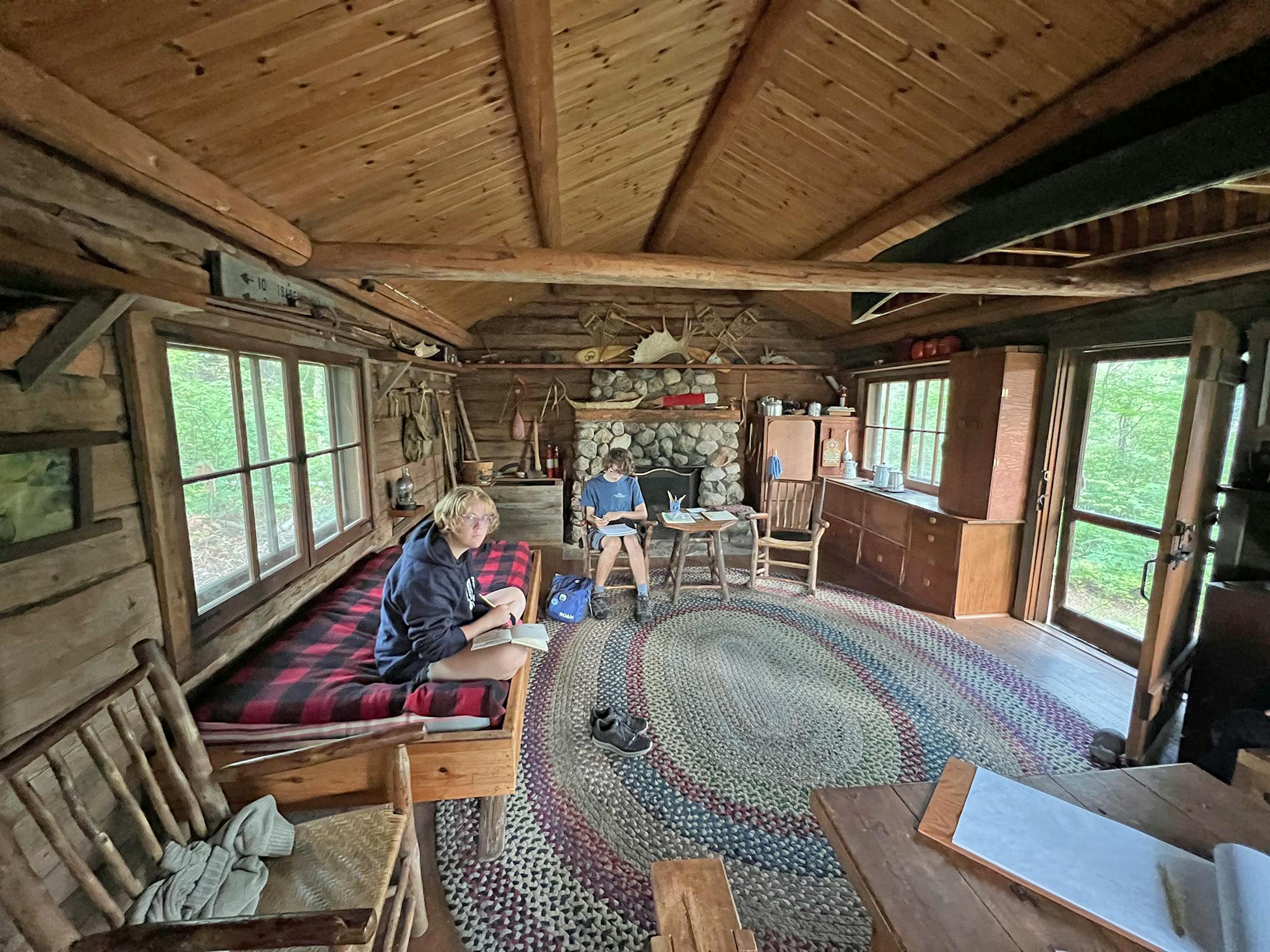
On the grounds as well were kids from a local camp. Each carried a pen and notebook, and, while scattered about the cabin, wrote in journals about Sig and, presumably, his adventures and ideas. Certainly, wilderness would be included in these ruminations, however they might define it.
When I first came to Ely 45 years ago I did so fresh out of graduate school to run one of the two local newspapers, the Ely Miner.
By then I had read Sig's books and had canoed the boundary waters but was aware only vaguely of Sig's history. I knew he had graduated from the University of Wisconsin and that his first job in Ely was teaching high school biology. The pay was minimal, and within a couple of years he and Elizabeth had two sons, Sig Jr. and Robert. To make ends meet financially, especially before Sig took a teaching job and eventually became dean of the local community college, in summer he guided rubes on canoe trips, at times learning the tricks of the trade from plucky old-timers who descended from voyageurs of the fur-trapping days.