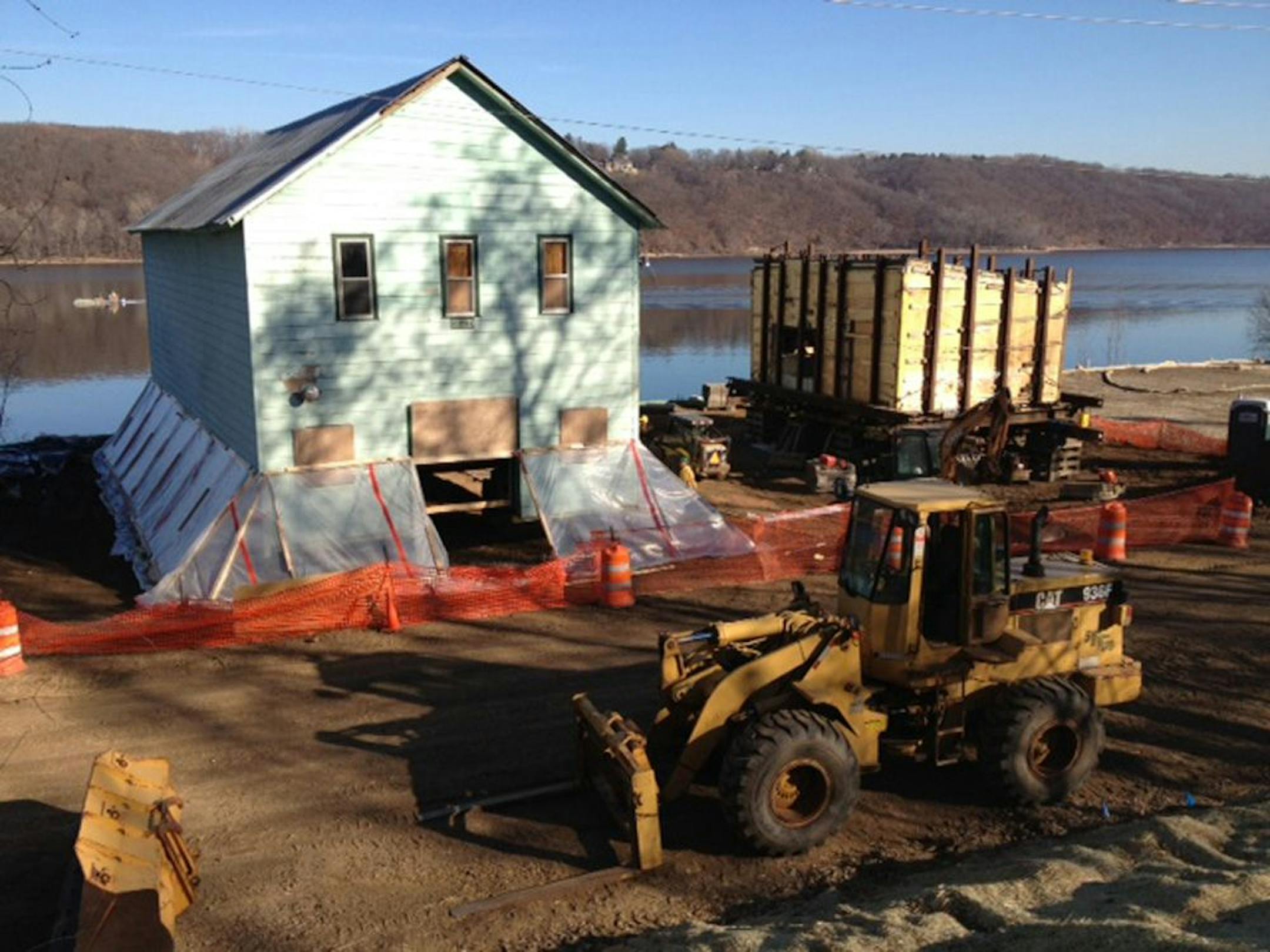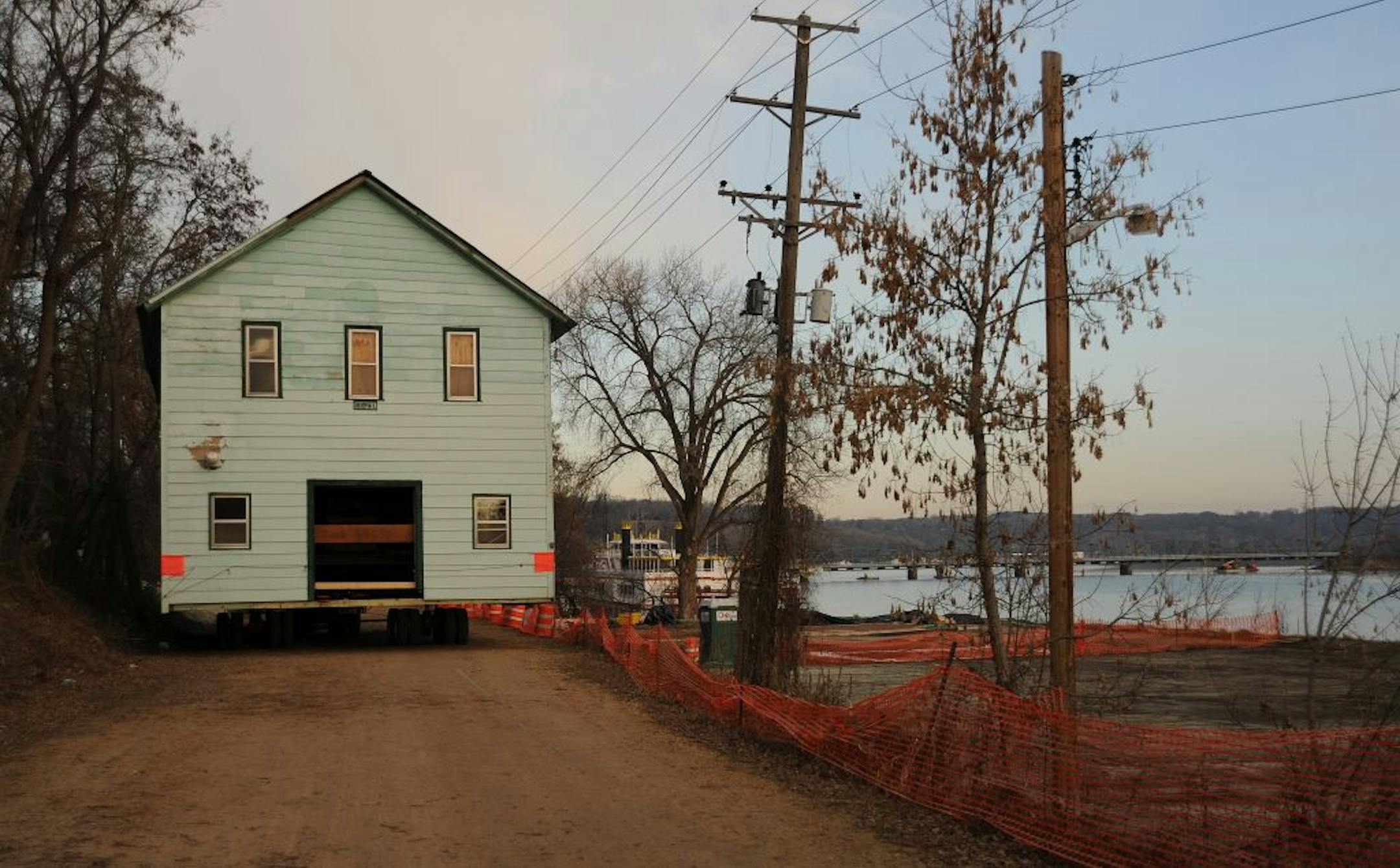
Two historic buildings saved from the path of a new St. Croix River bridge have a new home, but their significance remains a matter of interpretation.
About 1890, immigrant Moritz Bergstein built a stone building for a rag factory and a separate clapboard warehouse for mattress manufacturing in the woods of what eventually became Oak Park Heights. Bergstein was a German-speaking native of Hungary who was known for his rag picker's trade and his connections with Minnesota's early Jewish community.
The Shoddy Mill and Warehouse relocation -- part of a forthcoming loop walking trail that will be included in the mammoth bridge project -- cost $450,000. Site preparation, including riverbank restoration, made the total cost of the move $1.2 million.
None of the original equipment remains in the buildings, later used for coal storage and after that, for an auto repair business. Spending to save what's left frustrates some people, including Gary Kriesel, the Washington County commissioner who represents Stillwater.
"It's a colossal waste of money," Kriesel said. "Would they be preserving that if the bridge wasn't involved? It would probably be rubble at this point. Nobody wants to be out in front of this issue. I haven't heard one person say they support it."
The money, he said, would have better benefited the Washington County Historical Society, which has been barnstorming the county in search of donations for a new building.
"At what point do we step back and say we just can't afford to preserve everything?" said Kriesel, who acknowledged that moving the Shoddy Mill and Warehouse was decided years ago by "stakeholders" who hammered out compromises over preserving historical and cultural landmarks in the bridge project.
"It's part of the agreement. They would have been destroyed otherwise," said Jackie Sluss, a historian for the Minnesota Department of Transportation. "The Shoddy Mill buildings are a rare example of turn-of-the-century buildings that were built by a European Jewish immigrant to get a toehold in the American economy. They're being saved because of the story they tell. It's important to our understanding of Minnesota history."