
Shocked and saddened, Minnesotans wonder what's next after insurrection in Washington

January 10, 2021 at 1:10AM
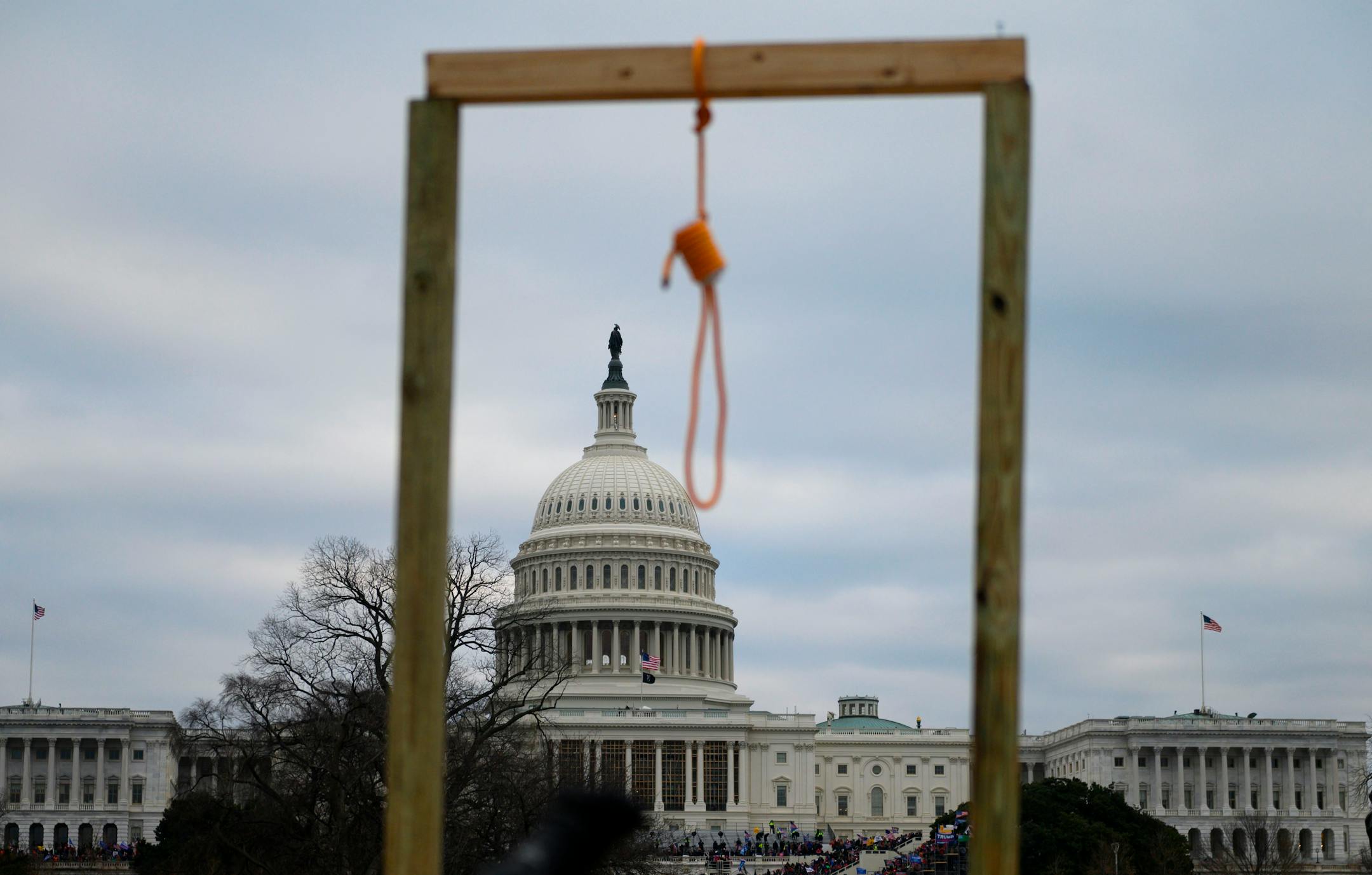
TOPSHOT - A noose is seen on makeshift gallows as supporters of US President Donald Trump gather on the West side of the US Capitol in Washington DC on January 6, 2021. - Donald Trump's supporters stormed a session of Congress held today, January 6, to certify Joe Biden's election win, triggering unprecedented chaos and violence at the heart of American democracy and accusations the president was attempting a coup. (Photo by Andrew CABALLERO-REYNOLDS / AFP) (Photo by ANDREW CABALLERO-REYNOLDS/AFP via Getty Images) ORG XMIT: 775604807
As throngs of people pushed toward the U.S. Capitol on Wednesday, a makeshift gallows was visible on the building’s west side.  (ANDREW CABALLERO-REYNOLDS • AFP via Getty Images/The Minnesota Star Tribune)

Christine Smith was working at her St. Paul home on Wednesday afternoon when her phone started pinging. Friends and colleagues at the Minnesota Department of Health told her of the attack on the U.S. Capitol. She pulled up Facebook to follow along.

"My first immediate reaction was a fear just like terror, and then it went to sadness," said Smith, a 42-year-old mother of two.

Minnesotans and Americans across the country still sound shocked and saddened by the violent insurrection that engulfed the nation's Capitol, producing almost unimaginable images, and they are somberly grappling with what comes next. The White House lurched into the weekend in turmoil amid growing calls to remove the president from office for stoking the insurgency as President-elect Joe Biden prepares for a scaled down inauguration in less than two weeks.

The new year was supposed to be restorative after a horrific 2020 in Minnesota, in the United States and around the globe: a pandemic that has killed 365,000 in the United States and upended daily life. The biggest, most sudden economic collapse since the Great Depression. A movement for racial justice unparalleled since the civil rights movement, sparked by protests and riots in the Twin Cities after the police killing of George Floyd. A bitterly divided electorate during a presidential election.

On Friday afternoon, Marcia Howard, a Marine Corps veteran and high school teacher, stood guarding a barricade at E. 38th Street and Elliot Avenue, one block east of where George Floyd was killed by a Minneapolis police officer in May. Howard lives just down the street, and she helps oversee security at the Floyd memorial. She couldn't help but see Wednesday "a scene out of a dystopian science-fiction action movie, hordes of people crawling through the windows of our nation's Capitol" through the lens of Floyd's killing.

"The military response to Black Lives Matter was a show of force unlike anything we'd seen: dark-clad military or paramilitary people in a line, as if protecting from a foreign invader," she said. "It was for show, it was for theater, but they all were armed. If you saw the capitulation of Capitol police — taking selfies, ushering in teeming hordes of white people — there's no greater argument for why we are standing at these four occupied blocks."

And yet Howard was saddened that what happened in D.C. didn't elicit a more forceful national response.

"Why isn't the world stopping?" she said. "This should have been like 9/11. There we have, writ large for the entire world to see, white folks mad that Black people had the power to vote and change the administration, and the Department of Defense was not allowed to call on the National Guard to defend that, our nation's Capitol. And yet there doesn't seem to be an earth-shattering reckoning on what America is going through right now."
The 9/11 comparison resonated with Harry Welty, a 70-year-old Duluth man who challenged U.S. Rep. Pete Stauber in last year's GOP congressional primary. Sept. 11, 2001, was the last time he'd stayed glued to his television like this. Though he once voted consistently for the GOP, Welty has been a longtime critic of Trump.

"That was the last gasp of the Trump world," he said. "It's like Pandora's box. He's unleashed all kinds of things that I think could follow us for some time."

Jeanne Coulter Vogel, a 70-year-old retired elementary school principal, was watching Trump's rally on Fox News when she thought she heard him tell the crowd he would march to the Capitol with them. That couldn't be, she thought at her Eagan home. She rewound the tape; sure enough, that was what he said.

Vogel has visited the Minnesota State Capitol. She knows the tight security there; surely the U.S. Capitol is even more strict. Then she saw rioters busting past a sparse group of police officers.

"Our own president, directing a siege on the nation's Capitol," she said.

Vogel voted for Joe Biden. She is originally from a small town outside Marshall, and plenty of family members are avid Trump supporters. She recalls how they spoke to her four years ago.

"How many times were we told, 'Trump won, just get over it?' " she said. "When Joe Biden comes on, we'll have somebody who'll calm waters. He always says he'll be a president for everybody, not just those who supported me. I find that very, very calming."

Ruth Holm of Faribault voted for Trump. She said she believes there was fraudulent activity in the November elections, but not enough to overturn the vote or support Trump's claim that the presidency was stolen. She believes it's time to move on with Biden. She was upset by last week's violence; she's against violence in all forms, and considers Martin Luther King Jr. a favorite historical figure. She wants arrests of those who broke the law.

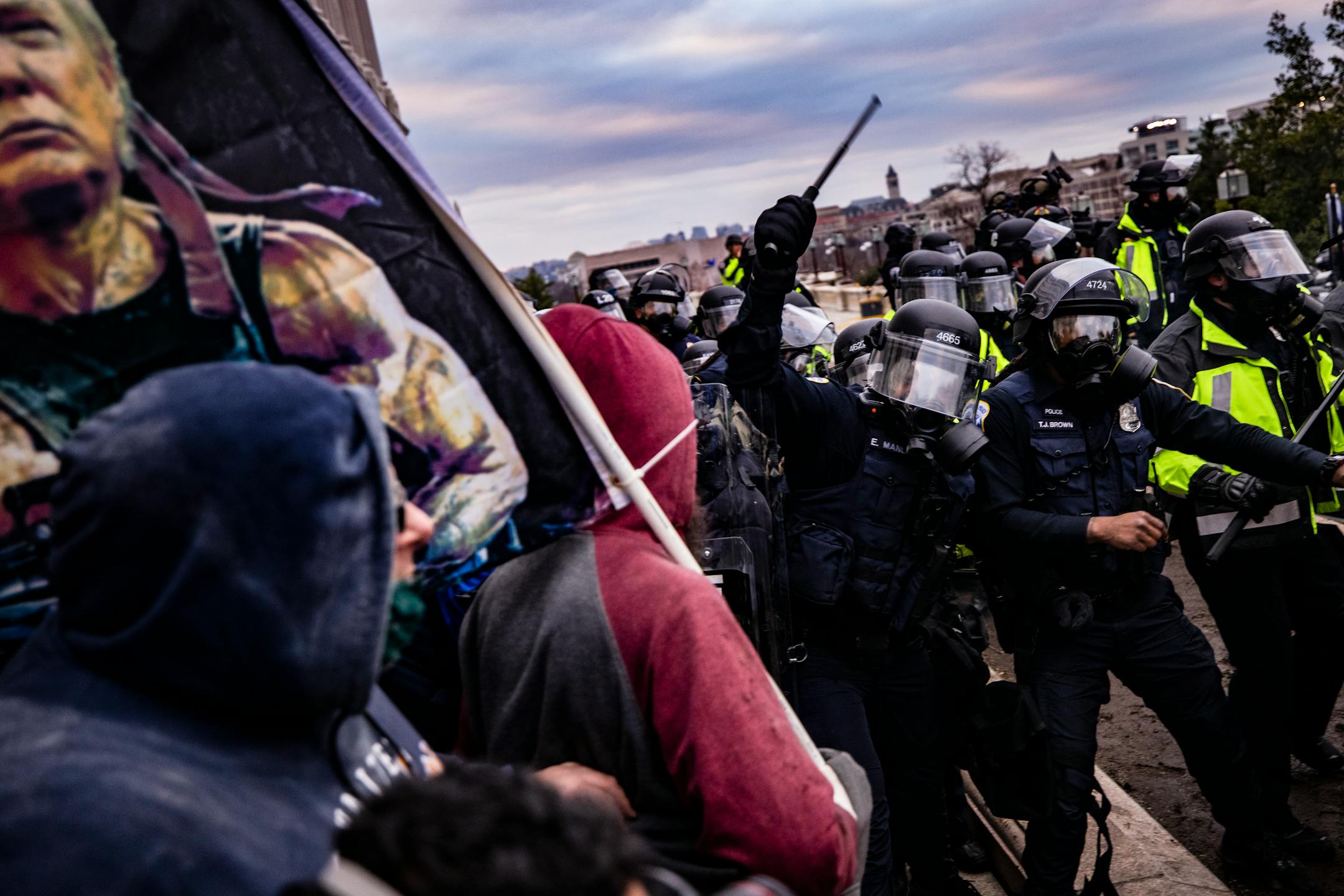
WASHINGTON, DC - JANUARY 06: Police officers attempt to push back a pro-Trump mob trying to storm the U.S. Capitol following a rally with President Donald Trump on January 6, 2021 in Washington, DC. Trump supporters gathered in the nation's capital today to protest the ratification of President-elect Joe Biden's Electoral College victory over President Trump in the 2020 election. (Photo by Samuel Corum/Getty Images)
Police tried to push back a pro-Trump mob storming the U.S. Capitol on Wednesday. The violence came after a rally by the president, who repeated, falsely, that the election had been fraudulent. (Samuel Corum - Getty Images/The Minnesota Star Tribune)

However, she doesn't put the blame on Trump, and she doesn't believe the president did anything impeachment-worthy.

"We're allowed to protest, we're allowed to do things legally," she said. "I'm tired of hearing that Trump did this or did that. He didn't go onto social media and say, 'Go into the Capitol, break it, burn it, destroy things.' "

Smith, who works for the health department, saw something much different, both perfectly straightforward — extremists committing something akin to domestic terrorism — and impossibly complex.

As a health equity and tribal grants supervisor, Smith has spent her career studying historical trauma. For her, just as important as looking toward the future is examining how our past led us to this point. Last week must be put in historical context: What it means to America's historically oppressed people to see a group of white extremists being treated far more gently than she believes a group of Black rioters would have been, but also what unique personal and historical trauma brought Wednesday's mob to the point of insurrection. A dive into that complexity could turn Wednesday into more than a horrific historical moment. It could become a national turning point.

"If we want to fix the car, we need to lift up the hood and be willing to look at our collective issues," Smith said.

JaNaé Bates, she woke up Wednesday morning with a sense of hope. The Georgia runoffs were the night before; a southern state whose history is pocked with racial injustice and voter suppression had turned the U.S. Senate from red to blue. As communications director for Isaiah, a Minnesota coalition of faith communities that fights for racial and economic justice, she's been intimately involved in racial justice. She hopes history remembers last week's events in that proper context.

"They fought so hard to be able to make sure folks have a voice, and their voices are finally able to be heard," Bates said of Democratic victories in the Georgia runoffs. "And you have a few hundred folks clearly in opposition to that vision for all America, and they're storming the Capitol for a very small sliver of America — in that context, it's a hopeful thing to me. When you cut off the head of the demon, they're going to thrash the hardest in their dying moment."

Staff writers Matt McKinney and Katie Galioto contributed to this report.

Reid Forgrave • 612-673-4647

about the writer

about the writer

Reid Forgrave

State/Regional Reporter

Reid Forgrave covers Minnesota and the Upper Midwest for the Star Tribune, particularly focused on long-form storytelling, controversial social and cultural issues, and the shifting politics around the Upper Midwest. He started at the paper in 2019.

See Moreicon