
She survived a brutal rape, then told her story

August 11, 2016 at 7:48PM
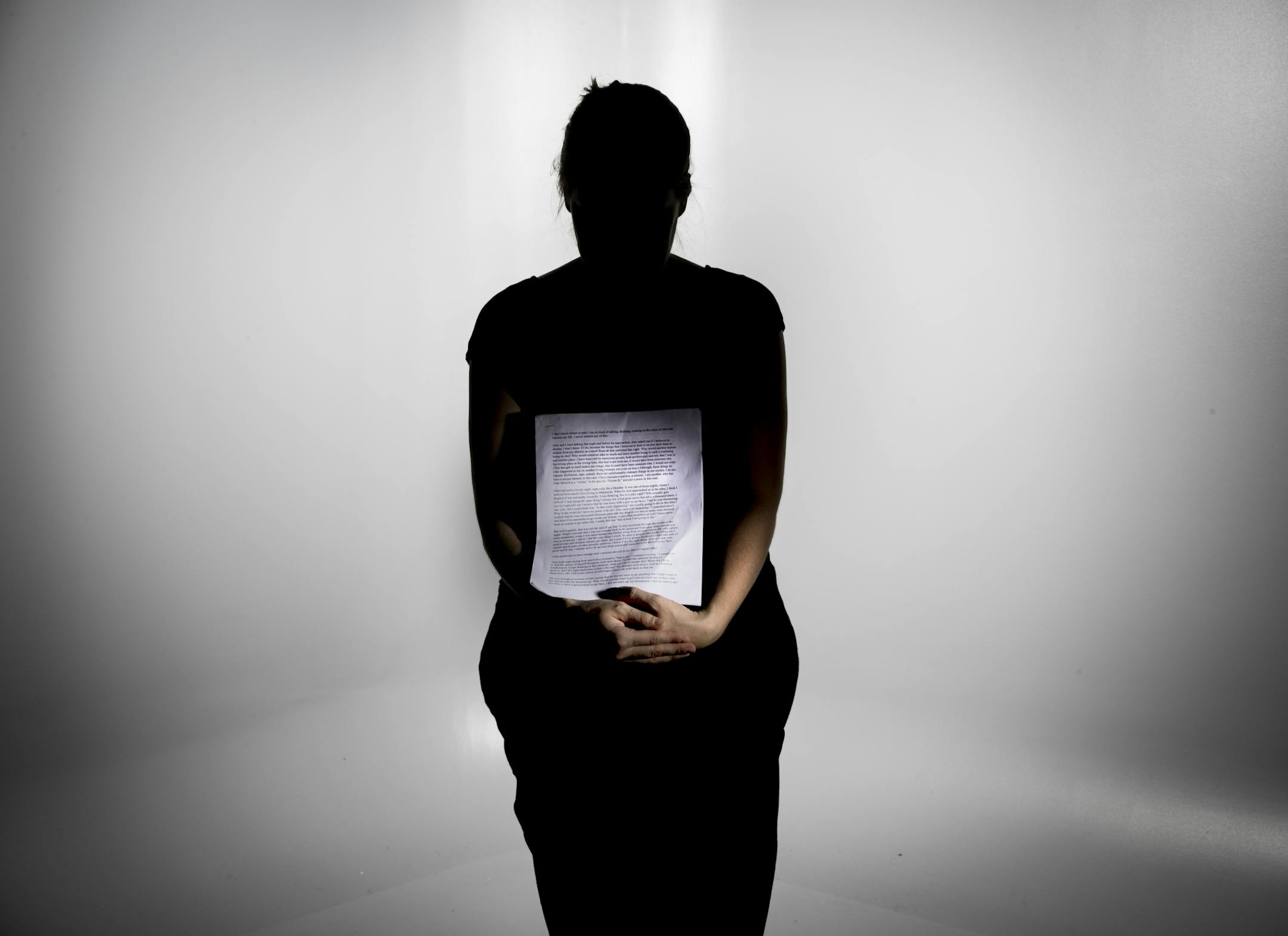
A victim of a brutal rape confronted her attacker in court, reading a five-page statement that brought many to tears in the gallery. She was photographed with her statement on Tuesday, August 9, 2016, in Minneapolis, Minn.
A victim of a brutal rape confronted her attacker in court, reading a five-page statement that brought many to tears in the gallery. She was photographed with her statement on Tuesday, August 9, 2016, in Minneapolis, Minn. (Star Tribune/The Minnesota Star Tribune)

'Victim B' looked down at her statement, nervously folding and unfolding it. Four pages, single spaced, that she spent months forming in her head, two weeks writing, and was determined to read, even though she didn't have to.

Her rapist's crime was so heinous that state law required the judge in the case to sentence him to life. This late July hearing was but a formality.

Assistant Hennepin County Attorney Chris Freeman walked up to reassure her.

"There won't be any surprises," he said.

"OK," she replied, nodding her head. She didn't fear that he would go free, but instead what would happen if she didn't go through with this. For her own sake, she needed to see it through.

As part of sweeping changes in victims' rights across the country, the Minnesota Legislature in 1988 allowed the option for those harmed by crime to make a statement at the perpetrator's sentencing. Since then, there has been a national debate as to whether it actually helps victims. The evidence is generally mixed. A 2015 study in the European Journal of Criminology found that delivering a victim impact statement "does not give rise to direct 'therapeutic' effects," but victims who experience more control over their recovery found a decrease in anger and anxiety.

The risk in giving a statement is that it could re-traumatize a survivor and disrupt the healing process, said Laura Palumbo, the communications director for the National Sexual Violence Resource Center. But taking such a risk can also be valuable.

"Because it is such a vulnerable act, it is all the more powerful and healing when there is a positive outcome," she said.
The woman closed her eyes and took a deep breath. Doing this, she told herself, will help mark the beginning of the end of her time as Victim B.

Becoming 'Victim B'

Her expression did not change when 26-year-old Mohamed Elmi walked in. In glasses, slacks and a shirt and tie, he appeared dressed to interview for a job rather than to receive life behind bars. The first time she saw him was about 40 minutes after midnight on Aug. 4, 2015, when he and another man turned her into "Victim B," as she would become known in court documents.

She moved from a southern state to Minnesota three years ago when she was 26 to pursue a career helping vulnerable adults and the elderly. That morning, the woman and her neighbor — who would become known as "Victim A" — were outside her apartment just south of downtown Minneapolis, talking about whether they believed in destiny when Elmi approached them. He had a gun, despite a record of violent crimes that should have banned him from ever getting one. Elmi demanded they empty their pockets. He told her to stop crying or he'd kill her. A car pulled up in the alley. Elmi and the driver, Ismail Adam Abdo, ordered her into the car. The neighbor called 911.

Elmi and Abdo took her to an ATM. When she couldn't withdraw enough money to satisfy them, they drove her to a park a few miles away along the Mississippi River, where they told her she would have to make up the deficit. At gunpoint, they raped her so forcefully that she vomited. They high-fived each other during the assault and called themselves "gang brothers." After they drove off, she walked to a nearby gas station where at 2:21 a.m., she had someone call 911. Police arrested Elmi later that day. Abdo fled the country and is still at large.

The evidence against Elmi was overwhelming. She identified him in a photo lineup. He left his DNA at the scene. Prosecutors offered him a plea deal of 35 years in prison. But Elmi pleaded not guilty and denied involvement. His attorney, Richard Cohen, offered little defense during the June trial, giving no opening statement and calling no witnesses. Victim B testified. It took a jury less than an hour to convict him.

'I am a shell of who I was'

When the time came to read what she wrote, she stood only a few feet from Elmi. She did not look at him.

"Start whenever you're ready," Judge Jay Quam told her.

"I'm ready," she said.

And then she read.

"I don't know where to start. I am so tired of talking, thinking, existing in this mess of what has become my life. I never wanted any of this."

She recounted that night, one so lovely it made her realize how much she loved Minnesota, sitting out in the alley near her home with a friend. When Elmi first approached them, she thought it was a joke — who would actually rob someone here? But she realized Elmi was drunk, and became more frightened than she had ever been in her life. She thought she was going to die.

"But unfortunately, that was not the end of my fear," she read. "It only increased through the events of the night." She felt pieces of herself disappear during the rape, she said. As she watched them drive off, "I felt every ounce of self respect leave me with them in that car."

"I can't even recognize myself in the mirror. I don't know who I am anymore."

She shook only occasionally as she tried to fight away nerves and tears. Others in the courtroom wept as she continued. Elmi's family members sunk in their seats and looked away. Elmi closed his eyes.

She told the court that her option that night was be willing or die. Afterward, it was call the police or let them rape another woman. She cried as an officer took her home from the hospital. It was 8 a.m.

"He was probably asleep while my whole world had only just begun to unravel," she said of Elmi.

Repeating the heartbreak

For weeks afterward, she would cry once it got dark. Any stranger could have been a potential rapist. Each time she had to recount the rape, she said, she became a victim all over again — from telling police what happened, to the medical exam, and then hearing her voice as the 911 call was replayed. The worst part, she said, was telling her family.

"My mother cried on the phone telling me, 'You are my baby, I am supposed to be able to protect you,' " she said. "When I saw my dad, he hugged and apologized profusely."

All of it made her feel the heartbreak all over again. "Remembering the feel of the concrete parking lot underneath my shaking body," she read. "Feeling the tears on my cheeks … reliving every moment of that night through every fiber, cell, and atom of my being," she said.

"Today I stand here almost one year later; I am a shell of who I was. I may look exactly the same but I am not the same person," she said. "I am grateful to have my life but the spirit of that person he met that night is no longer alive."

At home that night, long after the sentencing ended, she penned something else. "I'm so proud of myself," she wrote in a note to herself. "I stood on my own two feet and did myself proud."

Two weeks later, she reflected on her words, and what it was like to again relive her nightmare in that Hennepin County courtroom. This time, she said, the effect was a healing one.

"I feel like reading that statement was closing a chapter for me," she said. "I feel probably the best I have in a year because I have hope."

Brandon Stahl • 612-673-4626

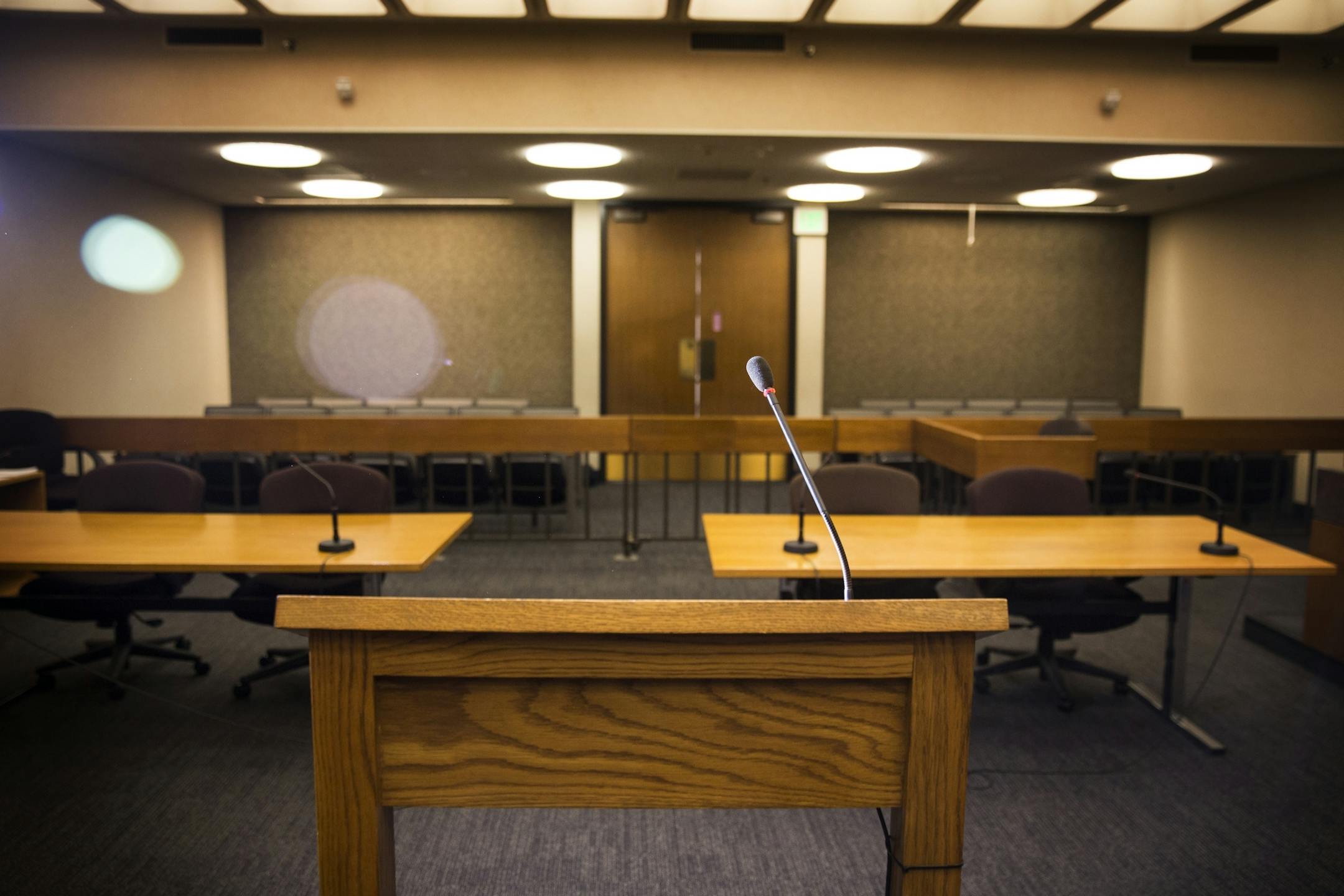
The podium where the victim read her statement.
The podium where the victim read her statement. (Star Tribune/The Minnesota Star Tribune)
about the writer

about the writer

Brandon Stahl

See Moreicon