

"OMG, did I really mean to say that?" It's that inevitable "oh, crap!" moment when something fell out that, really, probably should've been kept to oneself.
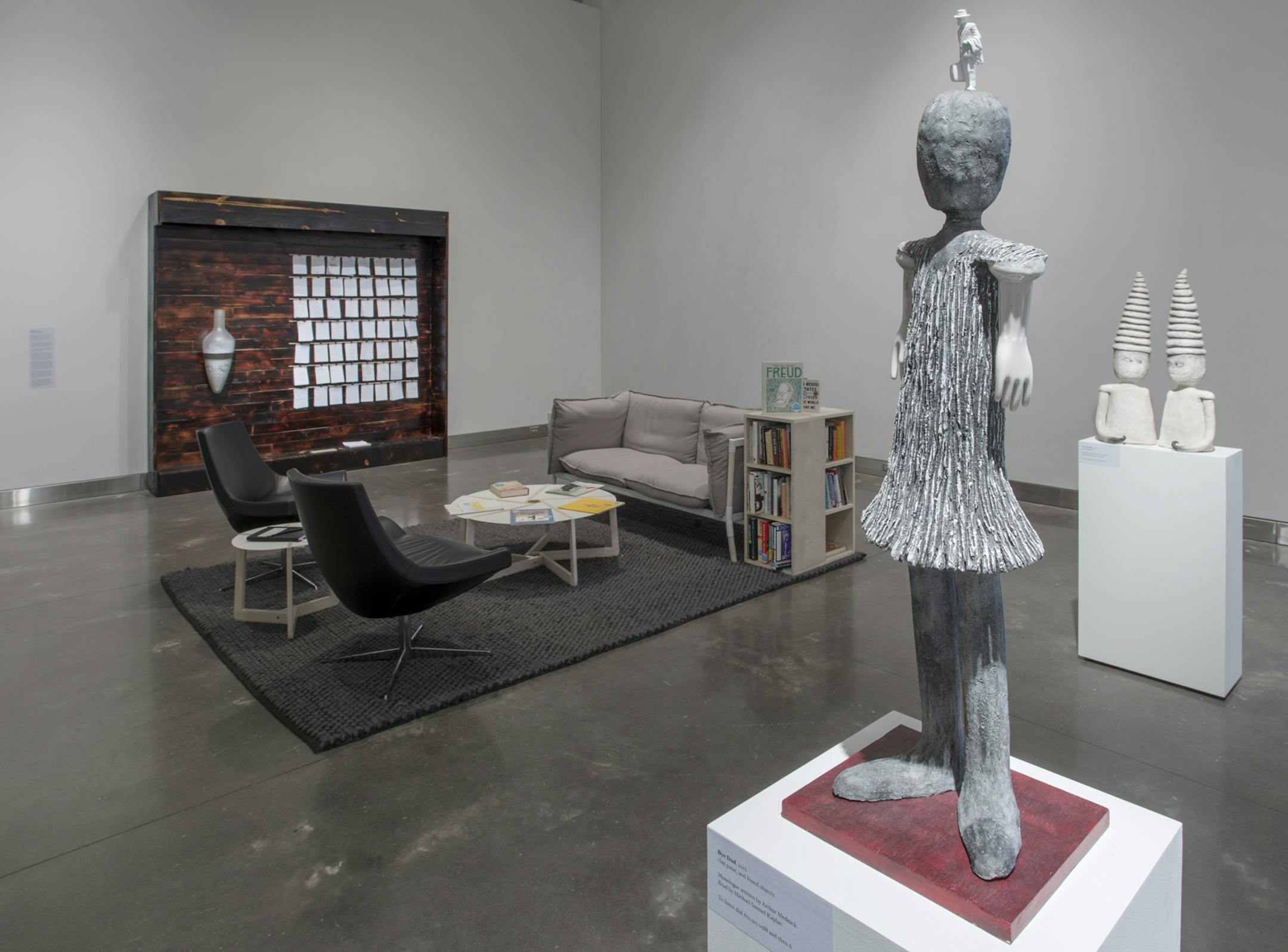
That sense of what's socially acceptable is part of the deeper issue embedded within artist Rebecca Krinke's participatory exhibition "What Needs to Be Said?" at the University of Minnesota's Weisman Art Museum. It's a companion element to Melissa Stern's exhibit "The Talking Cure," both closing April 30.
"What Needs to Be Said?" invites visitors to share some of their random thoughts on Post-its and then place them for others to see, on a large burned-wood wall piece facing a library-like area.
Visitors who prefer not to post their messages publicly — "public" meaning the people who physically visit the gallery — can drop them in a box labeled "private." Those notes will be burned in a public ceremony Wednesday night. Krinke promises that no one — not even herself — has read or even seen what's on them.
"I honor the trust; I don't read them," Krinke said. "I think of this sort of in an archetypal way, of being able to write or purge and send them off. In Japan, for example, the prayers are burned and they're sent to the divine."
Krinke, an artist-in-residence at the Weisman for the past academic year, created this piece as a companion to the broader exhibition that focuses on questions of public and private sharing, a relevant question in the age of social media and the internet. But in her exhibition, instead of the Facebook status update question of "What's on your mind?" the question becomes "What needs to be said?" In that way, there's an implication that certain things shouldn't be shared, or should be said only within a specific context. The truth of the matter, however, is that self-disclosure is important and, at times, it's unclear to whom what should be said.
The messages posted to the bulletin board have incited discussion among viewers, who often include school groups or college students.
"The people standing in front of the project might see a comment they don't like about Trump or Hillary Clinton, and they're like, 'Is that hate speech? Should that be taken down?' " Krinke said.


