
Shakespeare's depiction of Richard III may be 'wither'd up'

Scientists say portrayal as hunchback is pure fiction.

June 7, 2014 at 7:00PM
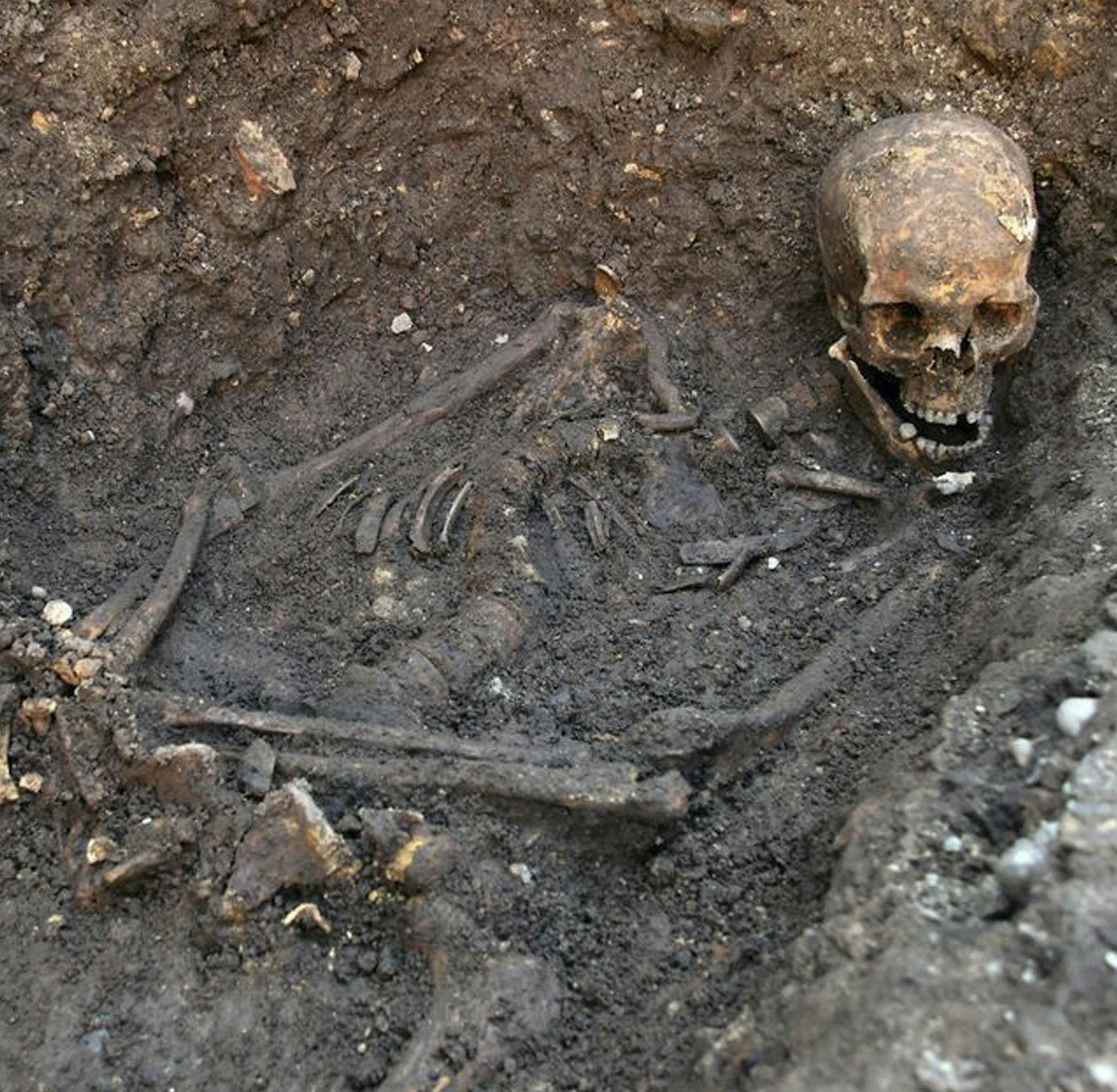
FILE - In this undated file image made available Monday Feb. 4, 2013, by the University of Leicester, England, showing the mortal remains of Britain's King Richard III, found underneath a car park in Leicester after being declared missing for around 500 years. Scientists at the University of Leicester, have carried out scans and according to a new analysis of the medieval king’s skeleton released Friday May 30, 2014, the King's long fabled kinked spine actually had a "well balanced curve"
FILE - In this undated file image made available Monday Feb. 4, 2013, by the University of Leicester, England, showing the mortal remains of Britain’s King Richard III, found underneath a car park in Leicester after being declared missing for around 500 years. Scientists at the University of Leicester, have carried out scans and according to a new analysis of the medieval king’s skeleton released Friday May 30, 2014, the King’s long fabled kinked spine actually had a “well balanced curve” that could have been concealed under clothes or armour, unlike the exaggerated hunchback which Shakespeare depicted as “deformed, unfinished, sent before time into this breathing world, scarce half made up”. In reality scientist say his head and neck would have been straight, not tilted to one side, and there was also no evidence that he had a limp. (AP Photo/ University of Leicester) (The Minnesota Star Tribune)

LONDON – The slings and arrows of literary insults aimed at King Richard III grossly embellish the deformities of the supposed hunchback whose villainy endures thanks to William Shakespeare.

That's the conclusion of scientists who used 3-D printing to reconstruct the spine of the last English ruler before the Tudors, after his remains were immodestly discovered under a parking lot in 2012. The findings may overturn centuries of maltreatment by the Bard and other writers.

Richard III, who died offering to trade his kingdom for a horse in Shakespeare's version of his life, had scoliosis that wasn't severe enough to warrant the hunchback depiction, scientists at the University of Cambridge and the University of Leicester reported in the Lancet journal. No evidence was found of a withered arm or uneven legs that would have caused him to limp.

"If you took Richard's clothes off, you could see that his spine had a big curve in it, but if he was clothed, scoliosis is much less obvious," said Piers Mitchell, a paleopathologist at Cambridge. "Shakespeare wrote his play over a century after Richard III died. Clearly, he was writing the play based on what he had heard, without seeing the evidence himself."

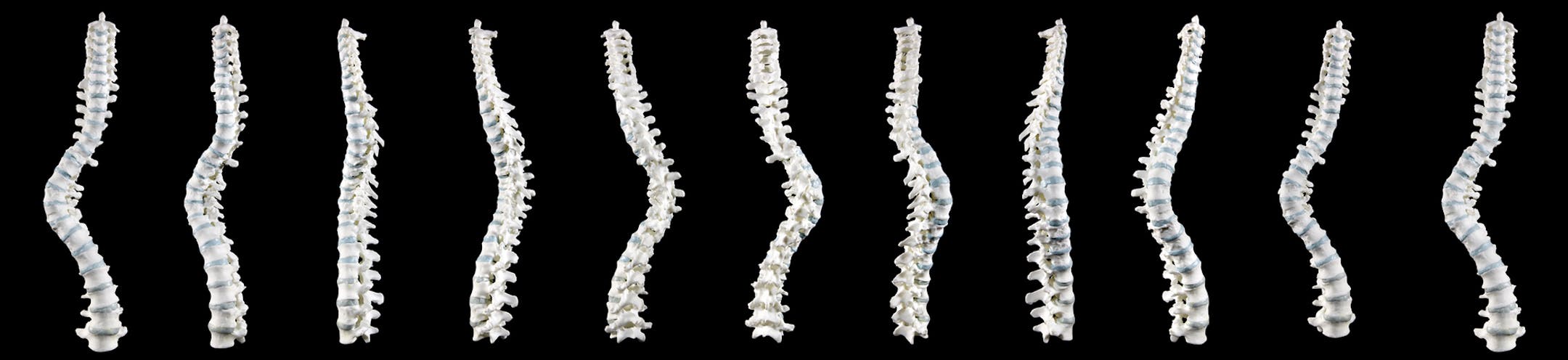
The researchers used CT scans to create 3-D reconstructions of each bone in the spine. While the alignment of the joints resulted in a curvature that matched what was clearly seen when the bones were unearthed last year, the effect on Richard's outward appearance was "probably slight" and easily obscured by custom-made armor, they said.

In the eponymous play dating to about 1593, Shakespeare used characterizations such as "deform'd" and "unfinish'd" in the first scene of the opening act to describe Richard, who was killed in battle in 1485. In the third act, the king says, "behold mine arm is, like a blasted sapling, wither'd up."

The latest scientific analysis may help set the record straight, Mitchell said.

Richard III's demise ended Britain's Plantagenet dynasty and inspired one of Shakespeare's most popular plays, with the title role performed by Kevin Spacey at London's Old Vic a year before the bones were unearthed. His death may have inspired some to malign the king to give legitimacy to the succeeding Tudor dynasty.
Richard III is sometimes accused of having arranged the killing of two young princes, the sons of the previous king, Edward IV. His death marked the end of the Wars of the Roses and he was succeeded by Henry VII.

Wounds were discovered on the skeleton that were consistent with dying in battle, scientists said at the time, and the corpse was probably "subjected to humiliation injuries, including a sword through the right buttock."


Embargoed to 0001 Friday May 30 --- In this undated image issued Friday May 30, 2014, by Britain's University of Leicester, showing a series of images of a turning 3-Dimensional model, showing the kink in the spine of Britain's King Richard III, which has been created by scientists. In new analysis of the medieval king’s skeleton released Friday May 30, 2014, scientists who carried out scans of the King's long fabled kinked spine found it had a "well balanced curve" that could have been c
A series of images from CT scans show the curvature in the spine of Britain’s King Richard III. While the alignment of the joints resulted in a curvature, Richard’s outward appearance could have been obscured by custom-made armor, scientists said. (The Minnesota Star Tribune)
about the writer

about the writer

Makiko Kitamura Bloomberg News Service

More from No Section

See More
FILE -- A rent deposit slot at an apartment complex in Tucker, Ga., on July 21, 2020. As an eviction crisis has seemed increasingly likely this summer, everyone in the housing market has made the same plea to Washington: Send money — lots of it — that would keep renters in their homes and landlords afloat. (Melissa Golden/The New York Times) ORG XMIT: XNYT58
Melissa Golden/The New York Times

It’s too soon to tell how much the immigration crackdown is to blame.