

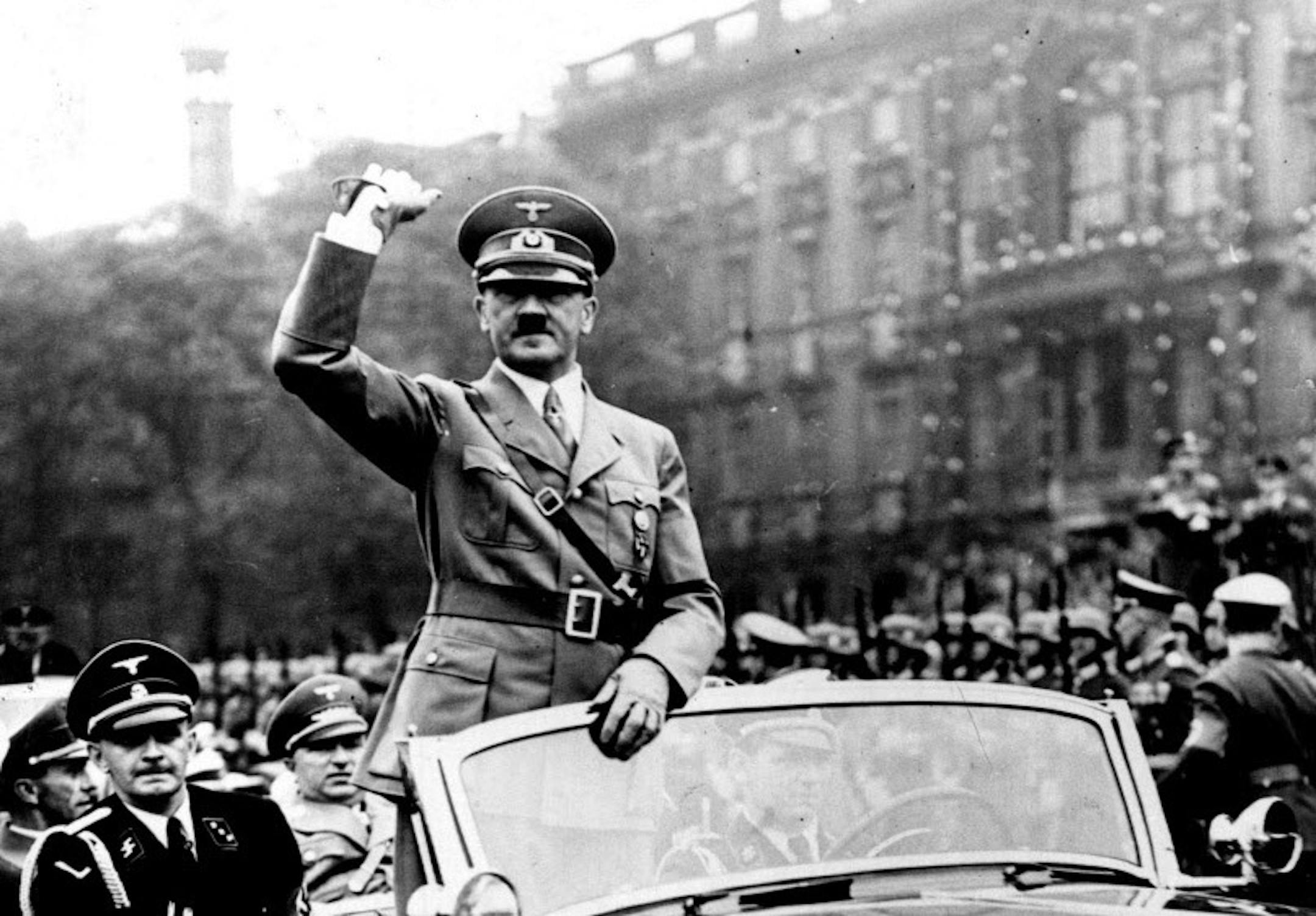
The Nuremberg trials opened 70 years ago this month with every prospect of ending in disaster. Nuremberg was the first time in modern history that the victors of a war decided to treat a defeated European enemy as criminal. The prosecution faced one overwhelming problem: There was no clear legal authority to say that starting a war was a crime under international law.
Today we often think of the Nuremberg trials as having been about the Holocaust. But in fact the prosecution team, led by U.S. Supreme Court Justice Robert Jackson and including British, French and Russian lawyers, focused on the theory that Germany's crime was to have engaged in "aggressive war."
There were multiple problems with treating the Holocaust as a crime in itself. The full scale of the murder was not yet understood. None of the Allies wanted to make it appear that they had sacrificed and fought World War II on behalf of Jews, which in any case would've been false. And there was no clear rule of international law that made it a crime to discriminate against your own citizens. Segregation was still constitutional in the U.S., making it particularly awkward for the Americans to treat Nazi anti-Semitism as a matter for outsiders to judge. In the end, the way the prosecutors could incorporate crimes against Jews and others was to say they were adjunct to the crime of aggressive war.
It fell to Jackson to explain to the International Military Tribunal how, exactly, the Nazis were guilty of crimes under international law. Jackson had been a skilled trial lawyer and an extraordinarily successful solicitor general, having argued the Franklin Roosevelt administration's cases before the Supreme Court. You can watch excerpts online, and they reveal the confidence of his oratorical style.
Yet in a formal legal sense, Jackson's case suffered from notable weaknesses. There was no single principle or treaty of international law that made it a crime to start a war, aggressive or otherwise.
One treaty, the Kellogg-Briand Pact of 1928, condemned war as a "solution of international controversies." Its signatories, including Germany, renounced war "as an instrument of national policy." But to condemn something or renounce it is not the same in law as making it a crime.
In his address, the opening statement of the trials, Jackson first tried to finesse the issue by claiming that aggressive war had been outlawed by the custom of nations, reflected in gradually emerging international consensus. His punchline was that, although the "world's statesmen" had been "less explicit than we might have hoped," nevertheless, "the 1920s did outlaw aggressive war."
The trouble with this line of argument was that Germany was a member of that community of nations, and it plainly hadn't gotten the memo. Custom was supposed to reflect the universal practice of civilized nations. All Jackson had to say in response was that if Germany had failed to understand that custom, so much the worse for it.


