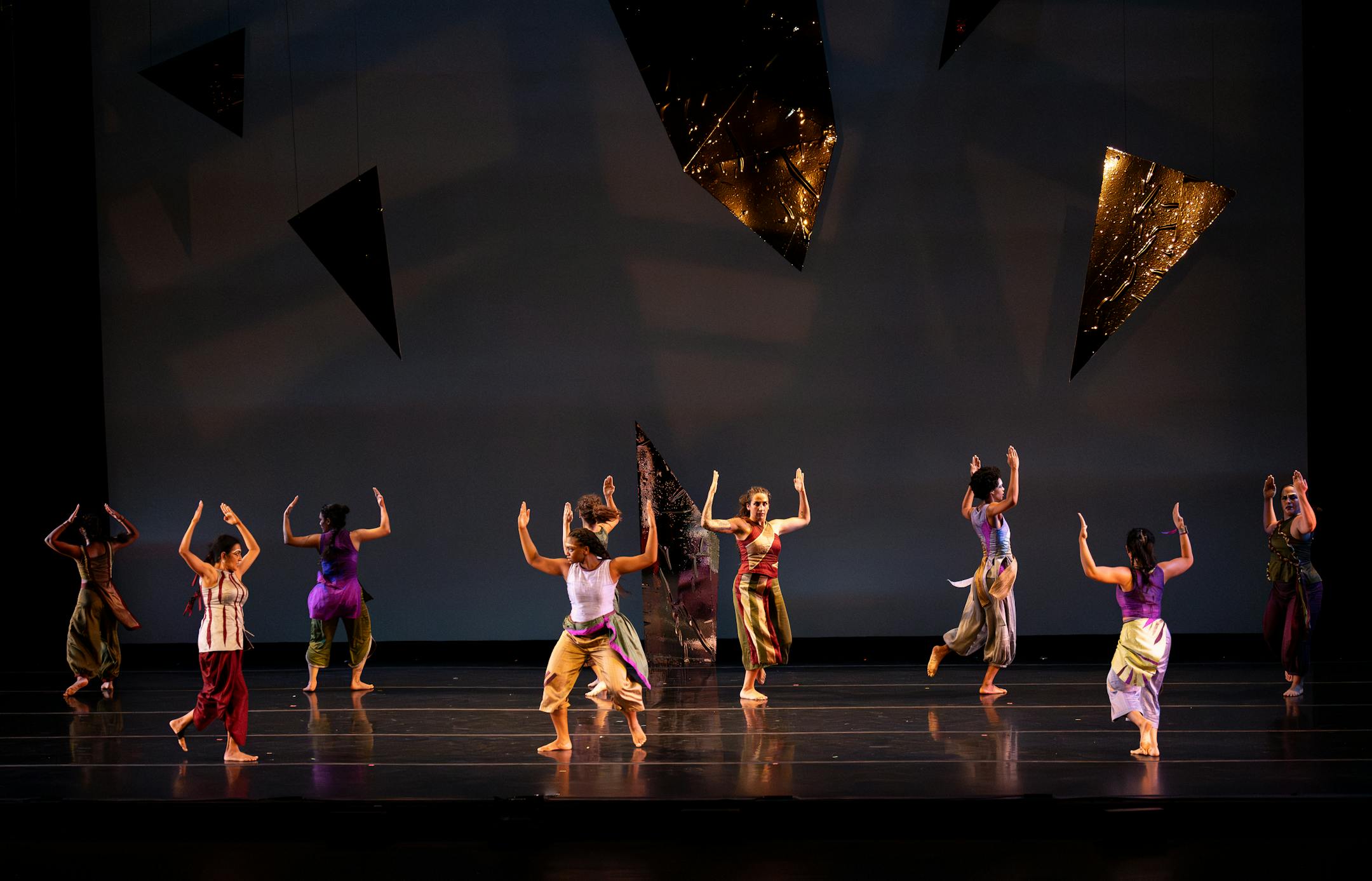
Concert dance isn’t just about bodies moving onstage. It’s also about the set, which adds tonal mood and helps frame the dance work.
Set design typically acts as temporary architecture, creating the illusion of a fully realized world. A set’s stillness can counterbalance the dancers’ motion, framing the choreographer’s vision through symbolism and metaphor.
Smaller venues or companies may not use sets and instead prioritize costumes or lighting. But a striking set design can cement a work in our memory by helping to tell a story or supporting the choreographer’s conceptual spine.
In many ways, the set functions as a visual language in dance, communicating through shape, color, texture and feeling.
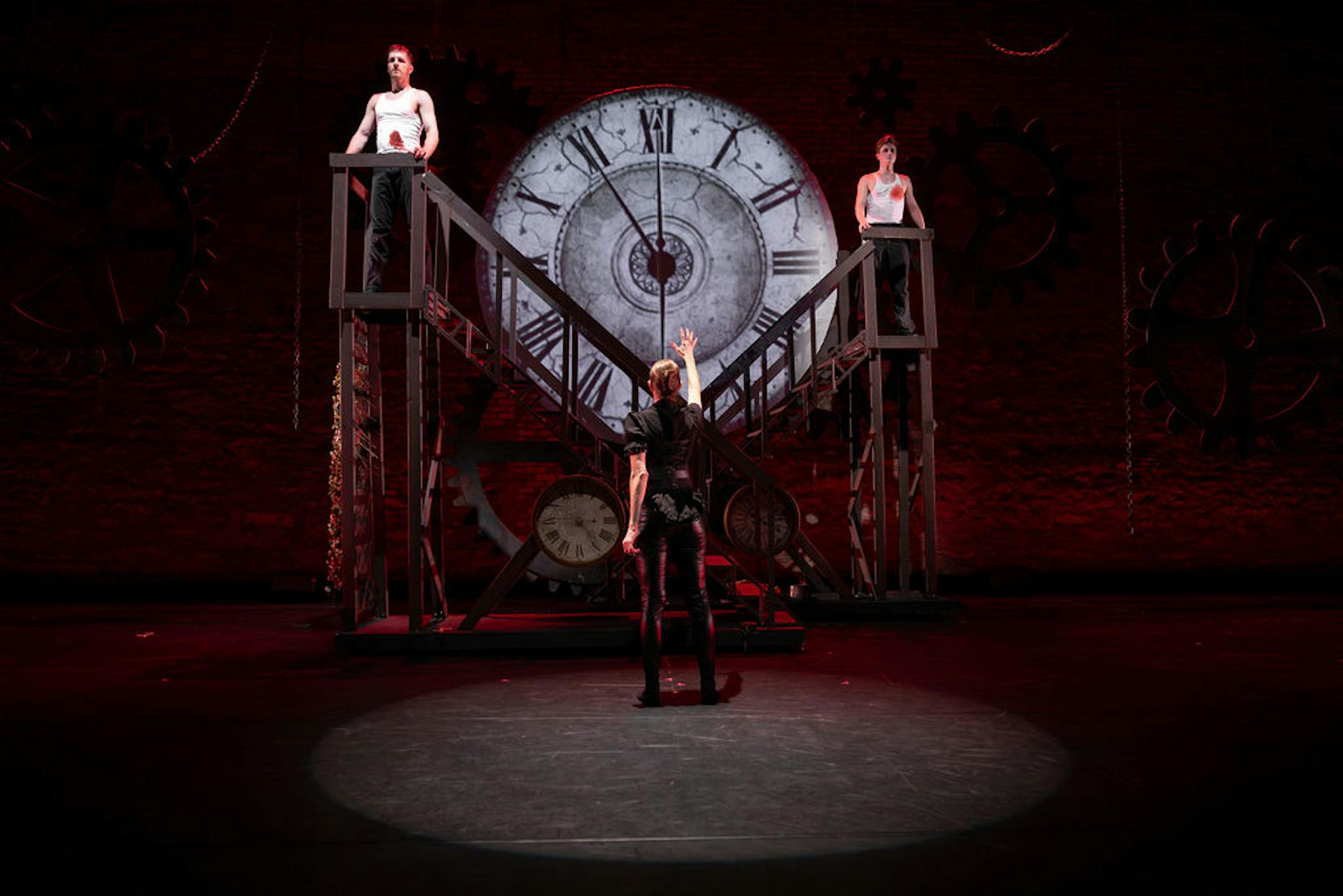
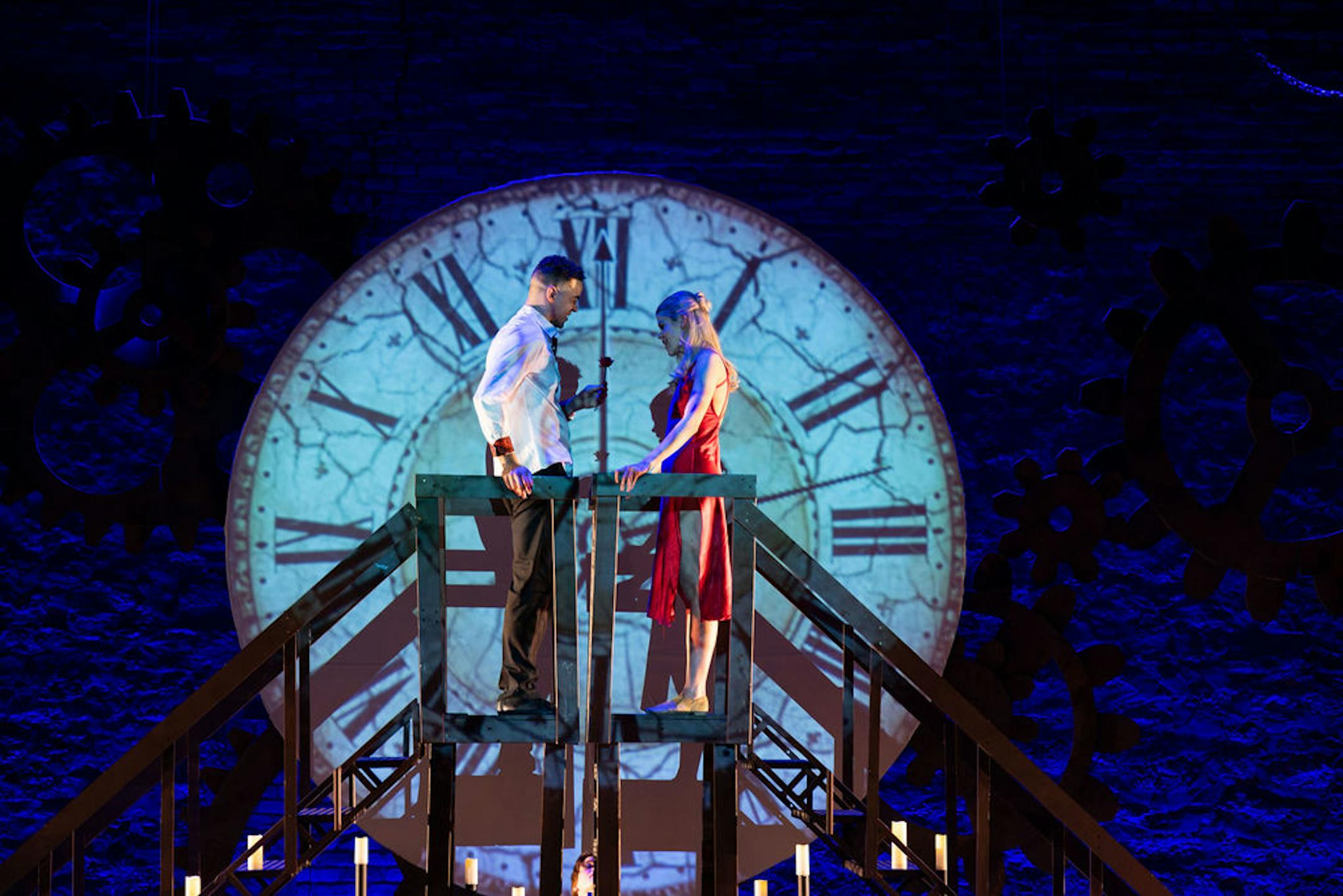
Designer Erik Paulson employed a vintage grandfather clock face as a central motif in Collide Theatrical Dance Company’s production of “Romeo and Juliet” last season. The set highlighted the urgency of the story and supported the production’s steampunk aesthetic.
Next month, Collide will embark on creating multiple settings for its aerial version of “Dracula” that will feature a vertical set design to complement the story.
“I really think that it helps to enhance the story itself and the accessibility of the story,” artistic director Regina Peluso said.
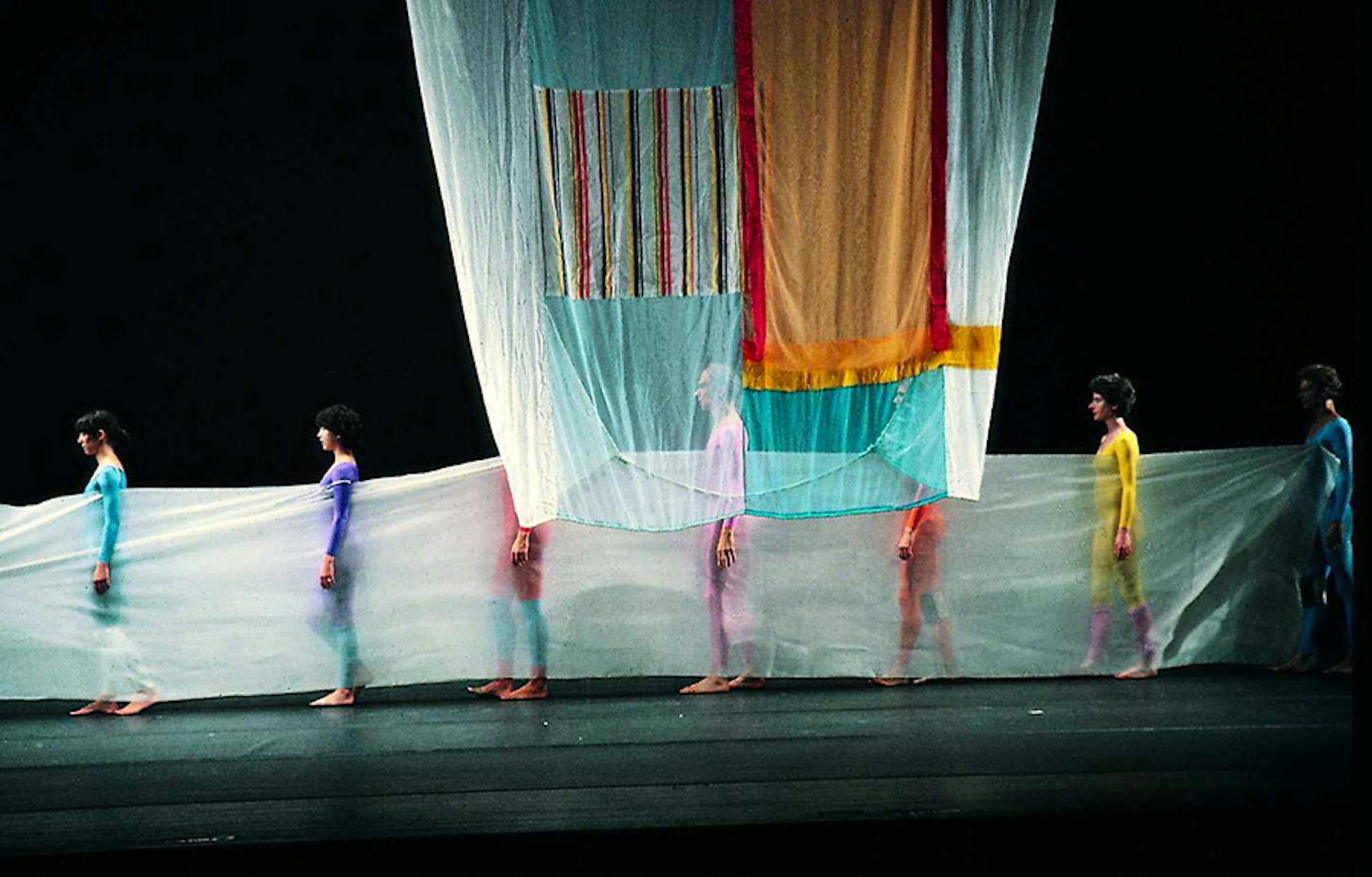
In some cases, a set design is part of the reason a work becomes iconic.
 1:47
1:47