Only the rustling breeze and the chatter of crickets would have been sounds familiar to the 350 people who have slumbered for nearly a century in unmarked graves on the northeast edge of the Pioneers and Soldiers Memorial Cemetery in south Minneapolis.
They could scarcely have imagined the buzzing traffic on nearby Lake Street or the rumbling airplanes that momentarily silenced the visitors who came to honor them for their contributions to medical education.
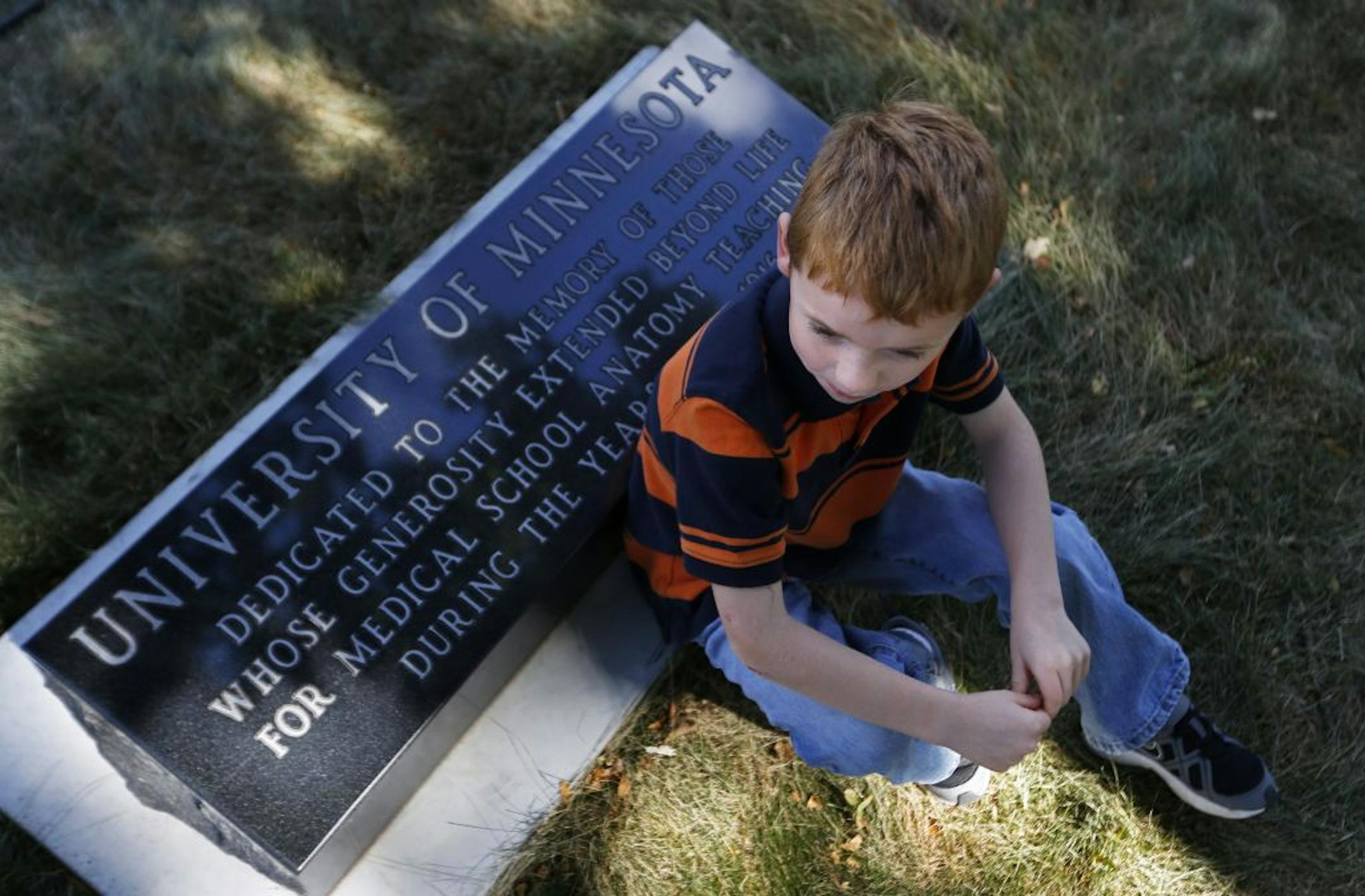
A black granite tombstone dedicated on Sunday over their graves cites the contributions these dead made to "medical school anatomy teaching" from 1914 to 1916, when about 250 of them were dissected by University of Minnesota medical students .
Though their life stories may be "lost to history," the people buried there "advanced learning about health in Minnesota and the nation," said Barbara Brandt, associate vice president for education at the University of Minnesota, which donated the tombstone.
Buried in the cemetery's potter's field, the 350 include transient workers whose bodies were unclaimed after they died in jail, prison or the city's charity hospitals. A few were suicides, or drunks or accident victims. More than half were foreign born -- immigrants from Sweden, Finland, Poland, Macedonia and other remote lands. About 100 were stillborn babies or infants who died shortly after birth.
"It was very easy to get lost back then, when they didn't have DNA or Social Security numbers or photo IDs everywhere," said Sue Hunter-Weir, a cemetery historian who has tracked down death notices for almost all of the individuals.
The ceremony attracted about 50 neighborhood residents, university officials, genealogy buffs and friends of the 1853 cemetery, which was established before the city of Minneapolis was incorporated. About 21,000 people are interred on the site at Lake Street and Cedar Avenue, which has been full since 1919. The dead include four veterans of the War of 1812 and about two dozen Civil War vets.
"I have great-great-grandparents buried here," said Kathy Spargo of Victoria, who attended with her husband, Ron, and grandchildren Maria, Anna and Mitch Spack of St. Louis Park.