

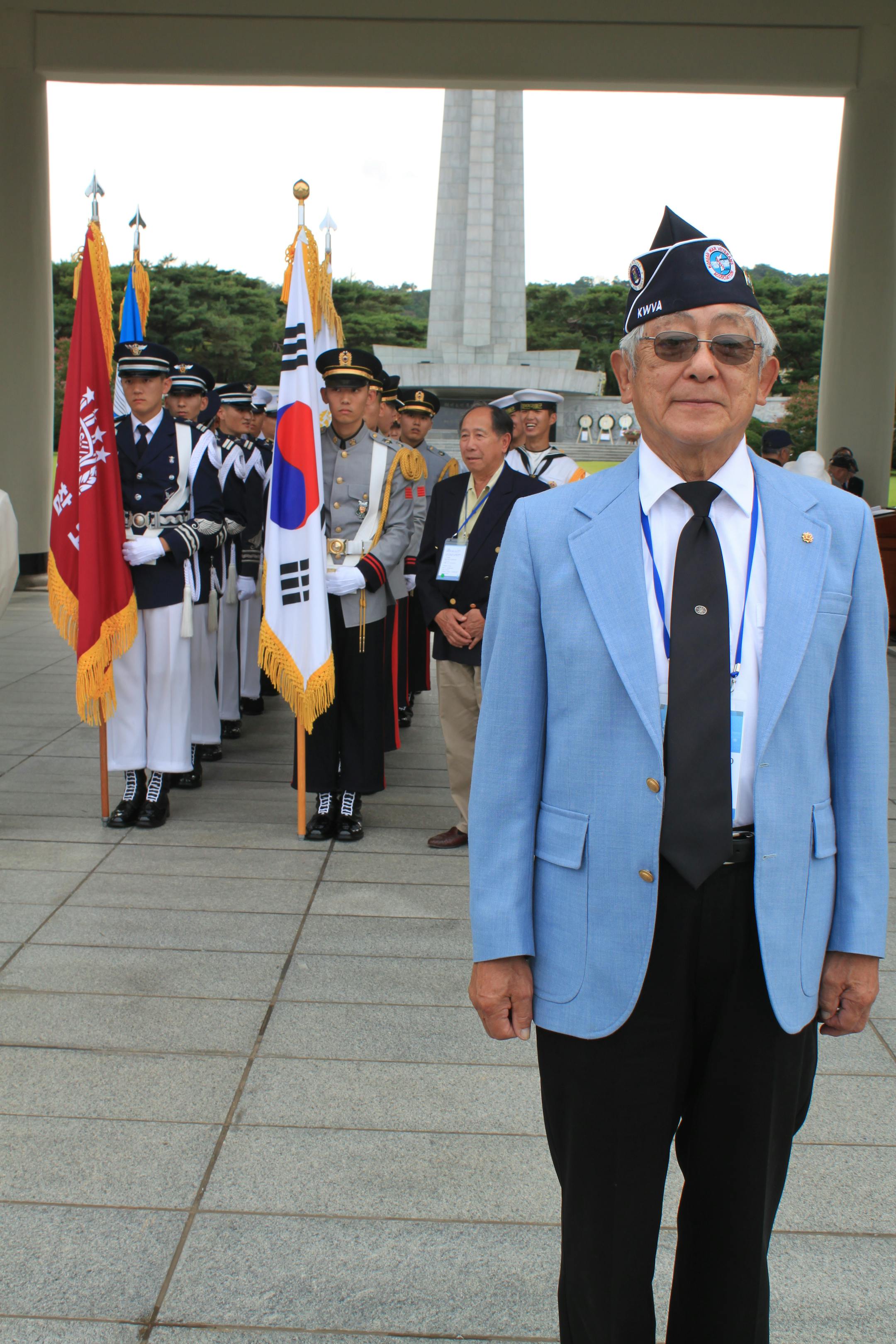
Ted Hirabayashi could have felt bitterness toward the U.S. government from the 1940s until his March death in the Twin Cities at 91, and it would have been understandable.
He was 12, the youngest of eight children in a Japanese American farming family in Kent, Wash., when the U.S. government forced the Hirabayashis from their home in 1942 at the start of America's involvement in World War II. After the Japanese bombed Pearl Harbor, the U.S. government rounded up more than 100,000 Americans of Japanese ancestry — the majority of whom were American citizens — and sent them to internment camps.
Even as his older brothers served in the U.S. military during World War II, Hirabayashi spent three years at Tule Lake Relocation Center in California, then Heart Mountain Relocation Center in Wyoming. Later in life, when he spoke about internment camps, said his widow, Alice, he remembered it as pretty normal: playing football and basketball, joining Boy Scouts.
Because of a Japanese language school here, Minneapolis had become a postwar hub for Japanese Americans, and Hirabayashi moved to the Twin Cities. He went to Central High School in Minneapolis. He met Alice, whose family was sent to an internment camp in Arizona then moved to Minneapolis, when she was working for a Twin Cities dentist.
Then the Korean War began. Hirabayashi enlisted in the U.S. Air Force, where he served from February 1951 until December 1954. He had some harrowing stints as a radio operator on Ch'o-do Island off the coast of North Korea. A staff sergeant, Hirabayashi scrambled into bunkers when Chinese planes dropped bombs on the island, a period that resulted in his hearing loss and post-traumatic stress disorder.
"I remember asking him, 'Dad, would you do it again?'" said his son, Alan Hirabayashi of St. Louis. "He didn't think twice: 'Yes!' He was this man of principle. He was so patriotic. He didn't hold a grudge."
After leaving the service, he got his accounting degree at the University of Minnesota, married Alice in 1957, and had two children. The family moved to Madison in the late 1960s, then St. Louis in the 1970s, where Hirabayashi opened his own tax and accounting services business. The Hirabayashis retired to Tennessee in 2001, where they lived on a golf course, then returned to the Twin Cities in 2016 to be close to family and to the Minneapolis VA when Hirabayashi had Alzheimer's.
He instilled in his children an ethic of hard work and a no-complaints attitude. A sign in his kitchen read, "Don't find reasons why you can't. Find reasons why you can." He would sometimes pull out a wooden coin inscribed with the word "TUIT." "This is a round tuit," he'd tell his children. "I don't like when you say, 'I'll get round tuit.' You never do. Just finish!"


