
Senate vote expected on budget deal

Senate is expected to OK agreement today.

December 18, 2013 at 9:16AM
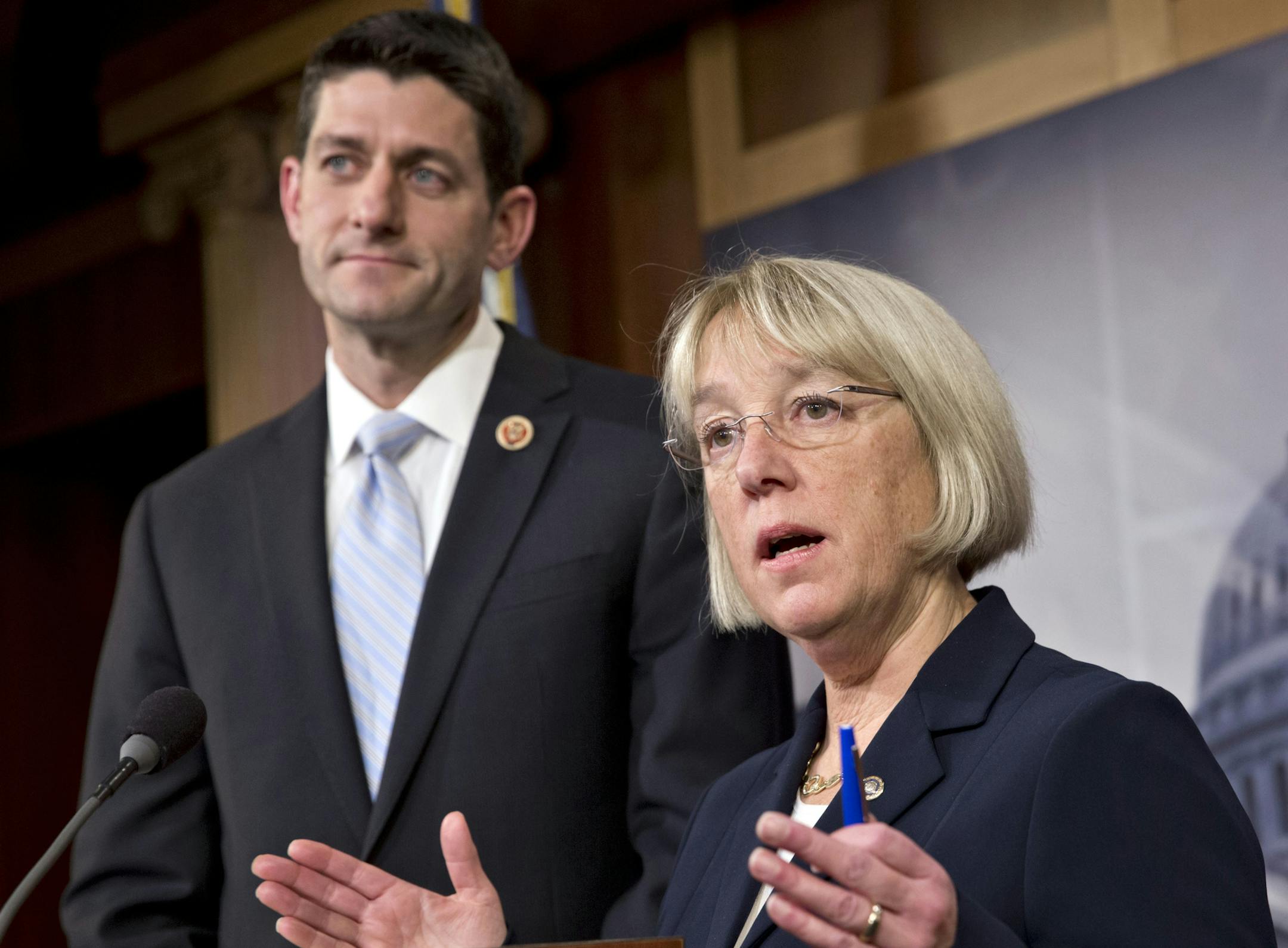
Budget committee chairs Rep. Paul Ryan, R-Wis., and Sen. Patty Murray, D-Wash., brokered the deal.
Budget committee chairs Rep. Paul Ryan, R-Wis., and Sen. Patty Murray, D-Wash., brokered the deal. (Associated Press/The Minnesota Star Tribune)

WASHINGTON – The U.S. Senate advanced the budget agreement to a final vote Wednesday with Republicans divided on their support for the bill.

The Senate voted 67-33 Tuesday to end debate on the $1.01 trillion U.S. spending plan. The measure passed the House 332-94 on Dec. 12 with almost equal numbers of Republicans and Democrats in support.

The budget deal would set U.S. discretionary spending at $1.01 trillion for this fiscal year, higher than the $967 billion required in a 2011 budget plan. The plan raises fees including for airline passengers, and is projected to reduce the budget deficit by $23 billion over 10 years.

The agreement crafted by Sen. Patty Murray, a Washington Democrat, and Rep. Paul Ryan, a Wisconsin Republican, doesn't include tax increases Republicans oppose or entitlement- program changes that Democrats resist.

"Instead of trying to solve everything at once we decided the most important thing we could do for the families we represent was to end the uncertainty," Murray, the Senate Budget Committee chairman, said on the floor before Tuesday's vote.

Some Republicans support the measure as a good first step. "We're far better off approving this budget than not, so I will be voting for it," said Sen. Susan Collins, a Maine Republican.

The measure's main accomplishment is easing $63 billion in automatic spending cuts over two years. President Obama said he'll sign it into law.

Some Republicans are balking because the accord pushes savings into future years and includes user fees that small-government groups are labeling a tax increase.

The plan leaves the door open to a possible fight over raising the debt limit because it doesn't include an increase in U.S. borrowing authority, which is set to lapse in February.

The budget plan doesn't extend unemployment insurance for the chronically jobless. It also doesn't continue more than 50 tax breaks that will lapse on Dec. 31, including the research and development tax credit.

The current short-term measure funding the U.S. government expires Jan. 15, so lawmakers will have only about 10 days when they return in early 2014 from a holiday break to prevent another government shutdown.

With 2014 primary opponents waiting, some Republicans are finding it difficult to support even such a limited deal. "Anyone up in 2014 is as nervous as a Christmas goose," said Ross Baker, a Rutgers University professor.

about the writer

about the writer

Kathleen Hunter and Heidi Przybyla Bloomberg, Bloomberg

More from No Section

See More
FILE -- A rent deposit slot at an apartment complex in Tucker, Ga., on July 21, 2020. As an eviction crisis has seemed increasingly likely this summer, everyone in the housing market has made the same plea to Washington: Send money — lots of it — that would keep renters in their homes and landlords afloat. (Melissa Golden/The New York Times) ORG XMIT: XNYT58
Melissa Golden/The New York Times

It’s too soon to tell how much the immigration crackdown is to blame.