

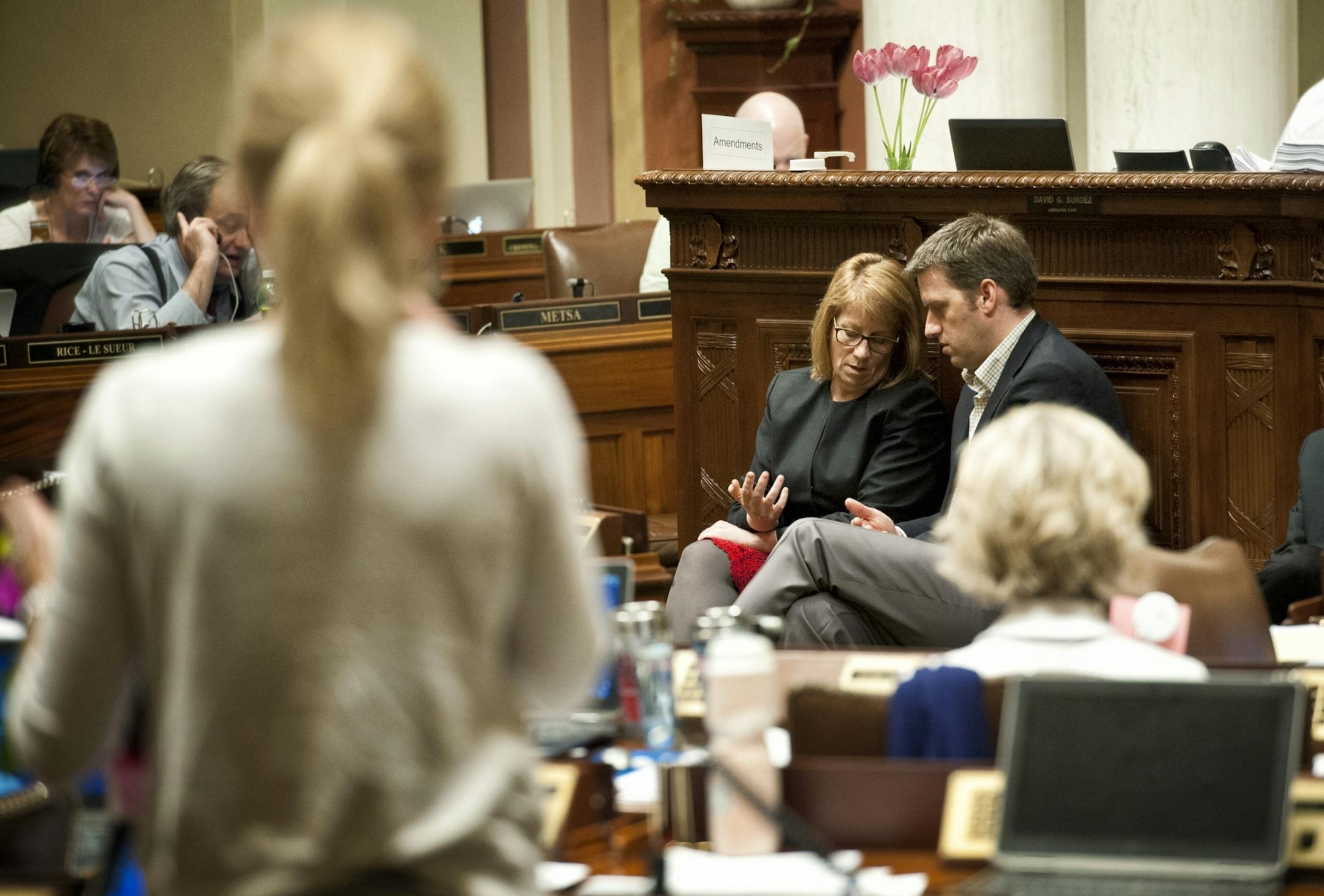
Most parents will have access to free, all-day kindergarten beginning in the Fall of 2014 under a $15.7 billion education funding bill given final approval by the Legislature on Sunday. The Senate approved the bill on a 41-26 vote and sent it to Gov. Mark Dayton. The bill is both the biggest single part of the state's general fund budget and a top priority of the DFL Legislature. Their reason for taking the unpopular step of raising taxes is to provide the popular benefit of all-day kindergarten, as well as other education improvements. All-day kindergarten will be optional for school districts, but sponsors expect most districts to provide it.The bill includes $485 million in new money and includes a $40 million boost in scholarships for lower-income families to send their children to high-quality pre-schools; a $40 million increase in special education aid; and an increase in the basic classroom education formula. "This is a great bill, that has reform, puts us on a path for each Minnesota student to be successfully ready for college and career as part of the world's best work force," said Sen. Chuck Wiger, DFL-Maplewood, chair of the E-12 Finance Division. "When are we going to get down the business of making sure we are educating kids?" responded Senate Minority Leader David Hann, R-Eden Prairie. "When are we going to get off the idea that somehow spending money equates to that?" The bill ends the high-stakes high school graduation tests known as the GRAD tests, and it raises the age at which students can drop out from 16 to 17. It also softens high-stakes basic skills testing for teachers by giving teachers two additional one-year provisional licenses if they cannot pass the tests.
All-day kindergarten approved in education bill
Most parents will have access to free, all-day kindergarten beginning in the Fall of 2014 under a $15.7 billion education funding bill given final approval by the Legislature on Sunday.
May 20, 2013 at 1:07AM

about the writer
jimrags

It’s too soon to tell how much the immigration crackdown is to blame.
