

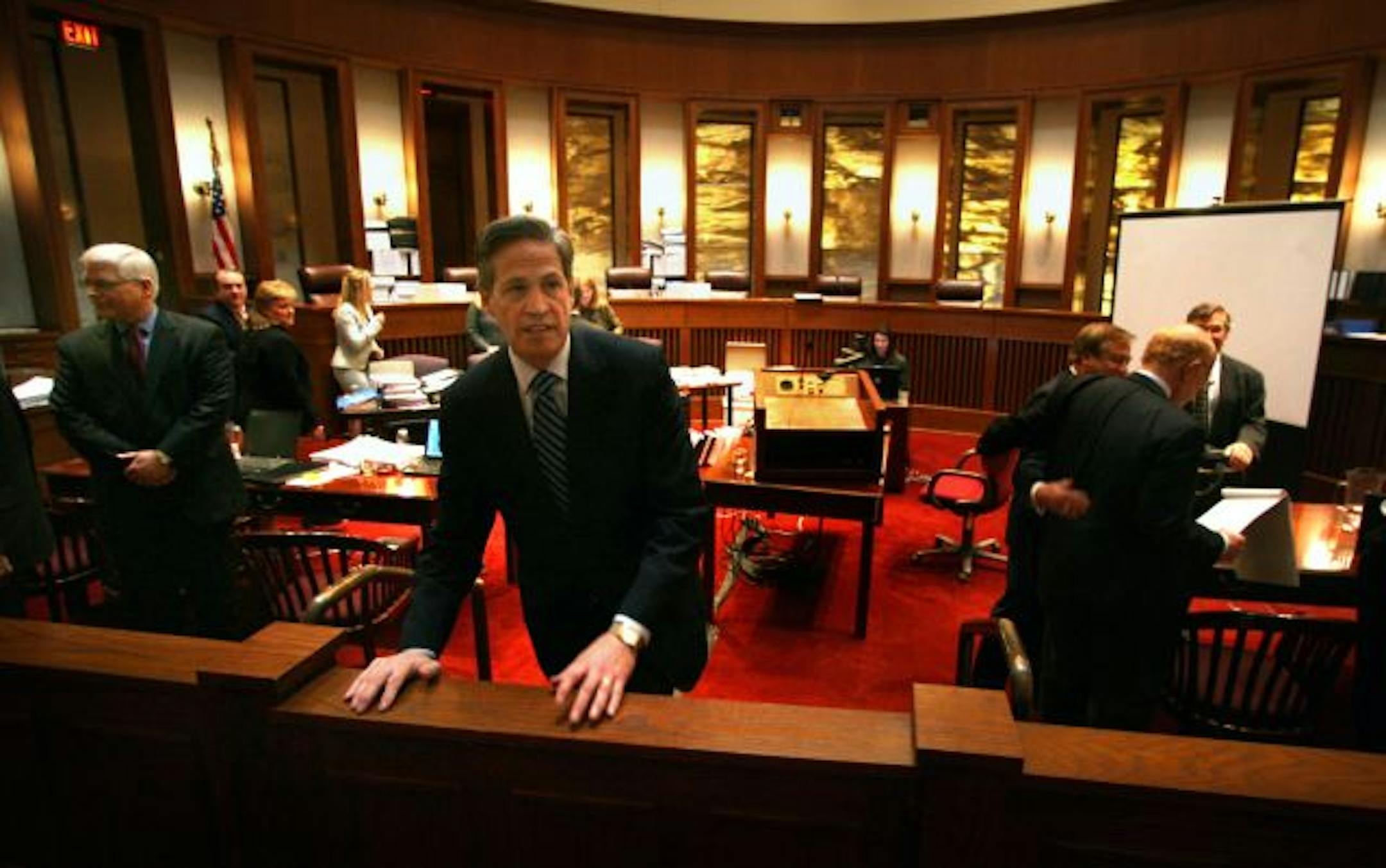
After seven long weeks, Minnesota's U.S. Senate election trial came down to a debate Friday between following the rules and a notion of common sense.
Now the choice is up to the judges, whose decision will be critical -- if not final -- in eventually naming Minnesota's new U.S. senator.
During closing arguments, Republican Norm Coleman and his lawyers urged the judges to bend their rules, which have hampered his case, and rely more on "common sense" in deciding which disputed ballots deserve to be counted.
But lawyers for DFLer Al Franken said Coleman failed to meet requirements to prove that election problems deprived him of enough valid ballots to have tipped the balance.
"The law requires proof that an error did, in fact, change the outcome," Franken lawyer Kevin Hamilton told the three-judge panel. "That is exactly what is missing from the record."
Defending a 225-vote Franken lead, Hamilton argued that very few ballots were wrongly rejected and that the Minnesota election system was "a model for the nation. Minnesota's electoral system works, and it works well."
But Coleman lawyer Joe Friedberg said enough problems occurred to render the election inconclusive. The biggest problem involved similar absentee ballots that were accepted in some counties but rejected elsewhere on Election Day or later deemed invalid by the judges.
"There were rules on Election Day and they are ... different from the rules you're applying because you're looking at the statute and on Election Day many counties didn't," Friedberg told the judges, asserting their standards for validating ballots are too stringent.


